








Shorouk Express
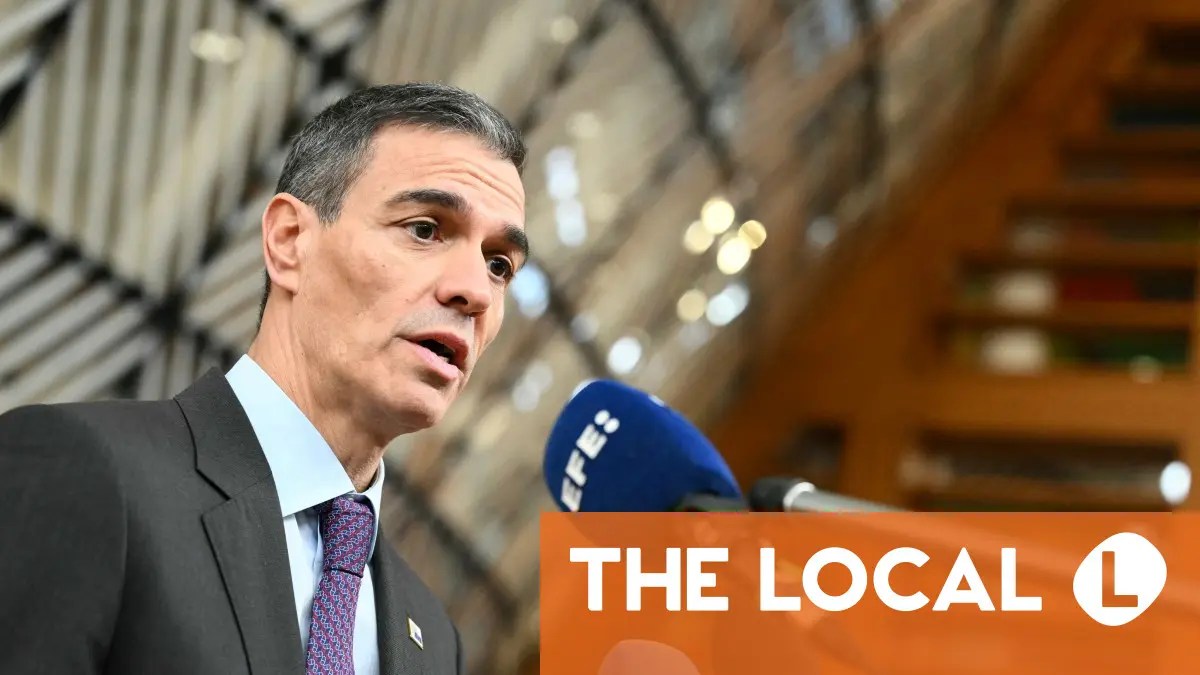
Buoyed by immigration, the Spanish economy has enjoyed positive headline figures in recent years and will continue to lead the way in the bloc in 2026, but Prime Minister Pedro Sánchez admits the benefits aren’t yet trickling down to locals.
Immigration and services have spurred the Spanish economy to continent-leading headline figures, but even Prime Minister Pedro Sánchez admits that these macro gains are failing to trickle down and that the purchasing power of Spaniards “is still low”.
Spain is set to be the fastest growing economy in the European Union in 2026, with GDP forecast to grow by 2.1 percent year-on-year, 0.9 percent above the European average, estimated at 1.2 percent.
READ ALSO: Spaniards no better off than 25 years ago despite economic growth
This improved performance is attributed to increased immigration and the remarkable dynamism of the service sector, according to the Economic Outlook 2026 report prepared by Mastercard Economics.
Spain’s population recently hit a record high of 49.3 million people thanks once again to the arrival of more migrants, counteracting the country’s rock-bottom birth rates and spearheading the current economic boom.
In 2024, The Economist ranked Spain as the best performing economy in the world for 2024, putting it ahead of 36 other countries considered ‘rich’.
Despite the global praise and good growth rates, however, Sánchez conceded recently that these headline successes are not filtering down to working people as they should.
On Monday, the Prime Minister strongly defended his coalition government’s achievements in continuing to move towards a “fairer, more competitive, more productive and more humane” economy. He also reiterated that one of the world’s three largest asset managers, US company BlackRock, has just ranked Spain as the third best destination for investment in 2026.
READ ALSO: Spain’s population keeps increasing due to immigration
Advertisement
While taking stock of the political year, Sánchez highlighted how the Spanish economy is outpacing the European average and 3 million jobs have been created since 2018, when he came to power, although he also acknowledged that there is still much work to be done and that the purchasing power of Spaniards remains low.
The objective must be to ensure that these macro figures have a “microeconomic impact on the daily lives of workers,” he said. “It’s undeniable that there is much to be done in this area. The purchasing power of Spaniards is still low. There are still too many people living in precarious conditions, with deprivation. But what is undeniable is that we’re moving in the right direction,” Sánchez stressed.
Advertisement
Critics of the Sánchez government have long pointed to superficial headline macroeconomic numbers belying the real purchasing power of people in Spain.
Recently published data from the European Statistics Office places Spain eight points below the EU’s average income level, the same rate as 25 years ago, proof that macroeconomics isn’t necessarily a reflection of the average wealth of a country’s population.
There has been no change to the Gross Domestic Product per capita in terms of purchasing power of the Spanish population over the past quarter of a century, which according to Eurostat stood at €27,770 in 2024.
This comes as property prices have soared in Spain, particularly after the pandemic, and forced locals out of their neighbourhoods in provincial capitals and island cities like Madrid, Barcelona, Valencia, and Palma de Mallorca.
READ ALSO: Is Spain’s ‘economic miracle’ making Spaniards richer?