

Shorouk Express 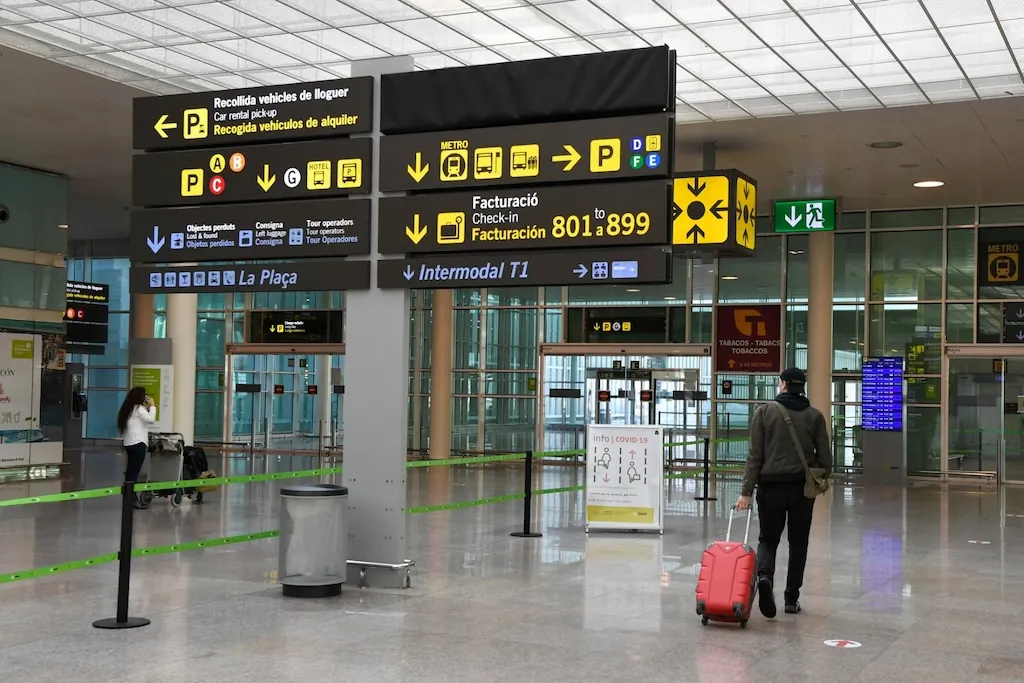
Barcelona’s El Prat Airport has started restricting access to its terminals to anyone without proof of a boarding pass, as authorities aim to control the problems of homelessness and petty crime at Spain’s second busiest airport.
Spanish airport operator Aena has changed access rules to Barcelona El Prat in a bid to improve security at the Catalan capital’s main airport.
Authorities want to prevent homeless people from sleeping in the airport premises, as well as restrict access to pickpockets, bag thieves, unlicensed drivers and unofficial bag wrappers.
Advertisement
In order to access the terminals, passengers will now need to show their e-tickets or paper boarding passes to private security at the main entrances. Friends and family going to arrivals to pick up travellers will also have to present proof of their contact’s boarding pass.
The airport operator has implemented checks at metro and train exits, and lowered the number of entrances to the airport buildings.
The measure is part of the new legislation passed this earlier this year across all Spanish airports managed by Aena.
According to newspaper La Vanguardia, some of these measures have already been in place at Barcelona airport for the last three weeks, with many people required to present tickets while travelling over the long December weekend already.
Security checks are also in place at the arrivals hall of Terminal 1, where people are being asked who they’re going to meet.
These checks have also begun in Terminal 2, but less frequently, due to the lower passenger volume compared to Terminal 1.
READ ALSO: How to avoid getting robbed or pickpocketed at Spain’s airports
Advertisement
Taxi and transfer drivers have been among some of the first to experience these new control at arrivals, which requires them to present the client’s details and flight information, as well as their taxi licence, before they can go inside.
Madrid’s Barajas airport has in recent years also seen a steep rise in the number of unhoused people and beggars staying there overnight, as well as pickpockets, criminal gangs and prostitutes.
Airport workers say they turned Barajas into a ‘lawless city’, with beggars sleeping in lifts or setting up tents, litter building up everywhere, foul smells, deteriorating infrastructure and toilets being left in a pitiful state.
As a result, since May of this year, security guards there have also been asking passengers and family members for proof of travel to be allowed into the terminals.
READ MORE: Madrid airport’s worsening homelessness problem
There’s been a similar situation taking place at El Prat, hence the new control measures. It’s estimated that around a hundred people slept in the terminals every night at Barcelona’s main airports. Some homeless people suffer from mental problems, others from addictions, and authorities have up to now been unable to agree on what they have to do to solve the problem, with no particular body wanting to take responsibility.
Other busy Spanish airports such as Málaga’s and Palma de Mallorca’s are also facing security and homelessness issues, meaning that it is likely that they will soon follow suit and implement controls at the entrances. In fact, authorities at both airport have already access to the airport at night.
Though there is no official data on thefts specifically committed at airports, in recent years robberies have been reported sporadically at Barcelona El Prat, Madrid Barajas, Valencia, Alicante-Elche, Palma de Mallorca, and Tenerife airports, among others.
There was the case of two thieves at Barcelona’s El Prat who stole a suitcase which contained €8 million worth of jewellery, two elderly pickpockets who operated at Alicante’s airport dressed as holidaymakers, and a thief who specialised in stealing suitcases on airport buses in Gran Canaria.