









This is an edited transcript of “The Ezra Klein Show.” You can listen to the episode wherever you get your podcasts.
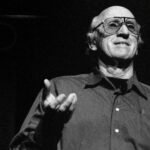
If you were looking for the most influential philosopher of the internet, the person who laid down the way Silicon Valley thought in its more idealistic era, the person you’d find is Stewart Brand.
Brand has had one of these amazing lives. He seemed to be present for almost everything that mattered there in 1960s culture — in the moment of the hippies, in a $20-a-month apartment in San Francisco with other beatniks. There at the mother of all demos — the one that created much of the structure for modern computing, that foresaw many of the places we’re ultimately going to go. There creating The Well, one of the earliest online communities. There with the Whole Earth Catalog, which Steve Jobs described as an early inspiration for what we now think of as the internet.
Archival clip of Steve Jobs: When I was young, there was an amazing publication called the Whole Earth Catalog, which was one of the bibles of my generation. It was created by a fellow named Stewart Brand, not far from here in Menlo Park, and he brought it to life with his poetic touch. This was in the late ’60s, before personal computers and desktop publishing. So it was all made with typewriters, scissors and Polaroid cameras. It was sort of like Google in paperback form, 35 years before Google came along. It was idealistic, overflowing with neat tools and great notions.
The list of all the places Brand was and all the things he influenced is very long — from the Clock of the Long Now to his long-running correspondence with Brian Eno. And along the way, Brand has been writing these very beautiful, unusual books. Not only the Whole Earth Catalog but “How Buildings Learn,” in 1994, which I love, and then, more recently, “Maintenance: Of Everything, Part One,” which explores something many of us would rather avoid: the constant and almost spiritually important work of fixing our cars, of doing home repairs, of caring for one another.
Brand makes maintenance sound philosophically potent, even beautiful. And one thing I think is interesting about this book at this moment, written by somebody with the weight of Brand, is that it points toward a different way of thinking about technology. It points toward a different ethos that Silicon Valley can maybe move toward — something a little bit more humble, something a little bit more rooted in the natural relationship we all have to one another and that we all have to aging and to loss.
Source:
www.nytimes.com