








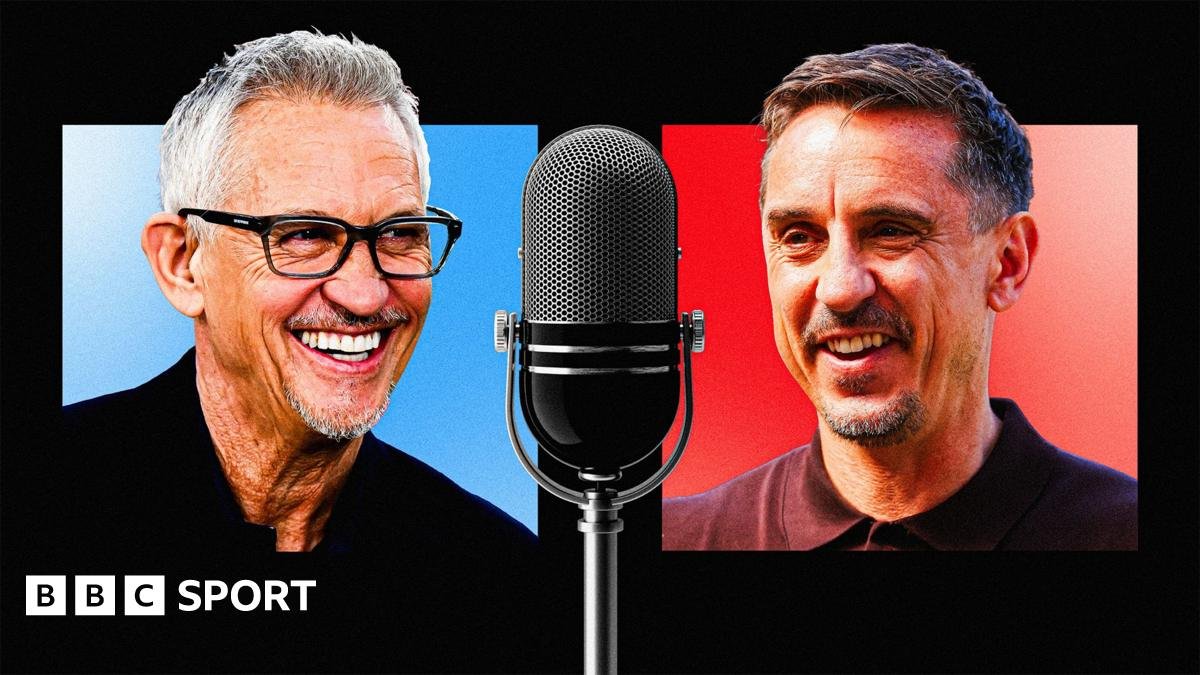
So what kind of challenge does Lineker and Neville’s success pose to mainstream broadcasters?
“They are still niche, small businesses, admittedly with huge influence over fans and reach, but their turnover is very modest so they aren’t taking on the big legacy media brands when it comes to hard business numbers”, says Jimmy Worrall, who recently launched The Football Boardroom podcast after setting up a media business with former England manager Gareth Southgate.
“That said, they are taking eyeballs, and tapping into the shifting patterns of fans, and the way they consume sports news.
“Don’t forget they don’t have the real gold (premium live content).
“They are all trying to diversify and because they are nimble and entrepreneurial, and now have access to capital, they can now buy growth as well as take risk on new shows, both have speed to market and they could conceivably grow to be some significant media businesses if they invest heavily and quickly.
“They will need to constantly evolve, that is for sure.”
“It definitely makes life tricky for the established broadcaster,” says Roger Mosey, a former BBC executive, when asked about the rise of athlete-driven content.
“They are bound, overall, to be impartial – they can’t be ‘Manchester United TV’ or ‘the anti-VAR channel’ or whatever.
“And the mainstream broadcasters are still governed by regulation and their traditions, which means that they can’t be as vigorous or sweary or impassioned as a podcast can.”
During the 2024 Euros, Lineker faced scrutiny for being more outspoken about England’s performances on his podcast than he was when presenting BBC coverage during the same tournament.
His 30-year relationship with the BBC then ended last year amid controversy over a social media post about Zionism.
In contrast, Neville continues to work for Sky as its leading pundit. Goldbridge has insisted he will continue to say what he wants since being acquired by The Overlap.
But is there a risk that an outburst about United could conflict with Neville’s role at Sky, or his relationship with United or their fans?
“If I was Sky, I would be watching Stick to Football every week knowing there’s no commercial upside but potential brand downside if the editorial tone is off brand because the talent is inextricably linked to Sky,” says Worrall.
“If I was Neville I would be watching Mark Goldbridge thinking the same, except he has the commercial upside as well.
“It’s one thing having a fan rant at the performance of the club, it’s another to have one of the most decorated players in their history fund and facilitate that rant. That won’t be an easy one to square off.”
“We see it as being separate”, insists Melvin. “There’s no point investing in Mark and turning him into a traditional presenter. What we want to do is grow his channels with him.”
Another factor was to have more of a daily offering via Goldbridge’s channels.
“When [former United manager] Ruben Amorim was sacked we didn’t have a Stick To Football show scheduled for 10 days so we didn’t talk about it until then”, recalls Melvin.
“We can’t do that. We have to be able to be agile.”
Source:
www.bbc.com