






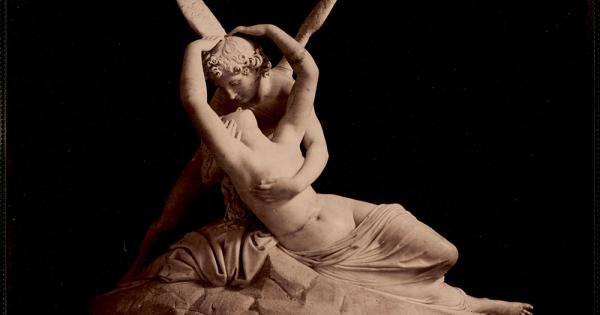
In the wee hours I often admire my husband’s muscular back, giving thanks for its “surest protection,” like that of the “resplendent mountain” I recently discovered in a 13th century spiritual memoir by German mystic Mechthild of Magdeburg. For Mechthild, the physical is mystical, and the mystical is sensual. After all, as Anne Lamott puts it, “We are love with skin on.”
Mechthild’s writings startled me: carnal — bordering on erotic — love poetry describing ecstatic, reciprocal union with the Divine involving mind, heart, soul and body. Her manuscript lay hidden for centuries, but once translated from Low German, its passionate dialogues inflamed imaginations, including mine.
Humans crave connection at every age and every life stage; we instinctively desire touch and long to feel love with all our senses. We treasure our most intimate relationships because they allow us to give and receive hugs, kisses, strokes of hair and drying of tears — mortal linkages that electrify not just our hearts but also skin and sinew.
For many years I denied my desire for embodied connection, manipulated by a romantic partner to believe I was disordered because of my wants. He characterized my need for nearness as cloying, selfish. Holding hands was off limits, especially in public. Side hugs, indifferent pecks on the cheek and sitting apart became the best I could hope for from a man who insisted that physical affection was not his “love language.” That we managed to produce three daughters from our bond was nothing short of remarkable. That I settled for such an unhealthy relationship revealed how poorly I understood love.
Contemplative writer Carl McColman notes, “We need to understand the fullness of human love — even including the passion and physical intimacy of romantic love — if we truly wish to explore the mysteries of God’s love.”
I understood that truth, and Mechthild’s poetry, only after being graced with a love so authentic, passionate and earthly that it was, by extension, spiritual. Only when I experienced embodied union and soul‑level shared faith with a romantic partner did I glimpse God’s perfect love for me.
Widower Michael Leach once wrote, “If each of us is a manifestation of divine Love, then isn’t a loving sensual relationship an expression of Love giving Love back to Love?” Yes. Only after a healthy, reciprocal relationship with a partner who frequently and authentically expresses deep romantic love did I begin to believe Christ desires me.
Mechthild wrote of satisfying physical and romantic love with such authority that I was surprised to learn that she remained a lifelong virgin, despite the fact that a vow of chastity was not required of her as a member of the Beguine order. Even without external expression, eros is present as intense yearning, deep passion, joyous ecstasy and sincere desire for love.
“We should raise the feathers of our longing to God,” she wrote, explaining how, despite never knowing physical love, she understood metaphysical union with Christ.
Extraordinary experiences — visions, ecstasies, even stigmata — allowed mystics like Mechthild to understand eros as otherworldly abundance. Their relationships with Christ demonstrated qualities also necessary for successful earthly unions: affection, compassion, friendship, intimacy, self‑sacrifice, vulnerability and, yes, eros.
“The mystics, even though so many of them were themselves celibate, recognized that … physical love matters just as much … [as] ethereal or spiritual love,” McColman writes.
In her 20s, Mechthild’s confessor urged her to record what was then a yearslong bond with her Creator. For the rest of her life — her final words dictated as she lay dying in the 1280s — she documented all stages of a long‑term love alive with physical intimacy. Her marriage to Christ was so multifaceted that only the highest literary forms could express it: 267 chapters in all, from prayer to parody, eventually forming seven books titled The Flowing Light of the Godhead.
Like other visionaries who desired God with their entire humanity, Mechthild wrote of Christ as bridegroom. Likewise, thinkers such as Origen, Bernard of Clairvaux and Teresa of Ávila celebrated the romantic and erotic imagery of Scripture’s Song of Songs, which connects human emotions — desire, yearning, passion, pleasure — to mystical experiences of God. However, it is Mechthild’s description of eros that makes her work unique among mystical memoirs. The self‑proclaimed “unruly woman of God” documents not a one‑sided longing but a spouse equally desirous of her. In this cosmic romance, God and woman are united in abandon and mutual trust.
Just as mystical love defies conventions, deep romantic connection obeys few earthly timelines. Because my husband and I have known loss, trauma and imperfect relationships, we recognize in every moment together the nearness of the Divine. We treasure each touch, honor every holding of hands and value every tangible gesture of love as both worldly and otherworldly. With a mutual determination to prioritize contact, we find creative ways to entwine even in times of illness or injury, when resting in each other’s arms means moving IV lines or hospital bed rails. This bride and bridegroom understand that physical union is not only exciting and fulfilling, but also healing.
Mechthild teaches a truth easily lost in the messiness of human relationships: as beloved children of God, we each deserve to be chosen, wanted and desired with mutuality. Settling for less jeopardizes our ability to develop a mature, reciprocal and intimate relationship with God.
When my marriage bed softens and turns to enfold me, I surrender like Mechthild. I form myself to my lover’s nature, reciprocating every caress and whispered “I love you.” And then, to Christ the bridegroom, I offer all affection, including eros, as prayer.
Source:
www.ncronline.org