


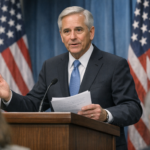







Lance Schroyer, a former Oklahoma state trooper, is no longer the White House’s nominee to lead U.S. Immigration and Customs Enforcement, the administration confirmed, removing a candidate whose confirmation would have placed a Senate-approved official at the helm of an agency central to federal immigration enforcement. The withdrawal means ICE will continue to operate without a Senate-confirmed director, prolonging a leadership gap at a time when the agency remains a focal point of domestic policy implementation.
The nomination had drawn attention because of the prominent role the agency plays in enforcing federal immigration laws and in carrying out removals and investigations. With the administration stepping back from Schroyer’s nomination, the agency’s immediate operations will remain under acting leadership. Observers note that acting heads can manage day-to-day work, but lack of a confirmed director can affect long-range planning and the perception of institutional stability.
The decision to withdraw the nomination also carries procedural implications. Nominations to lead federal law-enforcement agencies require Senate confirmation, a process that can be lengthy and politically fraught. Until a nominee secures Senate approval, agency priorities set by the executive branch may proceed under interim arrangements, and some strategic or policy initiatives may await a permanent appointee. The change underscores the challenges administrations face in placing permanent leadership across agencies with high political salience.
Beyond immediate personnel considerations, the withdrawal will be closely watched by stakeholders across government and civil society for its potential impact on enforcement posture, oversight and internal morale at the agency. The White House has not announced an alternative nominee at this time. For the moment, the episode highlights ongoing volatility in senior appointments and the ways in which confirmation dynamics can shape how federal agencies execute core responsibilities.