









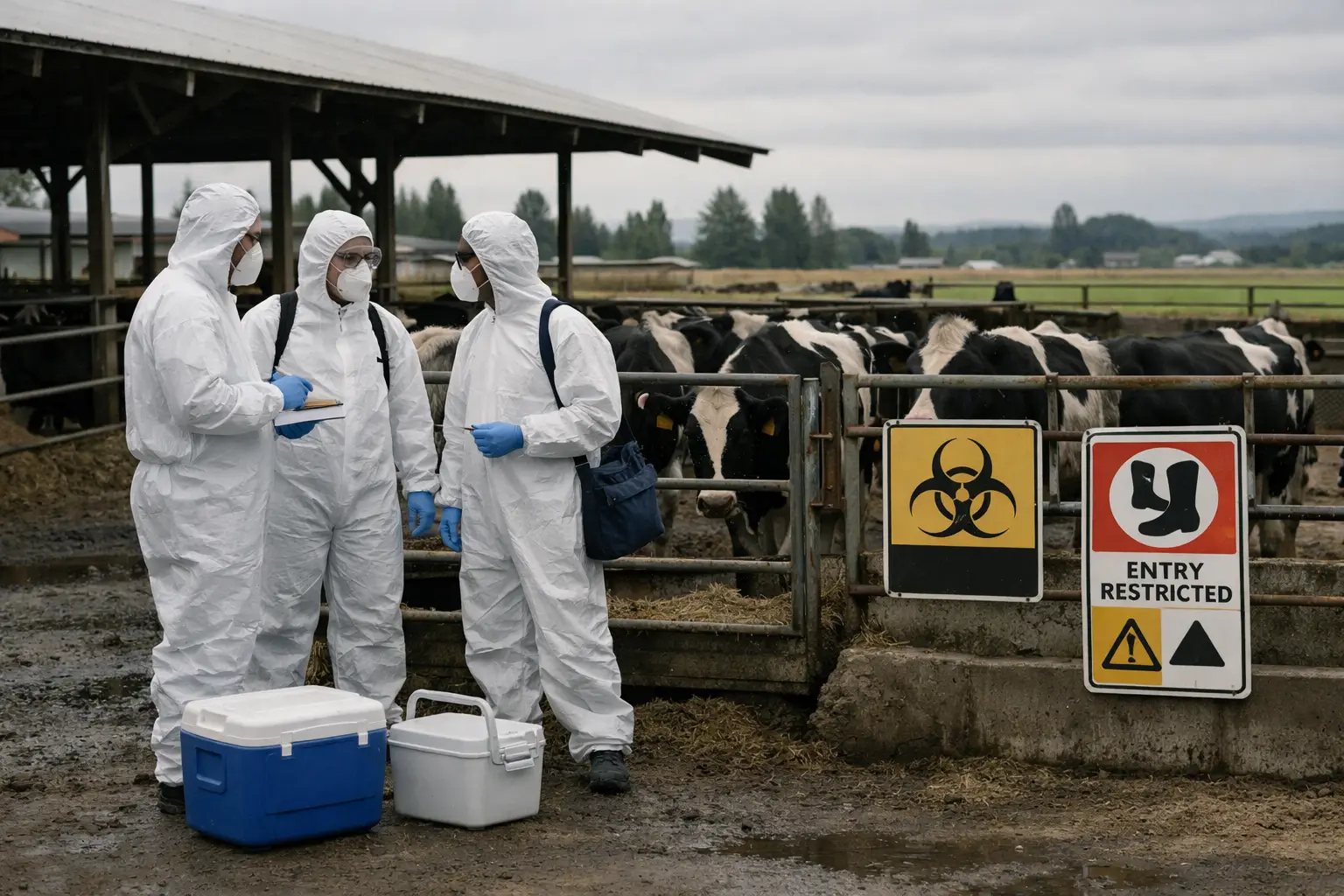
A Washington state resident has died from complications linked to bird flu after exposure at a dairy where cattle were infected with avian influenza. The death, involving a resident of Yakima County, marks the first such confirmed fatality in the United States in a year and brings renewed attention to the risks at the intersection of livestock operations and human health.
The individual had underlying health conditions and had been hospitalized before dying on Sunday. Yakima County health officials identified the likely exposure as contact with avian influenza at a dairy with infected cattle. No personal details about the patient were released, and the case remains significant because it links a fatal human infection to an agricultural setting involving cattle rather than only poultry or wild birds.
Avian influenza has long been monitored as an animal health threat, but infections involving dairy herds have increased concern among public health authorities because farmworkers and others with close animal contact can face elevated exposure. The latest case underscores the importance of protective measures in workplaces where infected animals are present, including early recognition of illness and coordination between animal health and public health agencies. Official guidance on avian influenza is maintained by the Centers for Disease Control and Prevention, which tracks the virus and provides recommendations for reducing risk.
The death also places Washington state within a wider national concern over how bird flu moves through animal populations and what that means for people who work around them. While severe human outcomes remain uncommon, a fatal case involving infected cattle is a reminder that surveillance in dairies and rapid communication with local health departments are central to limiting potential exposure. For communities tied to agriculture, the immediate relevance is practical: identifying infected animals, protecting workers and ensuring that symptoms after exposure are taken seriously.