



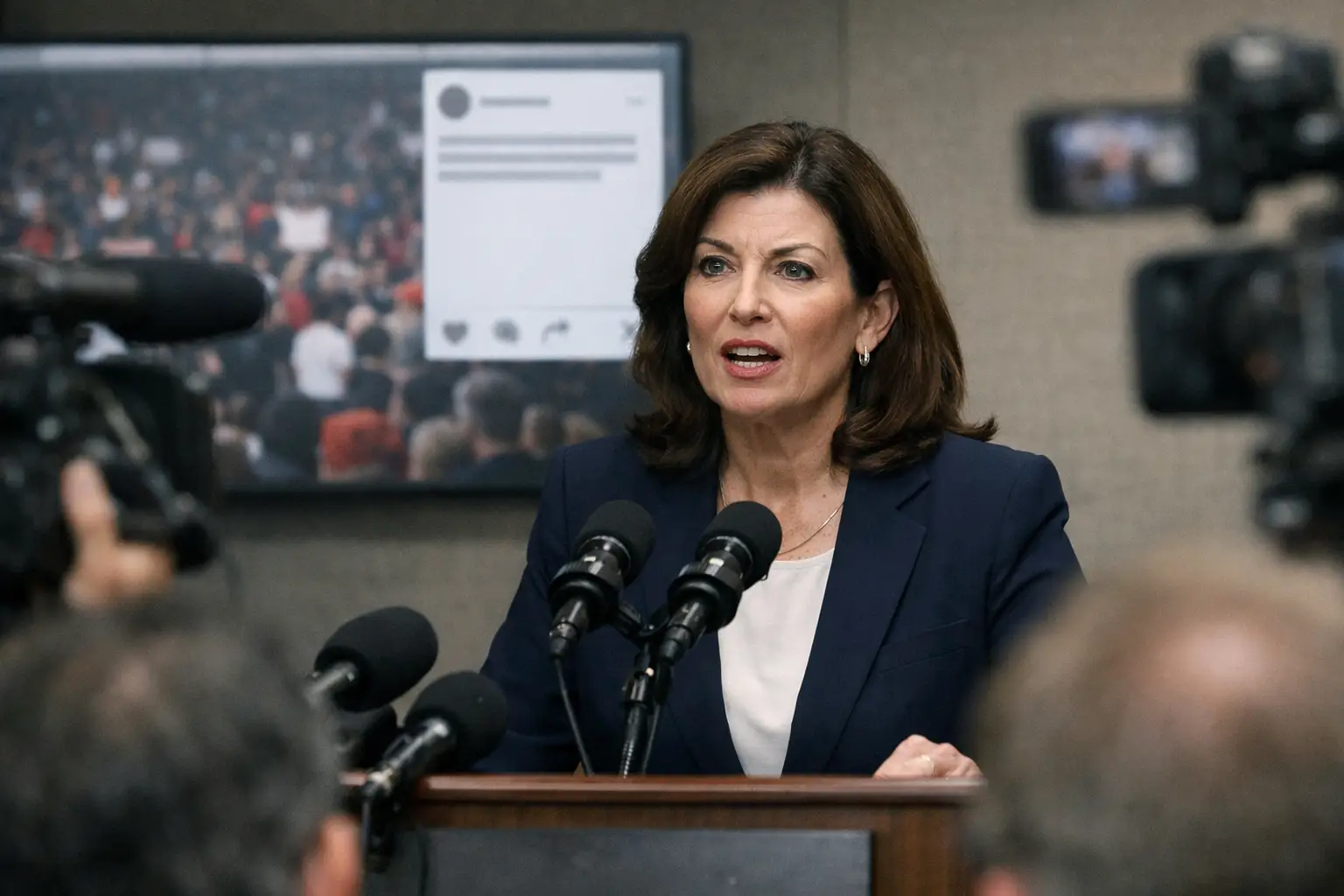
New York Governor Kathy Hochul sharply criticized Nicki Minaj on Wednesday, saying that Donald Trump rallies were “poisoning” the rapper’s mind. The Democratic governor made the remarks while speaking with reporters after being asked about a post by Minaj, whose public comments have drawn renewed political attention. “Maybe she oughta get outside and get offline a little more,” Hochul said, before adding that the artist should stop attending Trump rallies.
The exchange places a prominent cultural figure inside an already charged political environment in New York, where national partisan debates frequently overlap with local leadership. Kathy Hochul, who leads one of the country’s most populous and politically influential states, framed her response as a critique of Minaj’s exposure to pro-Trump political messaging rather than as a discussion of the rapper’s music or career.
Nicki Minaj, one of the most widely recognized names in contemporary hip-hop and pop, has a large online audience, making her political remarks and appearances visible well beyond entertainment circles. Hochul’s comments reflect the way statements by celebrities can become part of formal political debate, especially when they intersect with the movement surrounding President Donald Trump. The governor did not announce any policy response in connection with the exchange, and her remarks were limited to criticism of Minaj’s political engagement and online presence.
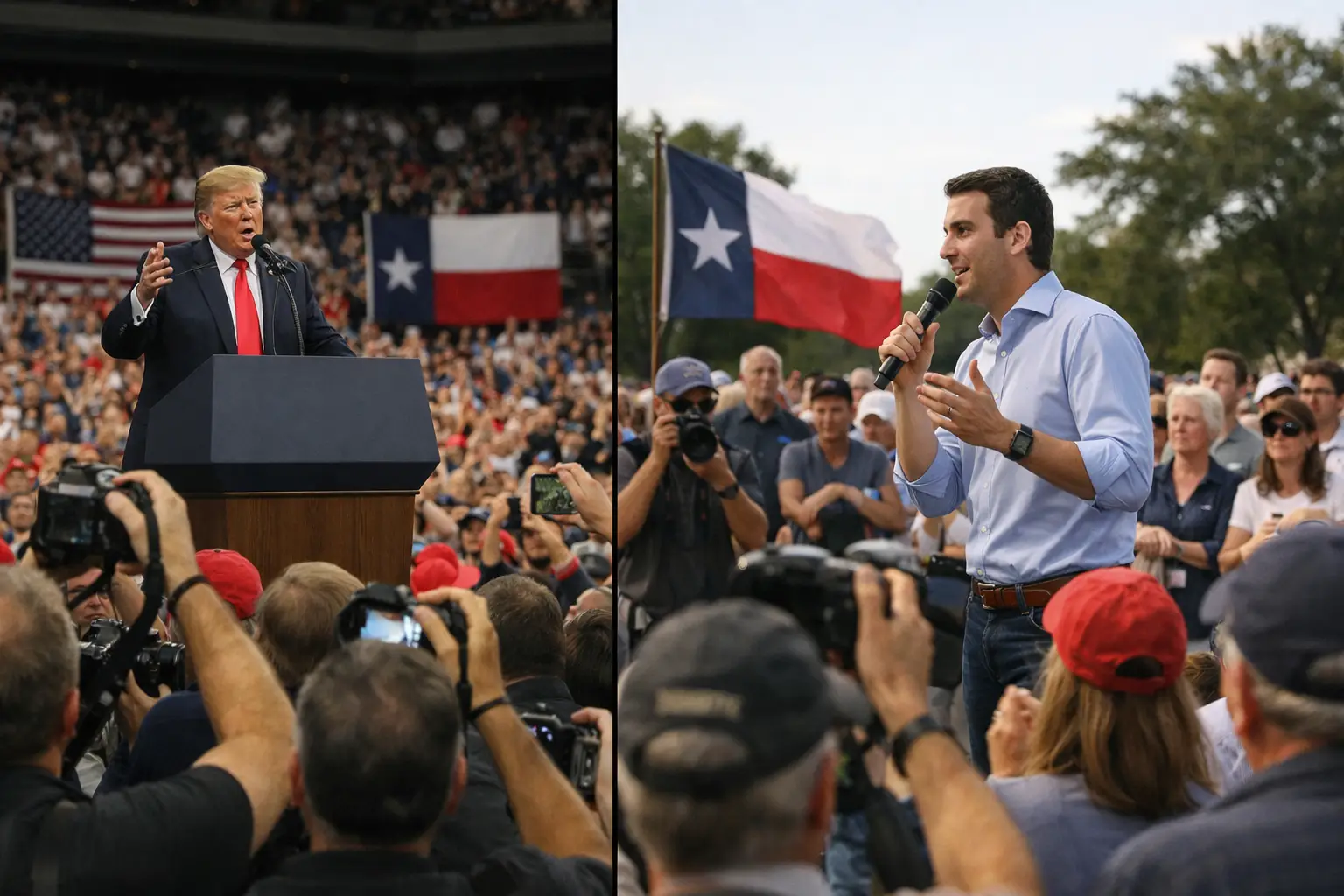
The moment also highlights the continuing role of rallies in Trump’s political identity. For supporters, they remain a central tool for mobilization and messaging; for Democratic officials such as Hochul, they are often cited as spaces that intensify polarization. By directly linking Minaj’s views to those events, Hochul brought together three spheres that increasingly shape public debate: elected office, celebrity influence and social media-driven politics.
No further details were provided about the post that prompted the governor’s answer, and Minaj’s response was not included in the exchange. What remains clear is that the comment added another layer to the broader conversation about how public figures outside elected office can influence, amplify or become entangled in partisan disputes during a period of heightened national political attention.