








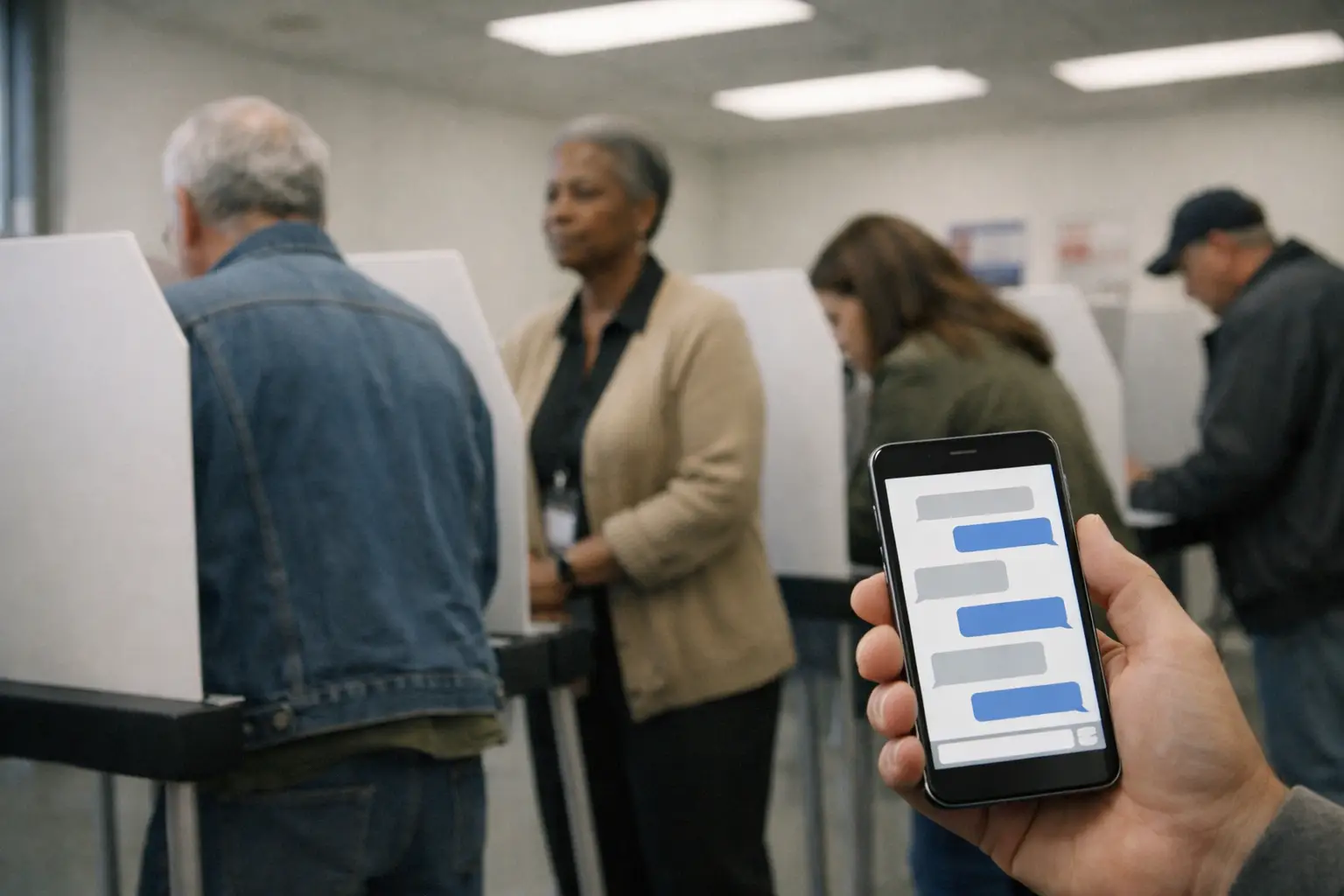
AI chatbots are becoming an increasingly common stop for Americans seeking political and election information, turning tools built for conversation into informal guides on elections, candidates and voting procedures. The shift gives voters faster access to answers, but it also introduces a problem with direct democratic consequences: some systems are providing incorrect voting details and, in certain cases, recommending candidates.
The concern is not only that a chatbot may make a factual error. Election information is highly practical: a wrong answer about how, where or when to vote can affect whether a person successfully casts a ballot. When the same tool also offers political guidance, the boundary between neutral information and persuasion becomes harder for users to identify. That matters at a time when many people treat generative artificial intelligence systems as search engines, advisers and explainers in a single interface.
A survey released earlier this year by the Pew Research Center found that about half of American adults reported using AI-powered chatbots. Among users, 42% said they use them to search for information. The survey does not mean that all of those searches involve politics, but it shows the scale of reliance on systems that can produce confident answers even when the underlying information is incomplete, outdated or wrong.
For voters, the safest route remains verification through official election sources, including state and local election offices and the U.S. Election Assistance Commission. Those institutions publish rules on registration, ballot access, polling places, deadlines and voting methods. Chatbots may help users phrase questions or understand general concepts, but election administration in the United States varies by state and locality, making official confirmation essential.
The rapid adoption of these tools places technology companies, election officials and news organizations under growing pressure to distinguish civic information from automated advice. As voters use chatbots alongside traditional search and media sources, the accuracy of answers about voting becomes more than a technical issue. It becomes part of the information environment in which electoral choices are made.