







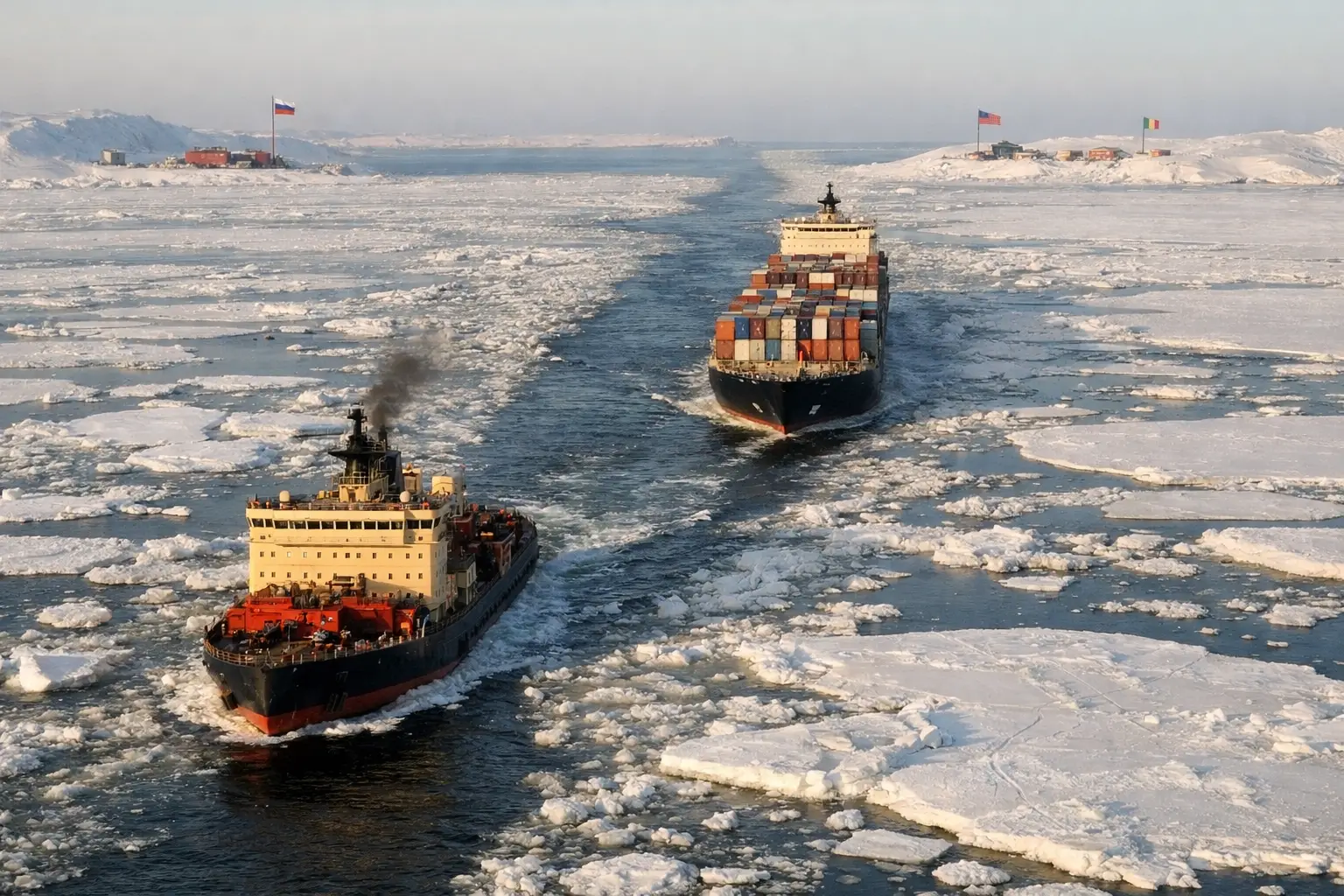
Onboard an icebreaker, reporting from the high Arctic offers a direct view of a region in rapid transition. From the deck of the USS Healy, writer Rana Foroohar documents how diminishing summer sea ice is creating navigable corridors that were once impassable for most of the year. Those evolving conditions are shifting economic calculations for shipping companies and prompting renewed attention from national authorities and commercial investors.
The newly accessible routes shorten some voyages between Eurasia and North America, reducing transit times and fuel consumption for certain trips. At the same time, thawing seas increase the potential for resource exploration along continental shelves and attract offshore activity. Commercial stakeholders are evaluating opportunities in freight, tourism and energy, while insurers and logistics planners must adapt to novel seasonal variability and operational hazards associated with ice, weather and sparse infrastructure.
These developments also carry strategic implications. Arctic access affects national security postures, civilian infrastructure planning and international cooperation over search-and-rescue and environmental protections. Governments and regional bodies face pressure to balance ambitions for economic opportunity with frameworks for navigation rights, maritime safety and ecological stewardship. The interplay between commercial interest and state activity is reshaping diplomatic and regulatory conversations about governance in polar waters.
Firsthand reporting from the icebreaker underscores the practical realities behind scientific projections and policy debates. Observations at sea reveal both the immediate challenges of operating in a changing environment and the broader consequences for commerce, indigenous communities and ecosystems. For readers seeking more on-the-ground perspective, reporting appeared on NPR, situating those observations within ongoing global discussions about climate, commerce and security in the Arctic.