







Missouri’s bishops and Catholic groups in the state are urging voters to consider the needs of the poor when voting on a proposed constitutional amendment that they say would shift the burden of taxation onto lower-income residents.
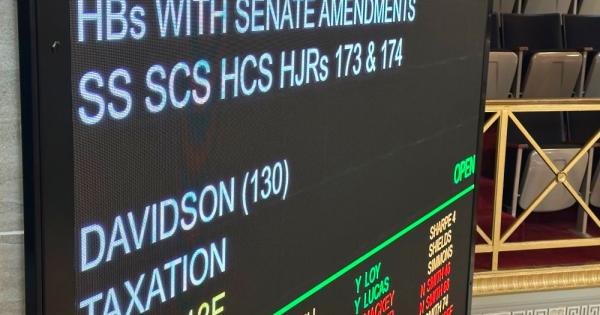
The Missouri Amendment 5, which is on the Aug. 4 primary ballot, would authorize legislative phase-out of the individual state income tax based on revenue growth, and authorize the expansion of sales and use taxes. It also curtails the current constitutional limit on taxing goods and services.
Proponents say it will make Missouri more competitive and attract jobs and investment.
The state’s four bishops, in a July 17 statement issued by the Missouri Catholic Conference, urged voters to consider “the moral principles that should guide us in pondering any tax proposal.”
They also cited the U.S. bishops’ 1986 statement “Economic Justice for All,” which emphasized that tax systems should be evaluated by their impact on the poor and ensure that those with greater resources bear a proportionately greater share of the public burden. “For this reason, tax systems that rely heavily on regressive forms of taxation, such as sales taxes, should be approached with prudence because they can place a disproportionate burden on those with lower incomes,” the bishops said.
It also recognized the sincerity of supporters to promote the long-term prosperity of the state and that their legitimate considerations should be weighed alongside the potential effects on those who are most vulnerable.
Jamie Morris, executive director of the Missouri Catholic Conference, said when changing from an income-tax system to a sales and use tax, there must be protections for the most vulnerable people. Such regressive taxes “impact lower-income people harder because a greater share of their money will go toward essentials.”
Board members of the Seeds of Justice Network, a faith-based advocacy group in St. Louis, said they opposed the amendment because it “disproportionately burdens Missourians on a fixed income.” They also stressed that “a sales tax charges everyone the same rate on every purchase, so it takes a bigger bite out of a tight family than a comfortable one.”
The group said Amendment 5 works against both the common good and the concept of solidarity, a key component of Catholic social teaching.
It also said that if new sales tax revenue doesn’t keep pace, “the state services most at risk include child care, education, and physical and mental health care for our most vulnerable neighbors, including children and the elderly,” — all areas, it added, where Missouri already ranks among the lowest-funded states in the country.
The St. Louis Council of the Society of St. Vincent de Paul sent a statement in July from its Voice for the Poor Committee to its 3,000 members which said the expansion of sales taxes and “transactions involving any goods and services” — included in the Amendment 5 — “could include everyday services such as rent, auto repair and hair care.”
It pointed out that a tax structure that “relies on sales and use tax instead of income tax is generally considered detrimental to low- and moderate-income households and advantageous to high-income households,” adding that with this format “individuals with lower incomes pay a larger percentage of their income in taxes compared to wealthier individuals even if the absolute amount of tax is the same.”
Michael Mehan, executive director and CEO of St. Vincent de Paul in St. Louis, told NCR that the amendment involves issues of Catholic social teaching on the dignity of the person and preferential option of the poor.
Put another way, he said: “When you raise taxes on toothpaste and toilet paper, poor people are punished.”
The amendment also would eliminate charitable income tax credits, which would directly impact the agencies serving people in need.
Amy Blouin, president and CEO of the Missouri Budget Project, said her agency’s analysis shows that 80% of Missourians would reap a tax increase if Amendment 5 passes. Blouin served as director of advocacy for Catholic Charities of St. Louis before founding the nonprofit public policy analysis organization.
The state individual income tax brings in $8.5 billion to $9 billion in general revenue annually, making it the primary source of funding for schools, public safety and other critical state services. The Missouri Budget Project estimates replacing this revenue could require the state sales tax rate to rise from 3% to as high as 10.7%, pushing combined state and local rates as high as 16%.
Dee White, a member of St. Josephine Bakhita Parish in St. Louis, said she uses Catholic social teachings as a guide when voting and that Missouri’s Amendment 5 raises some concerns. “One of the foundational tenets of our Catholic faith is the option for the poor and vulnerable, which requires us to consider what impact public/societal policies could have on the least among us,” she said. “Replacing the state income tax with expanded, higher sales and use taxes will disproportionately impact middle- and low-income working-class families.”
White prefers a more equitable tax structure where those who have a higher income receive the appropriate tax rate, a financial structure where revenue is raised fairly and consistently rather than penalizing those who are vulnerable or already struggling to make ends meet. “We will never make up the difference between the revenue obtained from state income taxes versus sales taxes,” she said.
Andrew Hutchinson is also using his faith as a guide in helping to lead his labor union in a fight against the proposed amendment.
As deputy business manager with Laborers Local 955 in Columbia, Missouri, he gives presentations on the issue and canvasses in neighborhoods.
Hutchinson, who is a parishioner at Our Lady of Lourdes Parish in Columbia, said he has been influenced by the words in the prayer at Mass seeking forgiveness for what we have done and failed to do — and takes note in particular about what we might “fail to do” for those with fewer resources.
He said the church’s insistence on caring for others brought him back to the faith as an adult and as he sees it, this ballot issue fits with that view.
“Voting against Amendment 5 is the least we can do to make sure others are doing well,” he said.
Source:
www.ncronline.org