









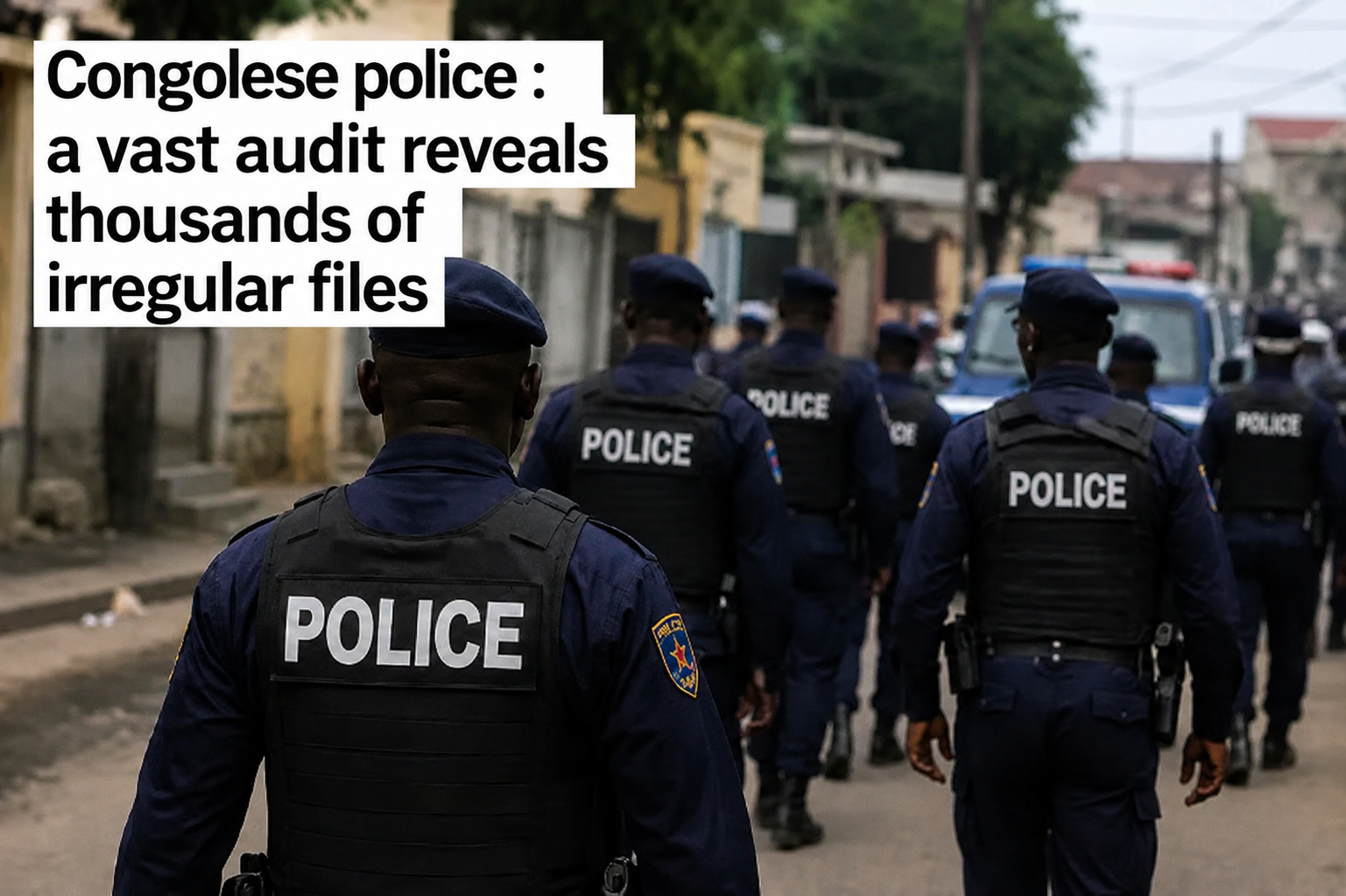
An audit conducted on the workforce of the Congolese National Police (PNC) has highlighted significant administrative irregularities. Out of nearly 158,000 files examined, approximately 40% are considered suspicious, suggesting the existence of ghost workers, outdated files, or inactive personnel still on the payroll.
According to government estimates, these anomalies could represent a loss of over $230 million per year for public finances. This is a considerable sum that, if used correctly, could help improve police working conditions, upgrade their equipment, and modernize security services.
The government now intends to proceed with the biometric registration of officers in order to clean up administrative records, identify the actual workforce, and put an end to undue payments.
Context and Criticisms
This revelation comes at a time when President Félix Tshisekedi’s government is facing criticism regarding the governance and operation of several public services. Observers, civil society organizations, and political actors believe that the reforms undertaken are still struggling to produce the expected results, particularly in the areas of security, public administration, and the fight against corruption.
Beyond its financial impact, this situation also raises concerns about the effectiveness of the Congolese National Police. Inaccurate workforce management can complicate the deployment of officers on the ground, even as the country continues to face major security challenges, particularly in the eastern Democratic Republic of Congo.
Moreover, the phenomenon of “ghost workers” is not new to the DRC. Over the years, several audits and investigations have already highlighted similar irregularities across various public administrations, illustrating the state’s persistent management difficulties.
A Test of Credibility
For many Congolese, this audit now represents a true test of credibility for the authorities. The publication of these figures must be followed by concrete measures: deleting irregular files, prosecuting those responsible for potential fraud, improving control mechanisms, and strengthening transparency in public finance management.
Beyond the numbers, this case highlights the challenges that the Congolese administration continues to face. The results of this audit will be judged not only by the savings achieved, but also by the authorities’ ability to transform these findings into lasting reforms, ensuring that state resources truly benefit active police officers and, more broadly, the entire population.