






(RNS) — Religion is continuing to be a major influence in an increasingly secular Europe — not so much through church attendance and worship but because it is embedded in its values, especially those to do with the economy, according to a Berlin-based think tank, the Rockwool Foundation.
According to the foundation’s research review, religion is playing a far greater role in economic growth and prosperity than many people realize, affecting key economic behavior, including education, family size and savings.
“Anyone who regards religion as a marginal factor overlooks a part of the deep structure of our societies,” lead author and economics professor at the U.K.’s Warwick University Sascha Becker told Religion News Service. “Religion still matters because it has shaped, and in many places still shapes, the social norms and institutions through which policy operates.”
The paper, “Religion and Economic Growth: What We Know and Why It Matters,” surveys a wide range of economic literature. Its authors, including Becker, Jared Rubin of Chapman University and Ludger Woessmann of the University of Munich, looked at evidence through the centuries and across the globe.
Becker cites education as a key area where policymakers need to understand the continuing role of religion in Europe. While most people would understand that religion played a key role in developing literacy because people were taught to read so that they could access the Bible, its influence is still evident today. Many European countries still have faith-based schools, religiously rooted educational traditions and minority communities for whom religious institutions are important.
“If policymakers want to improve skills, integration or female labor-force participation, they need to understand whether religious schooling complements secular skills, literacy, numeracy, science, or substitutes for them,” Becker said. He warned that a secular policy on education may look neutral in theory “but can trigger resistance if communities experience it as an attack on identity.”
The role of religion in schooling is particularly evident in England, where around a third of state schools have a faith designation, the majority linked to the Church of England, a substantial number to the Roman Catholic Church and a very small minority to Jewish and Muslim institutions.
“Even quite secular parents may value faith schools because they associate them with a clear ethos, discipline, good behavior and aspiration,” Becker said. “The point is not that religion automatically produces better schools: The evidence is complicated by selection and peer effects, but that religiously rooted institutions can still shape parental choices and the production of human capital in today’s Europe.”
According to the report’s authors, policymakers do not need to endorse religious doctrine, but they need to understand how the moral worlds in which people live affect choices they make about their lifestyles, such as family size and schooling.
Another example of how religion impacts Europe today is in attitudes to migration and social cohesion. Protests against migration have popped up across many European nations, often pushing for Christianity in rows about national identity. In the U.K., a movement called Unite the Kingdom has focused on the significance of Christianity in the heritage of Britain – something that many clergy have been wary of endorsing as it does not reflect the Christian ethos of welcoming the stranger.
Many religious organizations, such as the Jesuit Refugee Service, have been instrumental in helping migrants settle, learn a new language and understand local services and whether they can access them. While some migrants are Christian, others are not, and networks of Muslim institutions, for example, can also help people on their arrival in Europe.
“Understanding religion helps policymakers design integration policies that are neither naïvely multicultural nor simply assimilationist,” Becker said.
But Becker warns that religion is not the entire explanation for a nation’s strategy. In Spain there has been a more welcoming attitude to migrants than in other European countries, and Catholic charities and the Catholic Church have played a significant role in supporting migrants. According to Becker, there is a pragmatic reason for doing so, rather than a theological reason. “It reflects labor shortages,” he said.
Last week in Spain and the Canary Islands, Pope Leo XIV met migrants and the organizations that rescue, welcome and accompany them as they often arrive by boat across dangerous seas between Africa and Spain.
The gospel, said Pope Leo, “asks us if we have recognized Christ in those who disembark, marked by fear, hunger and violence, after enduring the desert, the night and the sea.” He went on to urge governments across the world to share responsibility for what happens to migrants, to protect them from criminal traffickers and help their countries of origin to improve their economic development.
Religion can also have a negative impact on society, the researchers warn, citing women’s absence from the Afghan labor force because of Taliban thinking on the role of women, which is contributing to a stunted Afghan economy.
Today, some Christian denominations are focusing increasing attention on the environment and the future of the planet, with believers encouraged to live more simply, encourage more sustainable development and limit consumption. “This could well impact economic growth,” Becker said, and he urged them to consider if it is possible to not hinder growth but encourage a different, greener kind of economic growth.
Still, Becker is not convinced that churches have significant ethical influence today on those in power, especially when it comes to some denominations’ thinking on capitalism and its adverse effects, such as the Catholic Church. “The U.S. has a large church attendance, yet it is the most capitalist society,” he said. “There is significant tension there.”
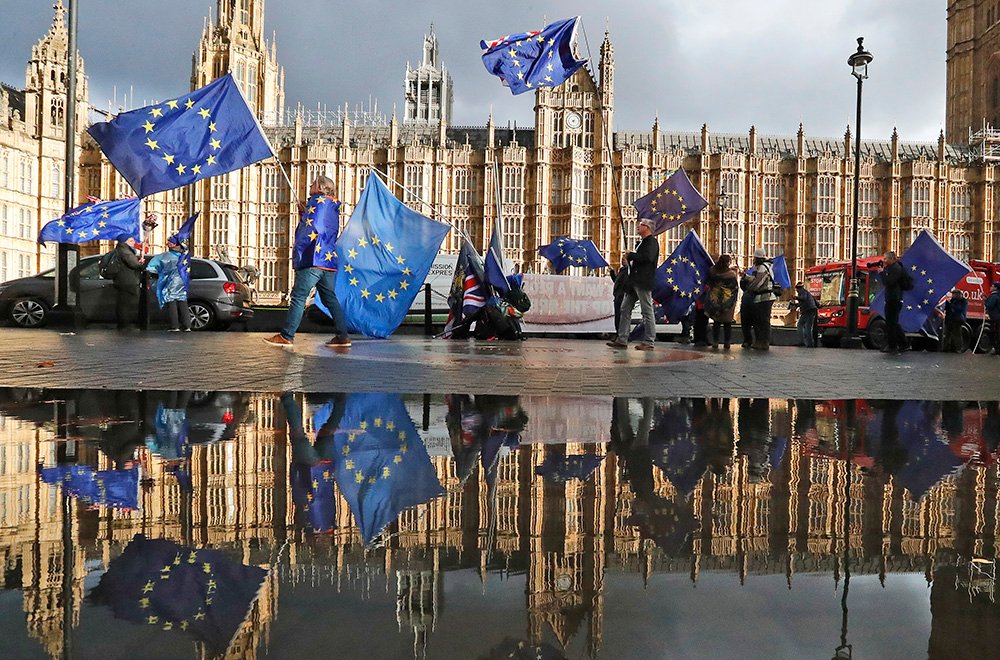
Back in Europe, ideas from Catholic social teaching, such as solidarity and subsidiarity, were adopted by the founders of the European Union but now function as secular constitutional principles.
Subsidiarity is a good example of a religiously rooted idea that has become secularized, Becker said. “In Catholic social teaching, it meant that higher authorities should support, not replace, families, communities and local associations.”
Today in the EU, subsidiarity has become a foundational legal principle, where decisions should be made locally under certain conditions.
“So, the religious roots are part of the genealogy, but the principles now have a broader, pluralist meaning,” Becker said.
Source:
religionnews.com