









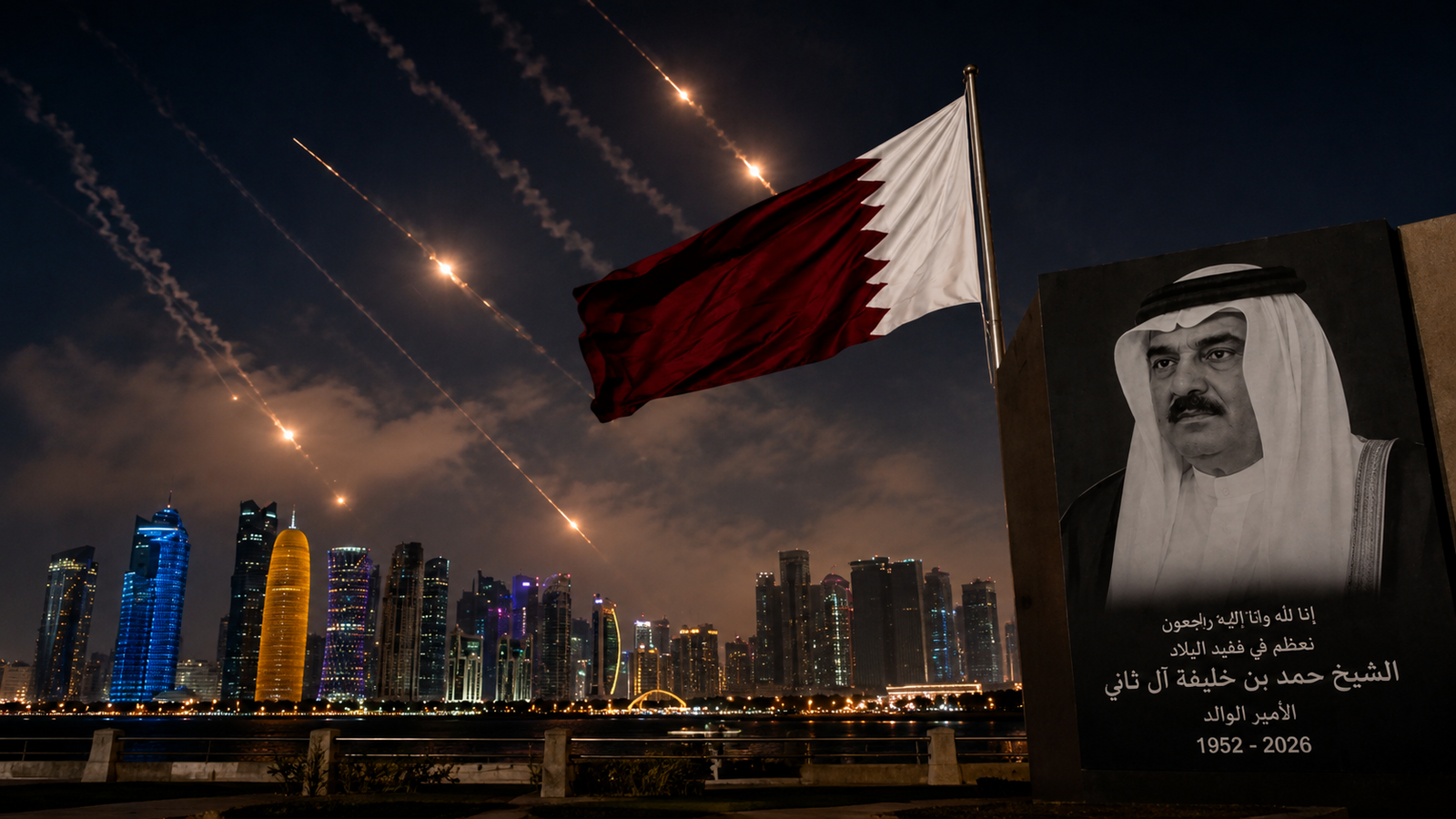
Doha – Qatar experienced a Sunday marked by two major events. A few hours after the announcement of the passing of the former Emir and father of the current Emir, Sheikh Hamad bin Khalifa Al Thani, the country was targeted by a new missile and drone attack claimed by Iran as part of the regional military escalation.
The Amiri Diwan announced the passing of the “Father Emir” at the age of 74 and declared four days of national mourning. Flags were lowered to half-mast, and public administrations suspended their activities during this period of remembrance. Sheikh Hamad bin Khalifa Al Thani is considered the architect of Qatar’s transformation into a diplomatic, energy, and media powerhouse over the past three decades.
A few hours later, Qatari authorities confirmed that the territory had been targeted by a new wave of missiles and drones launched by Iran against several Gulf countries, including Bahrain, Oman, Kuwait, the United Arab Emirates, and Jordan. Doha states that its air defense systems intercepted most of the projectiles, but debris fell in several sectors. Three people, including a child, were injured.
The Qatari government condemned these attacks, calling them a “flagrant violation of the sovereignty” of the targeted states and of international law. In a statement, it also denounced the strikes directed against other countries in the region.
A Symbolic Sequence of Events
The sequence of these events lends a particular symbolic significance to this day. Just as Qatar officially entered a period of national mourning, the country had to activate its air defenses and confront a further deterioration of the regional security situation.
However, there is no evidence to suggest that the timing of these strikes was linked to the passing of the former Emir. Iranian authorities are presenting these attacks as a military retaliation targeting installations linked to U.S. forces deployed across several Gulf states. So far, Tehran has made no public reference to the mourning observed in Qatar.
In international diplomatic practice, there is no legal rule mandating the suspension of military operations when a state observes a national mourning period. On the other hand, periods of mourning traditionally give rise to messages of condolence, gestures of restraint, or marks of respect between states, particularly when they maintain diplomatic relations.
Sunday’s events thus illustrate the level of tension reached in the region: even a country engaged in the funeral ceremonies of its former head of state did not escape the direct consequences of the ongoing military escalation.