
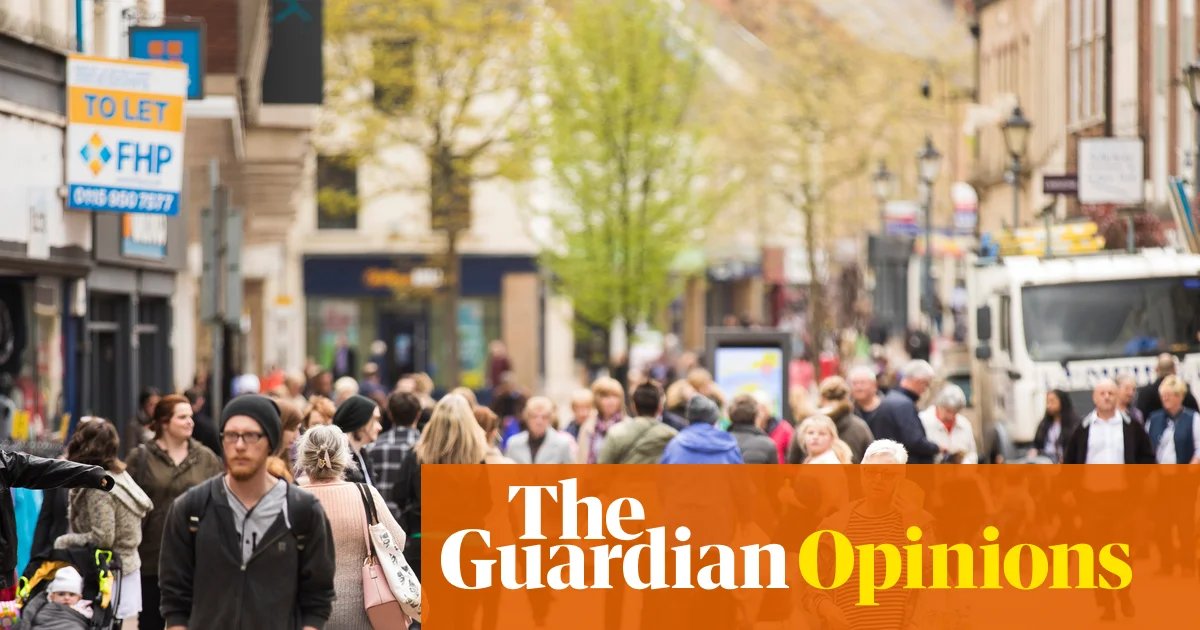
Among other defeats, the recent local elections saw Labour lose heavily across the Midlands and the north of England. The results are reminiscent of the 2016 Brexit vote and, with the return of those electoral geographies, some of the old tropes have resurfaced, too.
Once again, England’s post-industrial towns are cast as the angry, reactionary counterparts to booming, progressive cities. Certainly, Reform UK is winning there now, but that is not the full picture. These places should not be chalked up as lost causes for the left.
Over the past five years, I have been conducting intermittent ethnographic research in Mansfield, the former mining town in Nottinghamshire, to study its changing politics. Although it voted in a Labour MP at the last general election, the constituency now heavily favours Farage. Interviewing people in 2021, 2024 and again over the past year, I have seen the shift happen in real time.
Take Martin*, an ex-miner, and his wife, Diane, who worked with disabled children until she retired last year. Both voted Labour in 2024, which they now regret. “They haven’t got a clue how we live,” Martin says of politicians, “not a clue.” Both are appalled by politicians’ perks and pay. The £98,000 salary, second jobs and lobbying scandals strengthen their sense that politics is corrupt.
They are not alone in this – political corruption came up frequently in my interviews. Martin is planning to vote Reform next time. Diane says she probably won’t vote at all, being somewhat sceptical of Farage. “He does go on a bit,” she says.
Martin earned a good salary as a bricklayer down the pit, but he struggled for work when his colliery shut in the late 1980s. Eventually, he found work as a gardener, earning about half of what he used to. He has remained on low pay ever since. With the rising cost of living, the couple have cut back on small luxuries. “We only go and see tribute acts now,” says Diane. “We can’t afford proper acts.” Martin blames politicians. “You are getting poorer, actually, that is what you are getting – poorer. That is what they want.”
Alongside the real or perceived misdeeds of politicians, supermarket prices are a major source of anger. Daily routines have been upended by the rising cost of living. Debbie, a mother of four who works for the prison service, said she now took a different path through the supermarket, through the discount aisles, and reached not for the items on the shoulder-height shelves, but instead has to crouch down to retrieve off-brand budget items from the lower shelves.
To describe the views of Martin, Debbie and Diane as an amorphous “anger” is to undersell the coherence of their critique. Their complaints about the government are underpinned by more progressive views on what ordinary people are due and what political representation ought to look like.
Many of the people I spoke to over the past year thought that the price of food staples should be capped, no matter the consequences. Where so many facets of common sense are shaped by a deference to the free market, grocery prices are strikingly exempt. Experts tend to recommend against food price controls, as supermarket profits are not as high as many of my interviewees assumed.
Nevertheless, the cost of living crisis speaks to the need to expand the range of economic tools for dealing with future price shocks. Until then, there are other options to ease the crisis and improve wages. Rent controls are a good example, as are fair pay agreements.
On political reform, there are many more possibilities still: a proper second-jobs ban, replacing the UK’s lacklustre lobbying legislation and a new approach to MPs’ salaries, to name a few. It is entirely reasonable to ask why MPs are still allowed to have second jobs, or why town centres are left to decline, or why life has become so expensive.
Some of my interviewees will always vote for the right because they hold rightwing views on taxes, benefits and the state – this is true of many Reform voters. Others were preoccupied with visions of brown men sneaking across the Channel to take advantage and do harm. They spoke at length about dangerous immigrants deliberately shredding their passports. Voters who are invested in such views will not be part of any progressive project worthy of the name.
But not all Reform sympathisers are like that. Many people simply do not care enough about politics to be meaningfully defined by their vote. I think of Jasmine, a nursing associate from another post-industrial town, who voted Reform at the last general election because her sister, an evangelist for the party, told her to. “She said that voting for Reform was going to help her children’s future and I thought, right, OK,” she said. “So I went along with it. Which I probably shouldn’t have.” Her vote reflects the discrepancy in enthusiasm between Labour and Reform.
This is the political paradox of England’s post-industrial towns. While it is true that Reform is building its base in former mining and manufacturing areas, the local people who can be won over to progressive politics will only be convinced by being less like Reform, not more. Winning in post-industrial England requires connecting with its popular radicalism.
“A lot of working-class people, they don’t want a lot,” says Martin, the former miner. “They want enough to get by and to have nicer things in life. To go on holiday and to have good food and things like that. They are not bothered about yachts and aeroplanes – not in my eyes, anyway. They are just happy enough to get through in life with a job, a secure job to pay the mortgage and to look after their family … At the end of the day, that is what I think. When you have got peace of mind with that, you can’t beat it.”
* Names have been changed.
Source:
www.theguardian.com