







In a European football landscape shaken by years of tension, economic rivalry, and institutional fractures, stability has become both fragile and essential. The Super League episode exposed, with unprecedented clarity, the deep divisions that run through the system—divisions not only of interests, but of vision. What followed was not merely a crisis, but a defining moment for the future of football governance across the continent, forcing all actors to confront the limits of confrontation and the risks of systemic rupture.
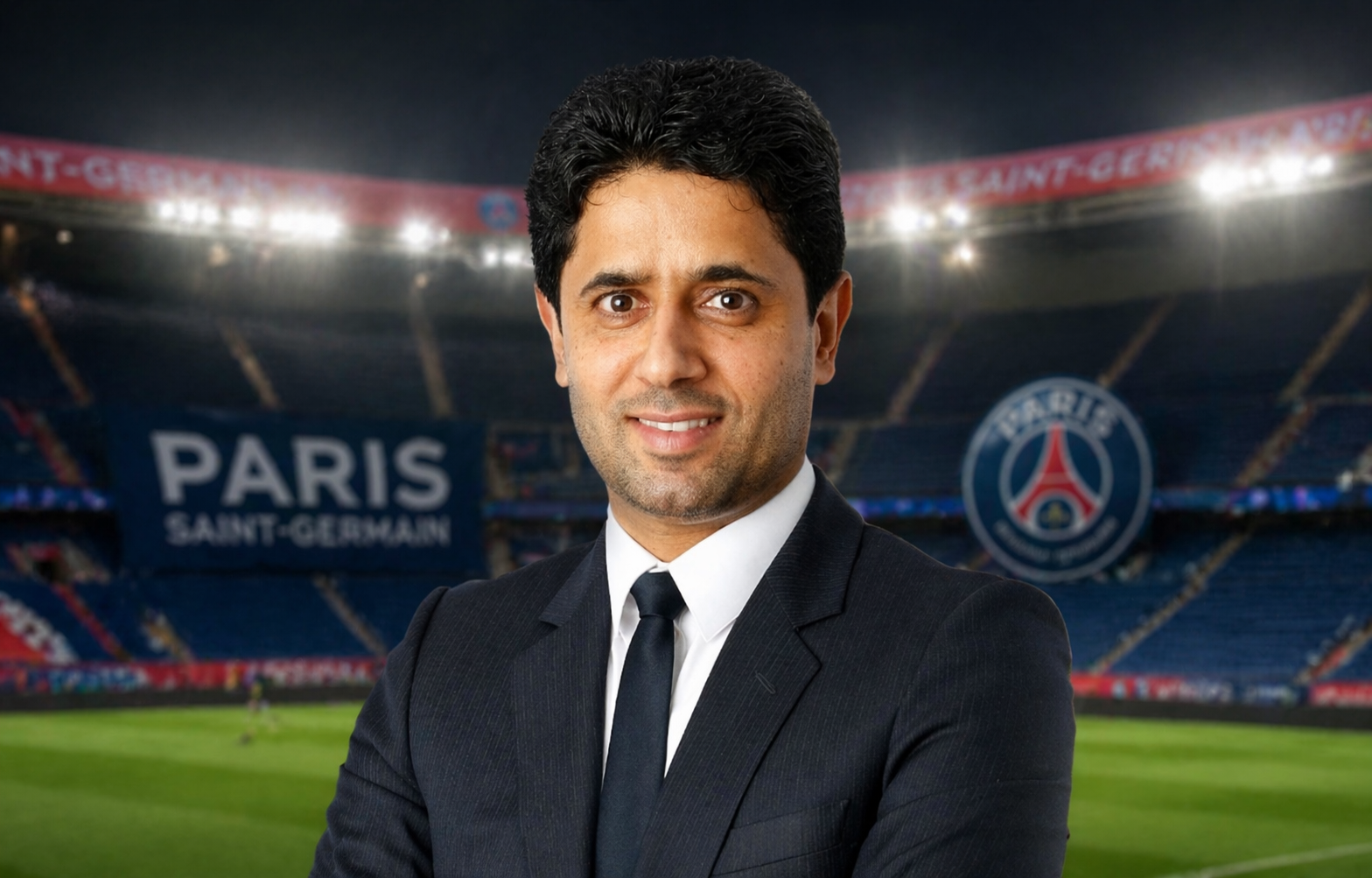
It is within this context that Nasser Al-Khelaïfi has emerged as a central figure, not through confrontation or dominance, but through a more subtle and strategic form of influence. While some attempted to impose new structures and others resisted in defense of existing institutions, he positioned himself in the space where dialogue remained possible. His role has not been to dictate outcomes, but to rebuild communication where it had broken down, and to restore a minimum level of trust among stakeholders who had grown increasingly distant and antagonistic.
This posture reflects a deeper transformation in the nature of power within modern football. Influence is no longer defined solely by financial strength or sporting success. It increasingly depends on the ability to navigate complexity, to connect opposing interests, and to prevent fragmentation in a system where every actor operates according to its own logic. In such an environment, maintaining cohesion becomes not just a necessity, but a form of leadership in itself.
The gradual reconciliation between major clubs and European football institutions is not the result of sudden alignment, but of a conscious effort to move beyond deadlock. It required acknowledging that no club, regardless of its power, can sustainably exist outside the system without ultimately weakening it. What has been described as “peace” is therefore less an endpoint than a recalibration—a pragmatic recognition that cooperation, even imperfect, is preferable to structural division.
Yet this moment of relative stability should not be mistaken for a definitive resolution. The structural tensions that led to the crisis remain deeply embedded in the system. Financial imbalances, disputes over revenue distribution, and the enduring ambition of elite clubs to reshape the competitive framework continue to shape the underlying dynamics. The system has been stabilized, but it has not been fundamentally transformed.
This is precisely where the significance of the current phase lies. It suggests that the future of European football will not be decided through rupture, but through negotiation, influence, and strategic positioning. In this evolving landscape, figures like Nasser Al-Khelaïfi represent a new form of leadership—less visible in appearance, yet more effective in preserving equilibrium and ensuring continuity within a fragile ecosystem.
Ultimately, what is at stake goes far beyond football itself. It is about governance in a globalized environment where economic power, institutional legitimacy, and collective interest must constantly be balanced. In such a system, those who can mediate, connect, and stabilize may hold greater influence than those who simply seek to dominate.