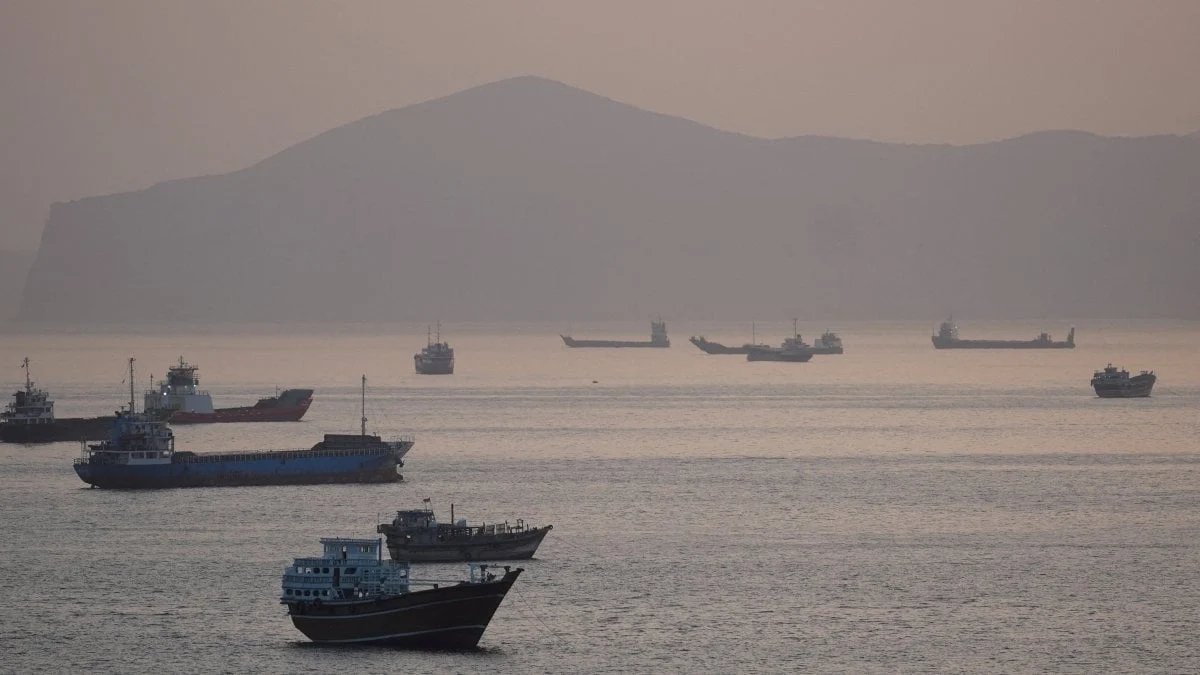








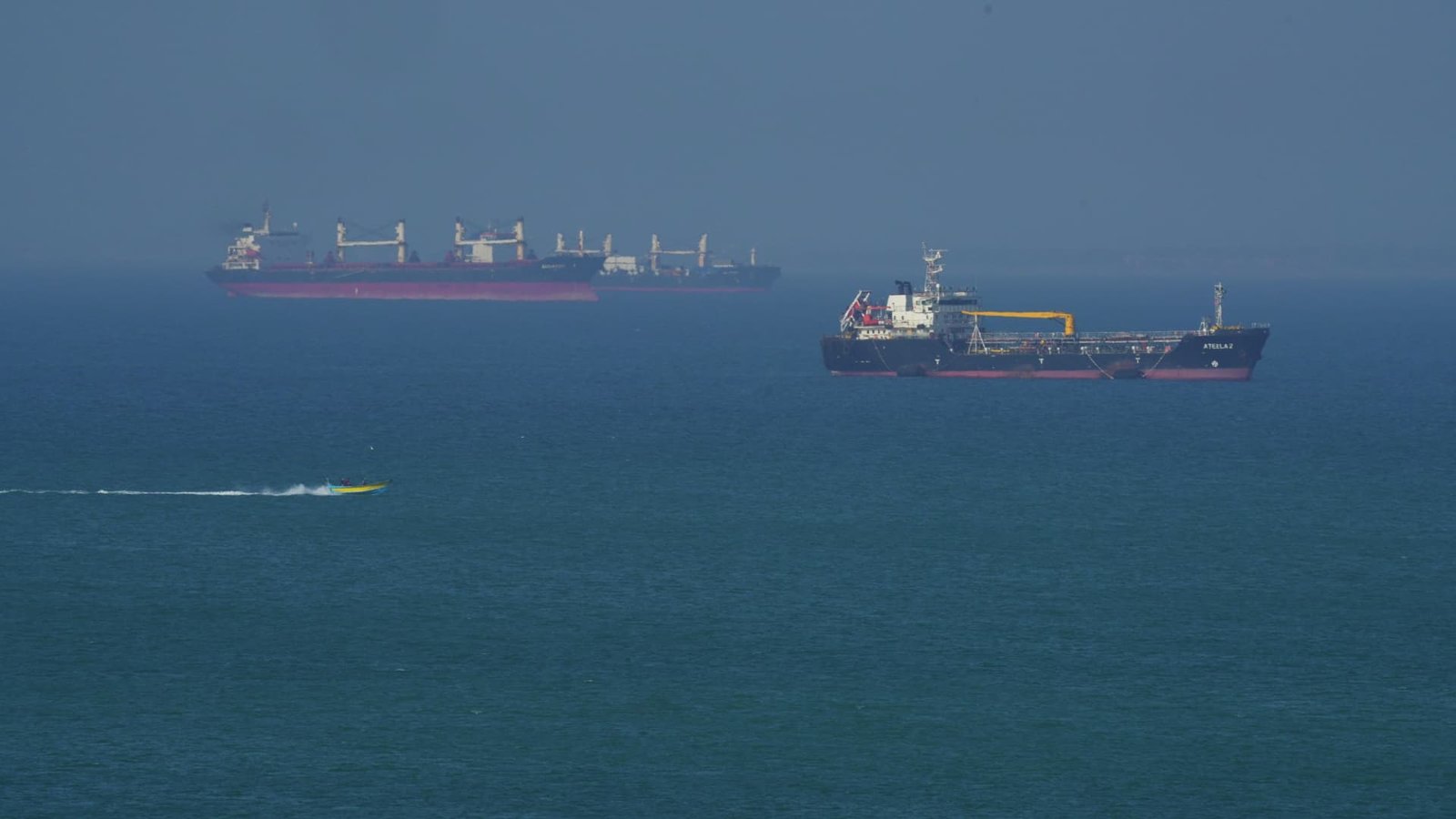
Oil prices jumped Monday after Iran attacked the United Arab Emirates, jeopardizing a fragile ceasefire agreement between Tehran and Washington.
International benchmark Brent crude futures rose nearly 6% to close at $114.44 per barrel. U.S. West Texas Intermediate futures advanced more than 4% to settle at $106.42 per barrel.
The UAE’s Defense Ministry said in a social media post that Iran had launched four cruise missiles at the country. Three of the missiles were successfully engaged by the UAE’s air defenses over its territorial waters, the ministry said. The fourth missile fell into the sea, it said.
A fire broke out at the UAE’s oil hub at Fujairah after a drone attack by Iran, according to a report from Reuters.
The attack on the UAE is the latest escalation in the Persian Gulf. The U.S. and Iran on Monday were teetering on the brink of war again after a weekslong standoff over the Strait of Hormuz.
U.S. Hormuz mission
President Donald Trump on Sunday said the U.S. would guide civilian ships through the strait. Iran has blockaded the key sea lane for weeks now, triggering the biggest oil supply disruption in history.
The U.S. military operation, dubbed Project Freedom, is supported by U.S. guided-missile destroyers, more than 100 aircraft and unmanned platforms, U.S. Central Command said Monday. But there was confusion about how aggressively the U.S. military would intervene in the strait, with an Axios report indicating that the operation is limited.
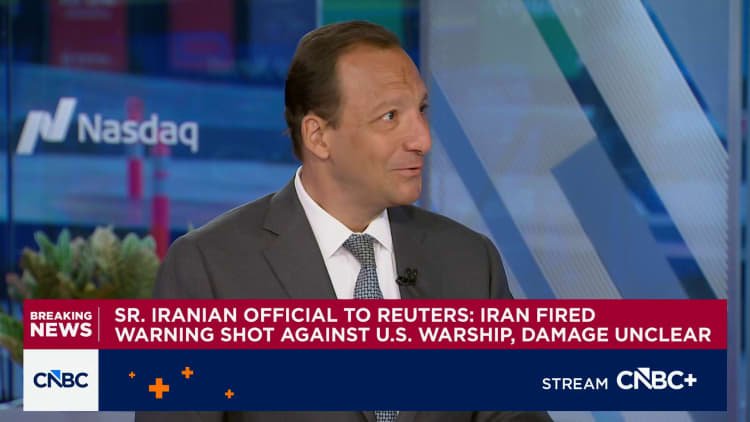
U.S. officials told Axios that there are no plans for full-fledged naval escorts right now. Instead, the U.S. Navy will advise ships on how to avoid mines and stands ready to intervene if vessels are attacked, according to the Axios report. A U.S. official told Axios that the military has been authorized to strike immediate threats to ships crossing the strait.
Admiral Brad Cooper, who leads U.S. Central Command, told reporters Monday afternoon that U.S. forces had destroyed six small Iranian boats attempting to interfere with shipping, according to Reuters.
Iran’s military warned Monday that it would attack any U.S. warship that approaches the strait, according to state news agency Tasnim. The U.S. military denied Iranian media reports that the Revolutionary Guard hit a U.S. warship with two missiles.
“No U.S. Navy ships have been struck,” CENTCOM said in a social media post. “U.S. forces are supporting Project Freedom and enforcing the naval blockade on Iranian ports.”
Two U.S. flagged merchant vessels have successfully transited the strait, CENTCOM said Monday.
More ships attacked
The U.S. operation comes after several attacks on commercial ships in or near the strait. A tanker was a hit by projectiles north of Fujairah in the UAE and a bulk carrier was attacked by several small craft off the coast of Iran, according to incident reports from the United Kingdom Maritime Trade Operations Centre (UKMTO).
The UAE on Monday said Iranian drones targeted a vessel affiliated with its state oil company ADNOC. It condemned Iran’s attacks on commercial ships as “acts of piracy.”
Another vessel was on fire Monday off the coast Mina Saqr in the UAE, according to a UKMTO report. The cause of the fire has not been verified, the report said.

Oil CEOs see pain ahead
Chevron CEO Mike Wirth warned Monday that fuel shortages are a growing concern in some regions of the world as the strait remains closed.
“I think as people look at the realities of very tight supplies, it’s not just a question of price,” Wirth told CNBC’s David Faber at the Milken Institute Global Conference. “It’s actually — can we get the fuel? I think over the course of the next several weeks, we’ll see those effects begin to move throughout the system.”
Wirth warned it will likely take months for oil exports through the strait to normalize. The sea lane needs to be checked for mines which will take time, Wirth said. And there are hundreds of ships stuck in the Gulf that need to exit and be redeployed around the world, he said.
Exxon Mobil CEO Darren Woods warned Friday that the market has not fully absorbed the impact of Iran’s blockade of the strait. He warned that even higher oil prices are likely on the way.
“It’s obvious to most that if you look at the unprecedented disruption in the world supply of oil and natural gas, the market hasn’t seen the full impact of that yet,” Woods told investors on Exxon’s first-quarter earnings call.
“There’s more to come if the strait remains closed,” the CEO said.
Source:
www.cnbc.com