




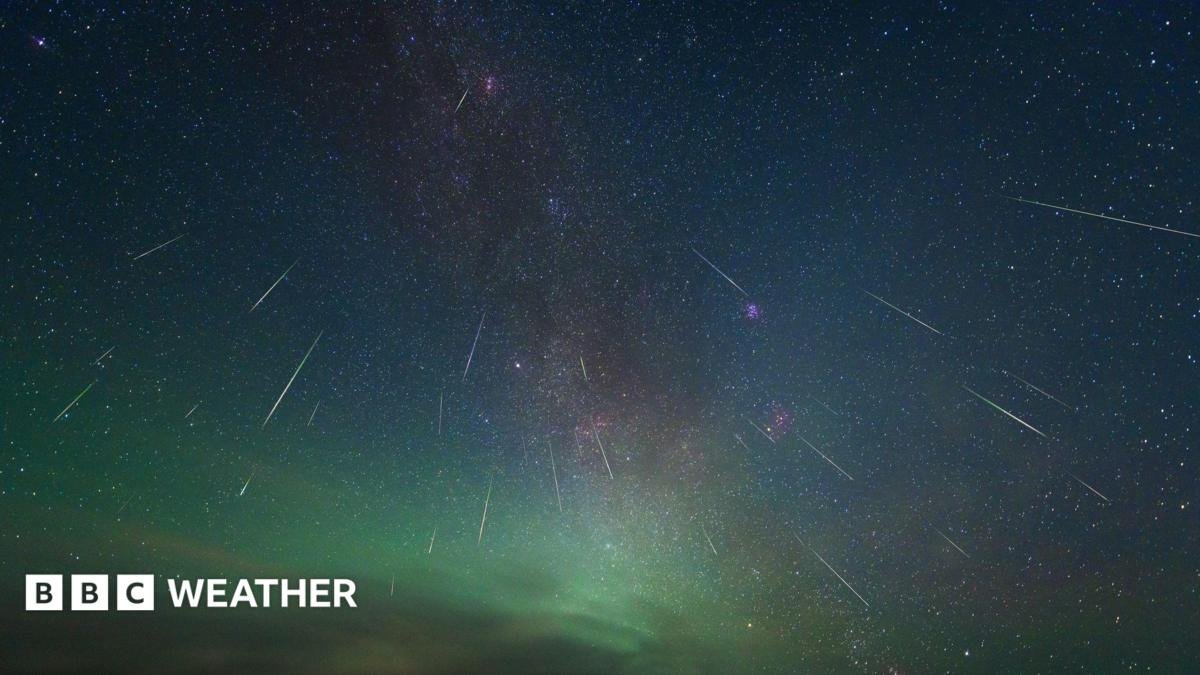
Meteor showers happen when dust from a passing comet or asteroid passes through the Earth’s atmosphere.
The tiny particles – roughly the size of a grain of sand – vaporise, creating visible streaks of light.
In the most dense parts of the dust stream, more meteors are visible.
The Perseids in particular are known for being a very active shower, where up to 150 meteors per hour are possible during its peak.
The shower is also famous for its bright “fireball” meteors.
To spot them, skygazers should look for the point in the sky where they appear to originate from, known as the radiant.
In this case, it is in the constellation of Perseus.
Source:
www.bbc.co.uk