










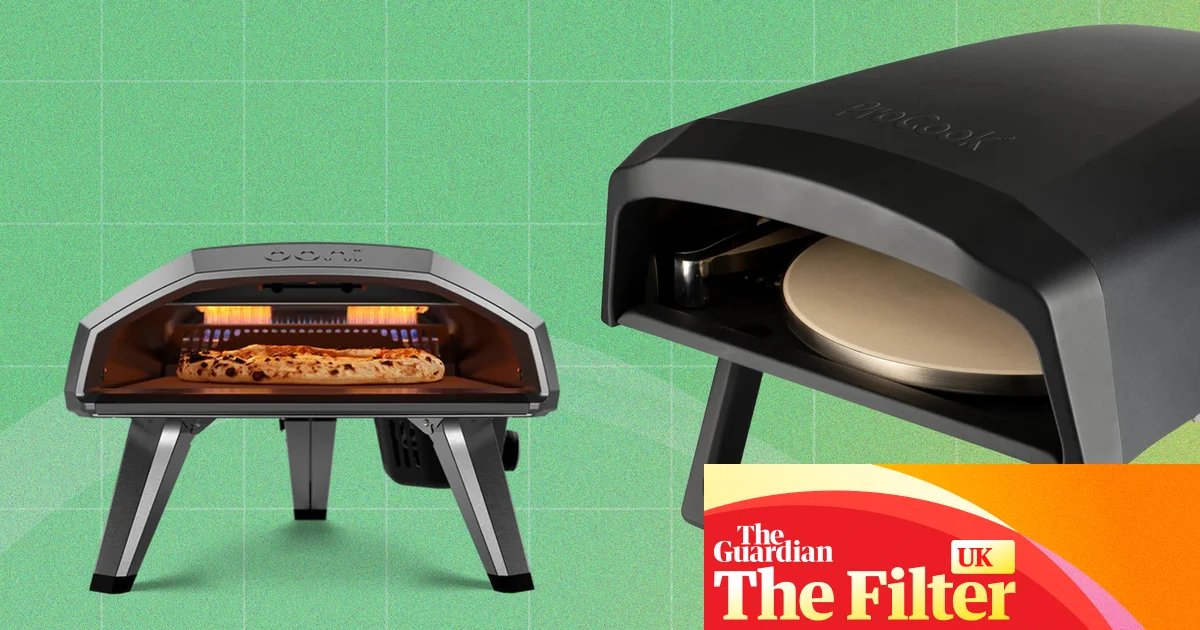
If you’re passionate about pizza – and, let’s be honest, there aren’t many who aren’t – then at the top of your foodie gadget wishlist has to be a pizza oven. You’ll struggle to find many that won’t salivate at the thought of a light pillowy base, smothered in a rich tomato sauce, and topped with melting, oozy cheese.
The Guardian’s journalism is independent. We will earn a commission if you buy something through an affiliate link. Learn more.
Seven years ago, I tested my first pizza oven, the Gozney Roccbox, and since then, these appliances have moved from niche product to a must-have for family get-togethers and entertaining.
Outdoor pizza ovens are now far easier to use, with manufacturers making them simpler to light, cook in, and clean up afterwards. There’s also a host of accessories to prevent you from ending up with overly charred results.
From electric models for those who prefer fuss-free pizza-making, to wood-fired ovens and kits for those in pursuit of an authentic smoky flavour, read on to discover the best pizza oven for you.
At a glance
Why you should trust me
I’ll be honest, I’m an indoorsy kinda gal – and most of what I test comes with a plug attached. However, I do like to get out once in a while. I never turn down the opportunity to head into my garden to test barbecues and outdoor ovens. I’ve spent the past decade or so sampling outdoor kit, building stands, lugging around gas bottles and making (fairly controlled) fires. I can promise you this – if indoorsy me can make amazing pizza using these ovens, then so can you.
How I tested
The funny thing about testing pizza ovens is that baking the pizza is the fastest part of the process. It’s everything that leads up to that point – unpacking and assembling the oven (and the stand, if included), connecting the fuel or starting a fire, and getting the oven up to the right heat – that takes time. There’s a lot of background effort for a short cook. And for some of the ovens on test, I found it wasn’t a single-person task. The Gozney Dome, for example, recommends four people to get the 62kg oven on to its stand. I roped in my partner, and we managed it between us, carefully.
Each oven took me half a day to test, plus clean up afterwards. That included assessing heat-up time, with an IR thermometer and using the oven’s integral thermometer where available, measuring consistency of temperature as it cooked, and baking three pizzas. These were cheese and tomato at about 430C; a veggie pizza topped with onion, pepper and tomato at 280-350C, for a slow cook to caramelise and soften the ingredients; and a salami-topped pizza at about 350-400C, where the aim was to sizzle the meat without singeing it. These temperatures were sometimes lower – such as for the electric ovens – but the principles remained the same. I used premade dough for consistency.
All of the seven pizza ovens tested put in a reasonable or excellent performance. I scored each for assembly, ease of lighting, overall use, consistency of heat, quality of pizza and storage, to help me rank them. Heat-up times were recorded, too, although since testing took place in March, times will be shorter when cooking in warmer months. For those who don’t have access to outdoor space, I also tested the Ooni Volt 2 indoor model.
All samples will be returned to their supplier or donated to charity, except for the Gozney Arc Lite, which I will continue to test to see how it fares after a summer of cooking.
The best pizza ovens in 2026
Best pizza oven overall:Gozney Arc Lite
Gozney
Arc Lite
from £349.99
What we loveCarry handles are great for moving it around
What we don’t loveAn integral thermometer would make it so much better

Described as a compact pizza oven – which it is compared with Gozney’s capacious Dome, but less so when stacked up against the others tested – the Arc Lite is a brilliant all-rounder. Small enough to store in a shed (it’s just 48cm deep and less than 30cm tall), it feels robust but isn’t too heavy to carry solo (12kg). What won it top spot, though, is that it comes with almost every feature you’d find in the brand’s bigger ovens – including the lateral flame that licks across the top from the side – but at a more affordable price. There’s no integral temperature display, however, so you’ll have to be handy with an IR thermometer.
Why we love itThe Arc Lite lit first time, and its colour-coded control dial (red for high, blue for low) proved simple to follow to adjust the heat. Once the stone read as 430C in most areas, I was able to cook a margherita in just 90 seconds, which emerged with a well-risen crust. Its edges were slightly burnt as I wasn’t quick enough to get it out – if you’re used to a larger mouth, the Arc Lite’s smaller opening can be a challenge at first. It took 10 minutes or so for the temperature to drop for the veggie pizza, which saw the topping cooked well, with the onions caramelised at the edges. The meat pizza was by far the best cooked, with good leopard spotting and perfectly sizzled slices.
It’s a shame that … the stone’s temperature isn’t always consistent when heating from cold. I’d suggest a longer heat-up than the 20 minutes stated in the quick-start guide.
Fuel source: gasMaximum pizza size: 12inTime to heat up to 430C: 30 minutesOutdoors or indoors? Outdoors

Gozney
Arc Lite
from £349.99
What we loveCarry handles are great for moving it around
What we don’t loveAn integral thermometer would make it so much better
Best budget pizza oven:ProCook outdoor pizza oven

ProCook
Outdoor pizza oven
£249
What we loveNo batteries required for the rotating stone
What we don’t loveA rear control means you can’t see the flame as you adjust

If your budget doesn’t stretch to the big-name brands, ProCook’s pizza oven is a good gas-powered option. Affordable, easily controllable and relatively simple to store as a result of its fold-up legs, it gets all the basics right. My favourite aspect is that there’s no need for a turning peel – a utensil that helps you turn the pizza in the oven, such as this one – as there’s a rotating stone that’s turned by hand. You’ll have to do so constantly for an even cook – but it’s a low-tech solution to prevent burning.
Why we love itThe ProCook pizza oven lit first time, and the dial made it easy to increase and lower the flame as required. Its rotating stone was handy – while some of my test pizzas burnt at the edges, that was because I was using rectangles of dough, not circles. Overall, pizzas cooked well, although with not quite as much rise as achieved in pricier ovens. This was most noticeable on the cheese and tomato pizza. In addition, some of the veggies on the veg pizza were still raw in the centre while the edges had started to char, suggesting topping-heaving pizzas might need cooking for longer, at lower temperatures. However, the meat pizza emerged best – well-melted cheese, sizzled slices of meat and only a tiny singe on one edge.
It’s a shame that … the flame size isn’t an accurate guide to the temperature inside, so you’ll need to budget for an IR thermometer for best results.
Fuel source: gasMaximum pizza size: 12inTime to heat up to 430C: 25 minutesOutdoors or indoors? Outdoors
ProCook
Outdoor pizza oven
£249
What we loveNo batteries required for the rotating stone
What we don’t loveA rear control means you can’t see the flame as you adjust
Best gas pizza oven:Ooni Koda 2

What we loveIt weighs about 16kg, so you could take it camping
What we don’t loveYou can’t fold the legs without detaching the stone’s motor

With the Ooni Koda 16 frequently billed as the “world’s bestselling” pizza oven, the next generation of the model has some pretty big shoes to fill. Fortunately, the Koda 2 brings plenty to the family pizza party, offering a capacity for 14in pizzas and foldable legs for storage and portability. Batteries to power the ignition are neatly concealed in one of the legs, and there’s a tapered flame at the back. For the review, I swapped its static stone for its rotating one – it’s a pricey optional accessory, but it was great for ensuring consistency. The only downside is that it reduces the oven’s capacity to 12in.
Why we love itFitting the rotating stone was fiddly, but worth it: rather than turning it on and off at a switch, there’s a hands-free sensor that requires just a wave – invaluable when you’re holding a pizza peel. The Koda 2 lit first time, and began to heat up quickly – although, like the Arc Lite above, the temperature across the stone remained inconsistent. Despite this, the cheese and tomato pizza featured a well-risen crust and was cooked beautifully on the underside. By far the best was the veggie pizza – probably helped by the rotating stone – with all vegetables soft and gently charred at the edges. The meat pizza was also good: plenty of even heat meant the dough rose well and the cheese browned evenly.
It’s a shame that … the shape of the mouth makes it awkward to get pizza in and out. I found it more of a challenge than the Gozney Arc Lite.
Fuel source: gasMaximum pizza size: 14inTime to heat up to 430C: 27 minutesOutdoors or indoors? Outdoors
What we loveIt weighs about 16kg, so you could take it camping
What we don’t loveYou can’t fold the legs without detaching the stone’s motor
Best electric pizza oven:Ninja Artisan electric outdoor pizza oven & air fryer MO201UK

Ninja
Artisan electric outdoor pizza oven & air fryer MO201UK
from £268
What we loveIt’s an easy route to better homemade pizza
What we don’t lovePizza can stick to the stone at lower temperatures

If you prefer your outdoor cooking to be a spur-of-the-moment thing, this Ninja pizza oven is for you. It’s plug-and-play in every sense: all you need is an outdoor socket or suitable extension, and you’re ready to bake pizza in minutes. No gas, no fires, and no need to have fuel in stock. It lets you know exactly when to put your pizza on the stone, it doesn’t need rotating – and if you’re not in the mood for a margherita, it works as a family-size air fryer, too.
Why we love itThe Ninja Artisan oven was hands down the fastest of all the pizza ovens tested. The programme runs for three minutes once your pizza is in – however, I’d suggest this is too long, as the first cheese and tomato pizza I put in came out burnt. Attempt two was better, with only one edge slightly singed and a well-risen crust after a two-minute cook.
My only quibble came when dropping the temperature to the 220C pan setting for the veggie pizza: the oven chirped that it was time to add food even though the stone would be far too hot for a 13-minute cook. Keeping an IR thermometer to hand to assess exactly how hot the stone is would be a good idea. With the temperature reduced, I cooked the veggie pizza – but, unfortunately, when it was time to take it out, I found it was stuck to the stone. The meat pizza cooked best, at the 245C New York setting (although my IR thermometer showed 300C) for a little over the default of eight minutes. It was reasonably risen and browned, with no burning.
It’s a shame that … the oven’s stiff door can be difficult to open with one hand, making it tricky to get the pizza in – and out, before it burns.
Fuel source: electricMaximum pizza size: 12inTime to heat up to 370C (the lower recommended temperature): 14 minutesOutdoors or indoors? Outdoors
Ninja
Artisan electric outdoor pizza oven & air fryer MO201UK
from £268
What we loveIt’s an easy route to better homemade pizza
What we don’t lovePizza can stick to the stone at lower temperatures
Best wood-fired pizza oven:Gozney Dome (Gen 2)

Gozney
Dome (Gen 2)
from £1,999.99
What we loveTemperature display means there’s no need for a thermometer
What we don’t loveBreezy days result in a face full of wood smoke

While the Dome (Gen 2) isn’t the company’s largest oven – that prize goes to the Dome XL – it’s still huge. If you love to entertain or want to cook more than one pizza at a time, this is the one for you. Even when you add the wood-fire control kit, as I did for this test, there’s still plenty of space on the stone. The kit is particularly clever: it consists of a grate for your wood, plus a rechargeable battery-powered fan that adjusts the flame. A high fan speed helps to get the fire going, while the lower speeds maintain it. It’s not as responsive as gas – I’d still have gas on hand for days when you don’t want to faff with fire – but overall this was a satisfying route to delicious smoky flavours.
Why we love itCooking with wood can be tricky, but the kit does make it as simple as possible. That said, the pitfalls remain, such as having to feed the fire small enough bits of timber to keep it going (the temperature can drop rapidly while you’re preparing pizza), and I found the fan often blew around ash if the speed was too high. I’d like to see tools included to help with adding fuel, too. The results were fabulous, though: the cheese and tomato pizza was well-risen across the entire base, and the veggie pizza’s topping was mostly soft with the onion caramelised. I was caught out by the meat pizza – a small flare-up from the fat caused one edge to scorch. Overall, though, it was beautifully cooked.
It’s a shame that … I would have liked more guidance included with the kit on getting a fire going. The only video I found online skipped that part.
Fuel source: gas, or wood with additional kit (£174.99)Maximum pizza size: 16in or 2 x 10inTime to heat up to 430C: 28 minutes for wood fireOutdoors or indoors? Outdoors
Gozney
Dome (Gen 2)
from £1,999.99
What we loveTemperature display means there’s no need for a thermometer
What we don’t loveBreezy days result in a face full of wood smoke
The best of the rest
Vonhaus outdoor pizza oven

Vonhaus
Outdoor pizza oven
from £114.99
What we lovePocket-friendly price will leave you with plenty of dough
What we don’t loveSkimpy instructions mean this isn’t one for beginners

Best for: a wood pellet-fired pizza oven
Cooking with this model was a labour of love. After an initial assembly of about 25 minutes, it took a few attempts to light and stay lit. To keep the flames moving forward, the mouth of the oven needs to be covered with the lid – take it off to check on the stone’s heat, and flames can start licking up the chimney or out the back.
In addition, you can’t control the heat – add too many pellets, and you’ll have to wait for them to burn off and the stone to cool to your desired temperature. Plus, each time you launch a pizza, you have to replace the lid, which makes it difficult to check cooking progress. Nevertheless, the results were better than those you’d get from your regular oven, although the dough didn’t rise as well as the other outdoor models. With practice, you may get better results, but it’s the price, rather than performance, that earned it a place in this roundup.
It didn’t make the final cut because … getting the lid on and off is a chore – plus it fell off a couple of times.
Fuel source: wood pellets; maximum pizza size: 12in; time to heat up to 430C: 30 minutes; outdoors or indoors? Outdoors
Vonhaus
Outdoor pizza oven
from £114.99
What we lovePocket-friendly price will leave you with plenty of dough
What we don’t loveSkimpy instructions mean this isn’t one for beginners
Ooni Volt 2 electric indoor pizza oven

Ooni
Volt 2 electric indoor pizza oven
from £499
What we loveA speedy heat-up and no need to venture outside
What we don’t loveHaving to remember to start the timer

Best for: an indoor pizza oven
For those who lack outdoor space or don’t want to wait for good weather, Ooni’s indoor pizza oven is excellent. It’s not just for cooking pizza, either, since it doubles up as a worktop oven and will even prove dough. However, it will take up significant space, so it’s better for larger kitchens. On test, it heated up rapidly, was easy to use (although named buttons would be preferable to numerous icons that all correspond to “pizza”), and displayed a live temperature reading of the stone, which helped when cooking several types of pizza. I liked that you could adjust levels of crispiness and watch cooking progress through a window. However, the rise of the pizza wasn’t as good as I’d hoped for – it was still a bit doughy, with only the fourth one I cooked achieving a bubbled crust, after the third one burned. Because of this, I’d suggest some practice may be required for consistent results.
It didn’t make the final cut because … of the amount of steam and odours emitted from the back. Despite cooking with a window open, my kitchen smelled like pizza for a couple of days after.
Fuel source: electric; maximum pizza size: 12in; time to heat up to 430C: 17 minutes; outdoors or indoors? indoors
Ooni
Volt 2 electric indoor pizza oven
from £499
What we loveA speedy heat-up and no need to venture outside
What we don’t loveHaving to remember to start the timer
What you need to know
Wood-fired vs gas pizza ovens
The fuel source of a pizza oven can impact how often you’ll use it, where you can use it, and how easy it is to get up to cooking temperature.
Gas-powered pizza ovens tend to be the most practical. They use bottled gas to provide an easily controlled flame that creates quick, consistent heat. Battery-powered ignition means there’s no need to light with a match, and most burn at a high temperature once cooking is finished to pyrolytically “clean” the debris off the stone.
However, safety is a concern. Gas connections and pipes must be checked regularly for signs of wear (and replaced), as leaks can cause fires or explosions. The intense, constant heat produced by a gas pizza oven can also be a fire risk to nearby materials, so be sure to have good clearance around it. In addition, gas can be expensive and sometimes tricky to obtain if you don’t have a local supplier.
Wood-fired pizza ovens infuse food with a naturally smoky flavour that clean-burning gas can’t achieve. Plus, you can add different flavours with different woods. The cooking process here is more hands-on and can take practise to master – but for many, this is all part of an authentic experience. Another plus is that wood is widely available and usually inexpensive – make sure to buy from a sustainable, well-managed source.
Note that wood-fired pizza ovens can take longer to reach cooking temperature, and maintain it – as the flame is managed by adding wood and adjusting airflow. Unsurprisingly, wood fires can be smoky, so a pizza oven can only be used in a well-ventilated area, far from your neighbours. Wood fires are messier, too, as you’ll need to dispose of the ash once cooled and deep-clean the oven occasionally.
What key features should I look out for?
Any feature that makes your pizza oven easier to cook with and maintain means you’ll use it more frequently, so look for those that you’ll find genuinely handy.
For gas pizza ovens, automatic ignition usually ensures they’ll light first time, taking away the annoying wait (while accumulated gas dissipates) before trying again. For wood-fired, a way to control airflow easily is invaluable for getting the flame going.
Once you’re up and running, integral thermometers mean there’s no need to keep an IR thermometer to hand to keep checking the temperature, while rotating stones help pizzas cook evenly. Finally, look for an oven that has a wide and tall enough mouth for you to easily launch and retrieve your pizza. Smaller ovens can be a dream to store, but if you struggle to cook with them, they’ll only gather dust in the shed.
How to clean your pizza oven
Most pizza ovens will be hot enough to burn away remaining food debris, either as they cook or once cooking is complete, leaving behind ash. Follow your manufacturer’s guidance for this type of pyrolytic cleaning.
Once completely cooled, sweep away the ash with a dustpan and brush, or a dedicated pizza oven brush, then use a cloth or paper towels to wipe the interior. Scrape any remaining residue off the stone with a plastic spatula – don’t be tempted to use water or cleaners as the porous pizza stone will absorb them. When you replace the stone, flip it over, so any remaining residue can burn away on your next cook.
If you have a wood-fired oven, you’ll need to clean the hopper or grate, plus the flue or chimney. Pop on a pair of gloves as it can be a dirty job. Open the chimney at the top, then sweep any particles down into the oven and out. You should be able to remove the hopper – sweep to remove ash and wipe away soot with paper towels. External parts that are dirty can be washed with soapy water, then dried thoroughly.
For more, read the best frying pans for every kind of cook and top chefs on everything you need to make the perfect roast
Rachel Ogden has worked as a consumer journalist for decades, becoming an expert unboxer before it was a thing, although she is less successful at assembling and repacking. Her home has hosted hundreds of appliances while her garden has seen a succession of pizza ovens, barbecues and heaters put through their paces. It takes a lot to impress her – many appliances have tried and failed
Source:
www.theguardian.com


