







The Resurrection shows us that new life is possible even after loss, and that hope can take root again in unexpected ways. It invites us to notice how God continues to renew our lives and the world around us, often quietly.
This month, the panelists reflect on their experiences of renewal in light of the Resurrection, guided by the question:
Can you describe a moment of spiritual, personal or communal renewal that reminded you of God’s presence in your life? How do you see creation reflecting that same hope?
Sr. Abhita D’Silva belongs to the congregation of Franciscan Missionaries of Christ the King from India. She trained professionally as a teacher and has worked as a school principal. She also specialized in counseling for people living with HIV/AIDS. D’Silva currently serves as secretary to the superior general and will complete her term in 2028. Her hobbies include reading, cooking, dancing, singing and caring for the sick with abundant mercy.
While reflecting on Easter and new life, I am reminded of an incident related by American filmmaker Cecil B. DeMille.
One summer afternoon, DeMille went out in a canoe and was quietly drifting and thinking about a problem. Looking down at the bottom, he noticed crowded water beetles. One of the beetles rose to the surface, clung to the wood and died. DeMille had a flash of his own problem. He noticed the beetle’s shell had dried in the heat of the sun. Later, he watched as the shell split open and a vibrant, metallic dragonfly with stunning, complex wings emerged.
This incident suggests to me that life and death are two sides of one coin. Every death of my dreams and desires leads me to a spiritual transformation. The water beetle’s transformation is a metaphor for spiritual rebirth and for God’s divine providence, promptly available for every being.
While I was going through a series of unfortunate incidents in my life, I felt deeply depressed. My low energy and unhappiness seemed to lead me toward a slow death, and at times I contemplated suicide.
In the midst of this, I received a call from a social worker in Chicago. I had been introduced to him by a kindhearted religious sister. He spoke with me about exploring options for my medication.
He generously offered me a place to stay in his home and assured me that I could remain for as many days or months as I needed in the United States. I spent several months with his family, meditating, praying and reading the Bible and other books, and I began to find new life and renewed energy. I gradually became like a member of their family and, over time, recovered and began to live a more meaningful and peaceful life.
One of the most enjoyable experiences during that time took place during the feast of the Nativity of the Blessed Virgin Mary. I had the opportunity to sing in Konkani, which is not my language. With the help of a musician, I practiced and prepared to sing two hymns dedicated to Mother Mary.
After the celebration, people congratulated me, and some recorded the hymns. My joy in that moment knew no bounds.
I also had a desire to experience playing in the snow. As it was almost time to return to India, I began to lose hope. However, on the day before I was to leave Chicago in mid-November, the weather suddenly turned cold and it began to snow.
Despite the cold, I went outside. I recorded the snowfall on my phone, sat in the snow and danced, enjoying it fully. It was an unforgettable experience.
When there was deep darkness and suffering within and around me, God’s providence brought light, joy and hope into my life.
Sr. Christine Kresho is a member of the Sisters of St. Joseph of Baden, Pennsylvania, a congregation dedicated to loving and serving the dear neighbor rooted in prayer, community living and the Gospel. As a team member of the St. Joseph Spirituality Center, she hosts a weekly Zoom session titled “Spirit Companions.” She is a retreat presenter and an author. In addition to five novels, her nonfiction books include Second Childhood: Aging into Divine Relationship; God is Better than Santa Claus: A Book for Adults; Praying to Our Everywhere God; and A Way of the Cross: In Communion with Creation.
Easter brings signs of hope, new beginnings and renewal. As spring arrives in the Northern Hemisphere, its bright pinks, yellows and purples replace the barrenness of winter. This change reminds me that personal renewal can happen even without my effort, recalling two surprising moments when God made a powerful difference in my life, even though I was reluctant or uninterested in cooperating with grace.
Several years ago, during my annual retreat, I arrived with a firm sense of justification about my dissatisfaction with another sister whose performance in her assigned ministry had posed significant challenges for me throughout the year. At the time, I did not feel compelled to reflect on or seek forgiveness for my perspective, so arrogant was I in my righteousness.
However, over the course of the retreat, my feelings of resentment were unexpectedly replaced by a sincere willingness to reconcile with that sister. This notable change convinced me of the power of God’s mercy on me and proved God’s loving desire for my personal growth.
The second incident occurred while my best friend, who was in a different congregation, was terminally ill with breast cancer. She, her other friend in her own congregation, and I had worked together for years before her diagnosis. After I moved into a different ministry in a different state, she returned to the hospital, and though I hoped and prayed for healing, it became clear she would not recover.
One Sunday, as I left Mass, I unexpectedly heard my own voice uttering aloud, “I don’t want to, but I’ll let her go.” Shortly after, her other friend called me to say that our mutual friend had told her she was ready to go but someone was holding her here. I realized once again that God’s merciful power had enabled me to let go of my selfish desire to remain attached to the good gift of friendship on my terms. Our friend died the next day.
My earthly journey continues to open my eyes to my brokenness; however, I also am growing into a new relationship with God that alters my image of my Creator. I do not believe my brokenness subjects me to God’s judgment, but cries out for God’s compassion. My sinfulness leads me to hope, reminding me that God is constantly loving me into new life as Jeremiah confirms in 29:11: “For I know the plans I have for you,” declares the Lord, “plans to prosper you and not to harm you, plans to give you hope and a future.”
Let us rejoice in the message of Easter: We and all of creation are always being resurrected because God is in love with us.
Sr. Deirdre Mc Kenna is a member of the Congregation of the Sisters of Mercy, an international congregation, and is based in the North of Ireland. She qualified as a fully licensed social worker in 1990 and has specialized in the area of palliative and end of life care for the past 17 years. She is author of the recently published When There Are Few Words: Exploring some of the questions that might arise for you, or someone close to you, at end of life. Alongside her formal ministry, she is currently working on her second book.
I have often sat in the chapel of a small, assisted living community of our sisters during the wake of one of their members. A wake for us as Irish people provides a special opportunity to remember, and to honour the memory, of the person who has died. Sisters, family members and local parishioners attend over the few days, to pay their respects, offer their condolences and to share stories of the woman they knew. As often humorous as solemn, and always with great reverence, these stories help those of us who mourn, to be comforted and to celebrate the life of one of us who lived in faithfulness and service.
God’s presence with us that evening felt like an accompaniment in our sorrow, reassuring, gentle and oh so tender.
Tweet this
During one particular evening, following the death of one of our sisters, I was praying evening prayer with the little, grieving community, at the close of one of the days during the wake. I noticed how these aged voices wove together, in our praying of the psalms, not denying grief, but carrying it. Each one no doubt conscious of her own mortality and, with the passing of so many years, aware of the nearness of her own life’s horizon.
In the rhythm of these voices, I knew God’s presence with us. Together, our communal breathing in and breathing out of the ancient words of psalmists, allowed us to call to mind how our own beloved sister had breathed her last breath back to God. God’s presence with us that evening felt like an accompaniment in our sorrow, reassuring, gentle and oh so tender.
Life had not been restored to what it was, but its mystery had been deepened somehow. We mourned, of course, but also held the hope of the new life promised in the fullness of God’s presence. The normal blend of sadness and tempered joy is born of our faith-filled trust that life is changed, not ended. That, I realized, is resurrection’s quiet work.
Creation, too, breathes this language beautifully. Each spring, I am reminded that resurrection is not hurried. Buds swell in their own time. Fields rest before they green. The earth does not argue with the dark; it waits. And then, astonishingly, life returns: persistent, quiet and abundant.
In these rhythms, I recognise God’s promise written into soil and sky: that nothing offered in love is wasted, that endings are not final, and that hope, like grace, finds its way of rising, even from ground that once seemed barren.
Sr. Erin Zubal, an Ursuline Sister of Cleveland, is chief of staff at Network Lobby for Catholic Social Justice. In this role, she leads internal coordination and integration of teams and operations to advance Network’s mission. Zubal is the first person to serve in this position and brings a depth of knowledge and experience in education, social work and public policy to the role. She served for 15 years as a social worker and educator in Catholic elementary and high schools in the Cleveland Diocese. She holds a master’s in social work administration from Case Western Reserve University and a master’s in educational administration from Ursuline College.
When I was a young high school assistant principal, I got a call from Sister Anne. She was principal of a local Catholic elementary school in the diocese, a longtime educator and a trusted mentor. And she had a request for me that ultimately changed my life.
Two girls* from a Congolese family — twins — were graduating eighth grade. “Erin, we taught them English and they are doing well, they are ready for high school and you’re going to take them the rest of the way,” she said. “I’m entrusting them to you.” And in case there was any question, you don’t say no to Anne. I was all in, from the moment she called.
Resurrection is not an individual event. It is communal. God liberates us all, and we all have the chance to respond to the invitation to be part of this liberating work.
Tweet this
The family, refugees from the Democratic Republic of Congo, lived around the corner from the convent. As I began to accompany these girls, I soon learned that they were two of 11 in their family. And so my life began to involve the family in many ways — helping with schoolwork, doctor’s appointments, teaching them budgeting skills and paying bills, bringing them home from basketball practice. I became part of the family.
Today, those once eighth graders are college graduates, and the second generation, their nieces and nephews, are thriving in our Catholic elementary schools.
It’s been nine years since Sister Anne called me, and today I accompany four families. I do not journey alone. Many of my sisters, friends and family have also journeyed with these holy people. I appreciate how hope, faith and renewal keeps giving in ways both personal and communal.
These families, holy families, are a daily reminder of God in our community, as well as the goodness, newness and abundance that accompanies that. New life springing up and spreading all around us is a universal sign of spring, but for Christians it also mirrors the resurrection.
“God spared us,” they frequently say in reference to the horrors and oppression their families faced before journeying to the United States. Resurrection is not an individual event. It is communal. God liberates us all, and we all have the chance to respond to the invitation to be part of this liberating work — in our communities, in our countries and around the world.
As our world currently weathers a sickening barrage of racist, xenophobic sentiment, my families and I find in one another a refuge and a space for joy. “God is with us,” the angel proclaimed to Mary. That is true. God is with us. God spared us — and so much more.
*Names withheld to protect privacy.
Sr. Suzanne Patterson has been a member of the Sisters of the Holy Cross, Notre Dame, Indiana, for more than 60 years, spending eight of those years in community leadership. Growing up an Army brat, Patterson met people in a variety of cultures, providing her with experiences that enriched her religious life. Throughout her ministry, she has served as an educator and school administrator; has worked in pastoral ministry with women in Chimbote, Peru; and currently is accompanying individuals who are experiencing homelessness and living with mental health issues. Her current passion is supporting members of the LGBTQIA+ community.
Resurrection moments in my life most often occur as I read books that surprise me. A book that led me down a road I had not yet traveled was Valarie Kaur’s See No Stranger. Her most enthralling, yet challenging, statement, “You are a part of me that I have yet to know,” has drawn me into a life-altering experience.
I felt breathless with excitement at her words and felt optimistic about discovering a new way of dealing with old problems and relationships. We often hear that we should see Christ in others, but the call to see another as a part of me has brought a new vision, new attitude and new presence to life. We can choose to see no stranger; however, living by this awareness requires a daily effort and lots of prayer!
Kaur’s call to see no stranger and to see in others a part of ourselves is like the Ubuntu view of life, “I am because you are.”
Jesus’ resurrection makes real our interconnectedness. He is the vine and we are the branches. We are because he is. Nature gives us a marvelous example in the Pando tree of Utah, which connects thousands of trunks through its one root system. Like the Pando, all of creation, including ourselves, shares life through the resurrected Christ.
Easter always means spring flowers to me — signs of new life and hope as daffodils, crocuses and tulips push through the earth. Living in an international community, I have noticed the deep connection our Asian sisters feel with flowers.
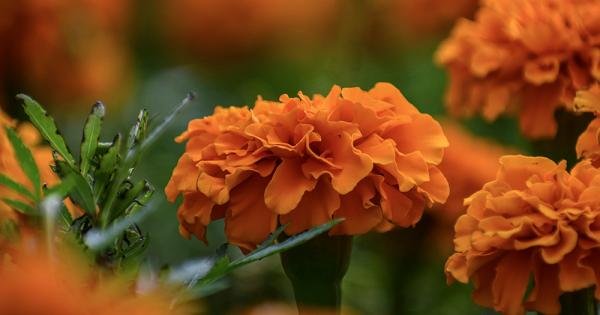
Sr. Sagorika Tripura shared that the most popular flower in Bangladesh is the marigold — called ganda in Bangla. A common garden plant with stunning shades of yellow, orange or red, marigolds have become a popular flower for Catholics because they symbolize surrender to the divine God. During big celebrations, like Easter, people fill the church with live blossoms, especially marigolds, as they represent purity, spirituality and divine energy.
Sr. Sefibanisha Wanniang told me that in India flowers are more than just part of the scenery; they are woven into the fabric of daily life and celebrate the profound bond between nature and the heart. She tells her mother’s love story:
My mom’s love for flowers is truly a beautiful inspiration. She cradles blooms like they are the most precious thing in the world. Her garden is not just a collection of plants; it is a vibrant tapestry of my parents’ love story. Each blossom holds a memory of shared laughter and whispered dreams.
It was in this enchanted space that my dad’s admiration grew daily. He was captivated by the way she tended to each petal with such tenderness. In the garden, they found solace together, a budding romance interwoven with the resilience of nature.
My mom believes that love is like a flower, something you tend patiently, allowing it to grow and thrive. Every day she greets the blooms with gratitude, thanking God for the promise of hope that comes with each new blossom.
Amen. Alleluia!
Source:
www.ncronline.org