




In a lengthy phone call on Wednesday, President Trump and President Vladimir V. Putin of Russia agreed that there should be a brief cease-fire in Ukraine in the coming days, according to both Mr. Trump and a top adviser to Mr. Putin.
The cease-fire would coincide with the May 9 Russian holiday marking the end of World War II, said Yuri Ushakov, Mr. Putin’s chief foreign policy adviser, but he did not give precise timing.
Mr. Trump told reporters at the White House: “I suggested a little bit of a cease-fire and I think he might do that. There’s so many people being killed, it’s so ridiculous.”
Mr. Ushakov did not say explicitly who had suggested a truce, but said that Mr. Putin “informed his American counterpart of his readiness to declare a cease-fire for the duration of the Victory Day celebrations.” Mr. Trump “actively” supported the idea, Mr. Ushakov said.
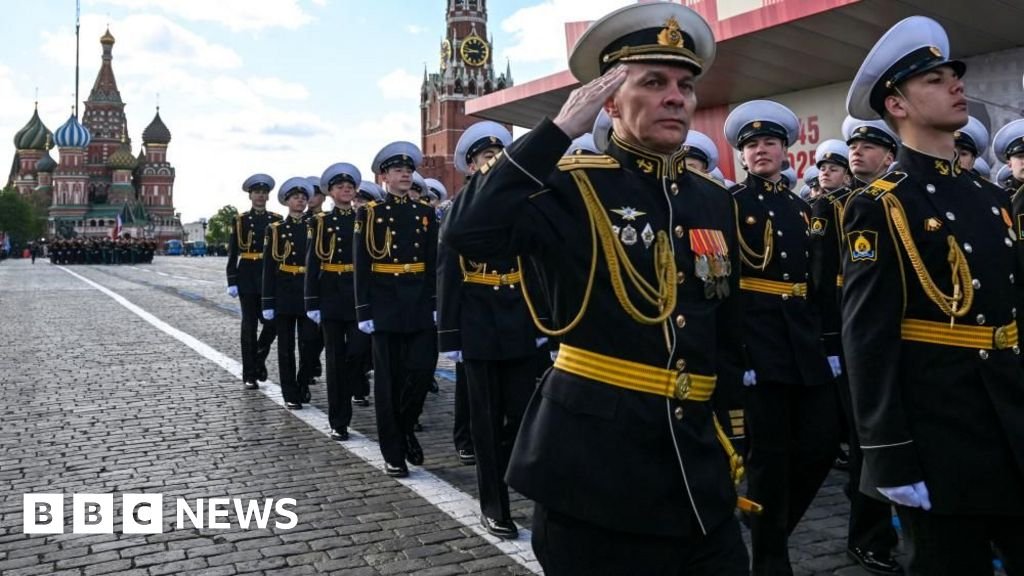
This year, Russia has significantly pared down its plans to celebrate Victory Day, which is among the most sacrosanct of state holidays under Mr. Putin, and usually sees parades in all major cities and many towns. In a departure from decades-long tradition, there will be no heavy military equipment rolling through Red Square, an acknowledgment of Ukraine’s long-range strike capacity.
A spokesman for President Volodymyr Zelensky of Ukraine said that Kyiv first needed to clarify what Mr. Trump and Mr. Putin had discussed before it could weigh in on a potential cease-fire. Moscow and Kyiv brokered a cease-fire earlier this month, timed to coincide with Orthodox Easter, but each side accused the other of multiple violations.
The conversation between the two leaders came a day after King Charles III, addressing Congress, said that “unyielding resolve is needed for the defense of Ukraine and her most courageous people in order to secure a truly just and lasting peace.” It was not clear what private exchanges the king and Mr. Trump had on the matter.
Most U.S. allies in Europe have remained committed to backing Ukraine, but Mr. Trump, who has at times blamed Ukraine for a war that began with Russia’s invasion in 2022 and spoken warmly of Mr. Putin, has sharply curtailed aid to Kyiv.
Mr. Ushakov said that both presidents expressed “in essence” similar opinions about Kyiv, which he said was being “incited and supported by Europeans” into “pursuing a strategy aimed at prolonging the conflict.” The White House has not yet issued a readout of the call.
Mr. Ushakov also said Mr. Trump “believes that a deal to bring an end to the conflict in Ukraine is now close at hand.” Before taking office in January 2025, Mr. Trump said repeatedly that he could bring the war to a quick end, a claim he has not repeated publicly of late, saying instead that he has been surprised at how intractable it is. On Wednesday, Mr. Trump once again appeared somewhat optimistic, saying, “I think we’re going to come up with a solution relatively quickly, I hope.”
According to Mr. Ushakov, Mr. Putin said his objectives in Ukraine would be achieved no matter what, though he “would have preferred for this to be the result of a negotiated settlement.”
Mr. Ushakov said much of the call, which lasted one and a half hours, was focused on the war in the Middle East. Mr. Putin said he supported Mr. Trump’s decision to extend the cease-fire with Iran and “drew attention to the inevitable and extremely detrimental consequences — not only for Iran and its neighbors but also for the entire international community” if the United States and Israel resumed military action.
He said the Russian leader offered a “number of considerations aimed at resolving disagreements regarding the Iranian nuclear program.”
The call was the 12th between the two leaders since Mr. Trump returned to office for a second term.
Reporting was contributed by Zolan Kanno-Youngs and Ed Wong from Washington, Constant Méheut from Kyiv, Ukraine, and Michael D. Shear from New York.
Source:
www.nytimes.com