







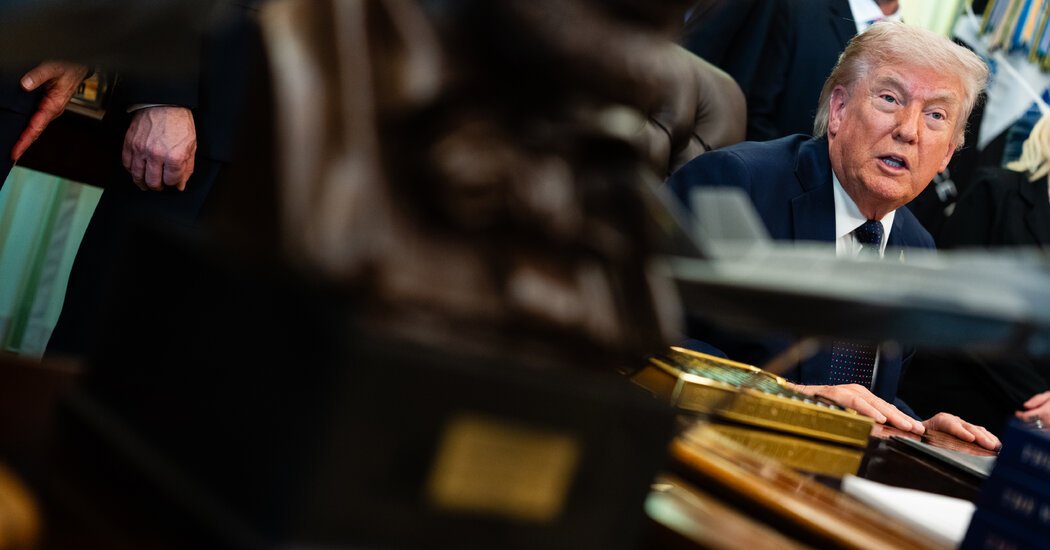
President Trump on Saturday called off a trip by two of his top negotiators to Islamabad, Pakistan, just before they were set to leave for talks about a potential deal to end the war in Iran.
“I’ve told my people a little while ago, they were getting ready to leave, and I said, ‘Nope, you’re not making an 18-hour flight to go there. We have all the cards,’” Mr. Trump said in a statement. “They can call us anytime they want, but you’re not going to be making any more 18-hour flights to sit around talking about nothing.”
Steve Witkoff, the special envoy, and Jared Kushner, the president’s son-in-law, had been scheduled to travel to Pakistan on Saturday, along with top aides to Vice President JD Vance. Officials in Pakistan have been mediating between the United States and Iran to try to end more than a month of war in the Middle East.
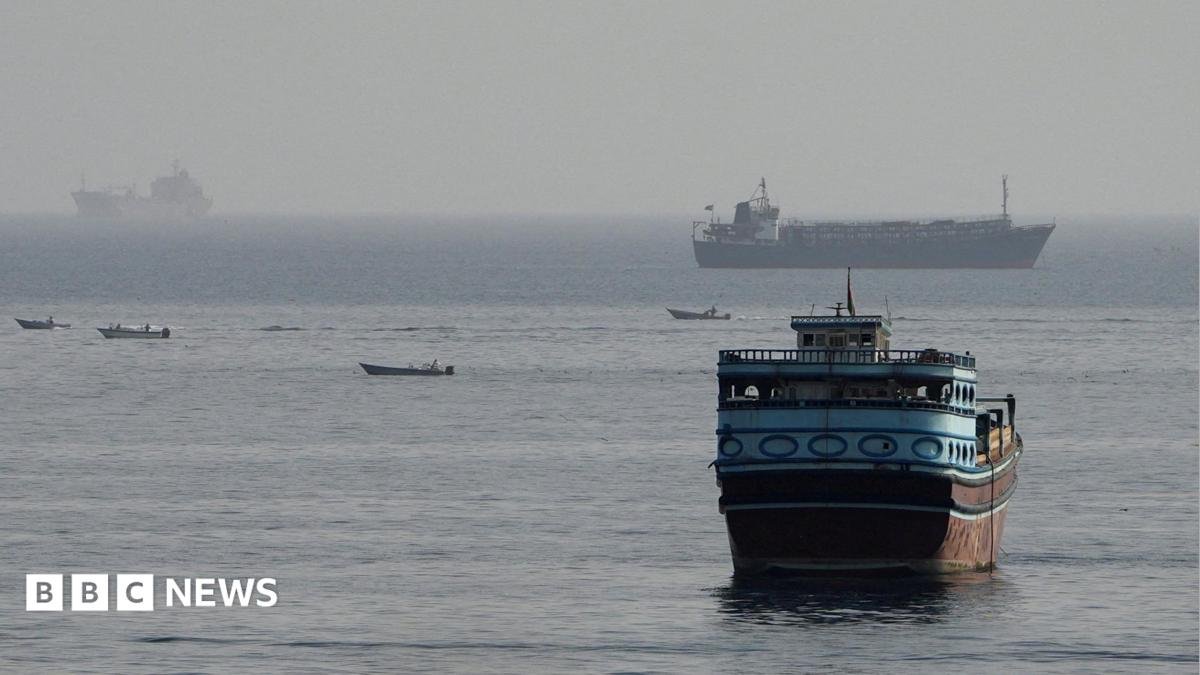
The cancellation of the trip is the latest sign that Iran and the United States are far from reaching a deal to end the war. A previous trip to Islamabad by Mr. Vance proved unsuccessful, and the Americans appear no closer to achieving the administration’s political goals, including convincing Iran to turn over its nuclear stockpile and curtail its future program. The two sides are also locked in a stalemate over control of the Strait of Hormuz, through which a fifth of the world’s oil supply flows.
Mr. Trump’s decision came after Iranian officials who had been in Islamabad for talks with Pakistani officials trying to broker a peace agreement left the country.
Abbas Araghchi, the Iranian foreign minister, and Iranian negotiators held a round of talks with Pakistani leaders but left without reaching an apparent breakthrough. On Friday, Iran’s foreign ministry had said no meeting had been planned in Pakistan between Iran and the United States.
Mr. Trump this week unilaterally extended a cease-fire between the United States and Iran that had been set to expire, saying he wanted to give Tehran a chance to come up with a new proposal to end the war.
The United States recently transmitted a written proposal to the Iranians intended to establish points of agreement that could frame more detailed negotiations. The document covers a broad range of issues, but the core sticking points are the same ones that have bedeviled Western negotiators for more than a decade: the scope of Iran’s uranium enrichment program and the fate of its stockpile of enriched uranium.
The American military has displayed its overwhelming might during the war, successfully striking thousands of targets. But Iran’s theocratic regime, even after its top leaders were killed, has remained in power and has asserted tight control over the Strait of Hormuz, limiting shipping, driving up the price of oil and shaking the world economy.
Source:
www.nytimes.com