






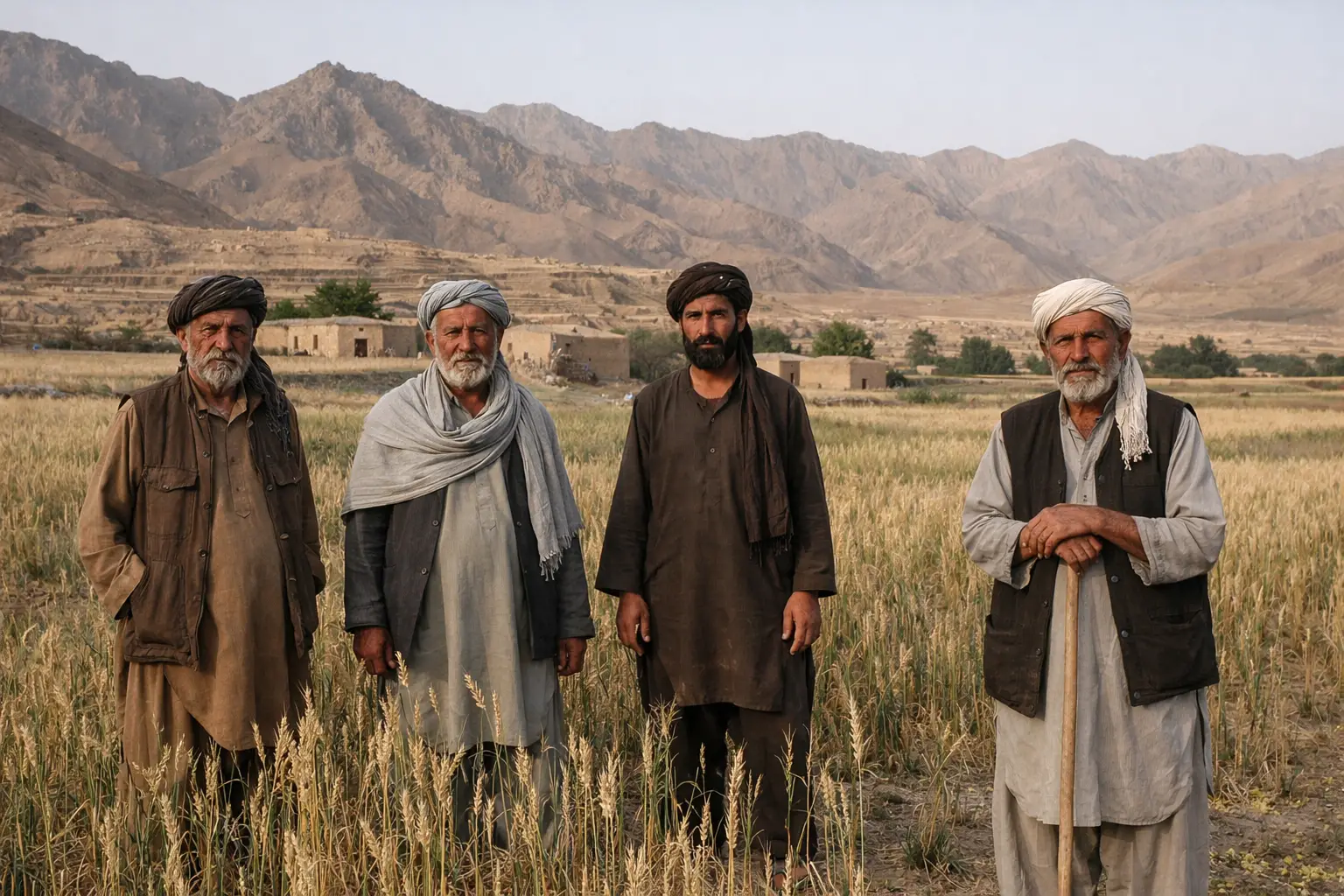
In northern Afghanistan, the effects of the Taliban’s ban on poppy cultivation are being measured not only in drug policy terms, but in household survival. In the village of Baba Yusuf, 28-year-old Mohammad Dawood still lives among reminders of a more secure past: carpets hanging on the walls and ornate mirrors that date from years when a single poppy harvest could support his family for months. Today, he works cotton and wheat fields that he says barely provide enough to live on.
The shift has exposed the fragile economics of rural Afghanistan, where poppy was long embedded in village life because it generated far higher returns than many legal crops. The Taliban authorities have presented the ban as a defining measure against the opium economy, a sector monitored for years by the United Nations Office on Drugs and Crime. But for farmers who depended on poppy income, the transition to crops such as cotton and wheat has created a steep loss of purchasing power at a time when many families already face limited access to work, credit and markets.
Dawood’s account illustrates the gap between enforcement and replacement livelihoods. Cotton and wheat are legal and less politically sensitive, but they do not carry the same value for small farmers trying to cover food, fuel, debt and household expenses. In communities where landholdings are modest and cash reserves are thin, the disappearance of poppy income can quickly affect children’s diets, school costs and medical care. The policy’s burden falls most heavily on families with few assets beyond their fields and seasonal labour.
The ban also carries wider implications for agriculture and rural stability. Afghanistan’s farming economy has been shaped by years of conflict, drought risk and restricted formal employment. Replacing an illicit crop is not simply a matter of planting something else; it requires buyers, transport, irrigation, price stability and access to finance. Without those conditions, households may comply with the ban while sinking deeper into hardship, weakening trust between rural communities and the authorities enforcing the policy.
For international drug-control policy, Afghanistan remains a pivotal case. A reduction in poppy cultivation can affect the global opium supply chain, but the social cost inside producing regions is immediate and visible. In Baba Yusuf, the issue is not abstract. Dawood’s fields now produce legal crops, yet his central concern is whether they can feed his children. That question has become the clearest test of whether the Taliban’s campaign against poppy can endure without a credible economic alternative for the farmers asked to abandon it.