






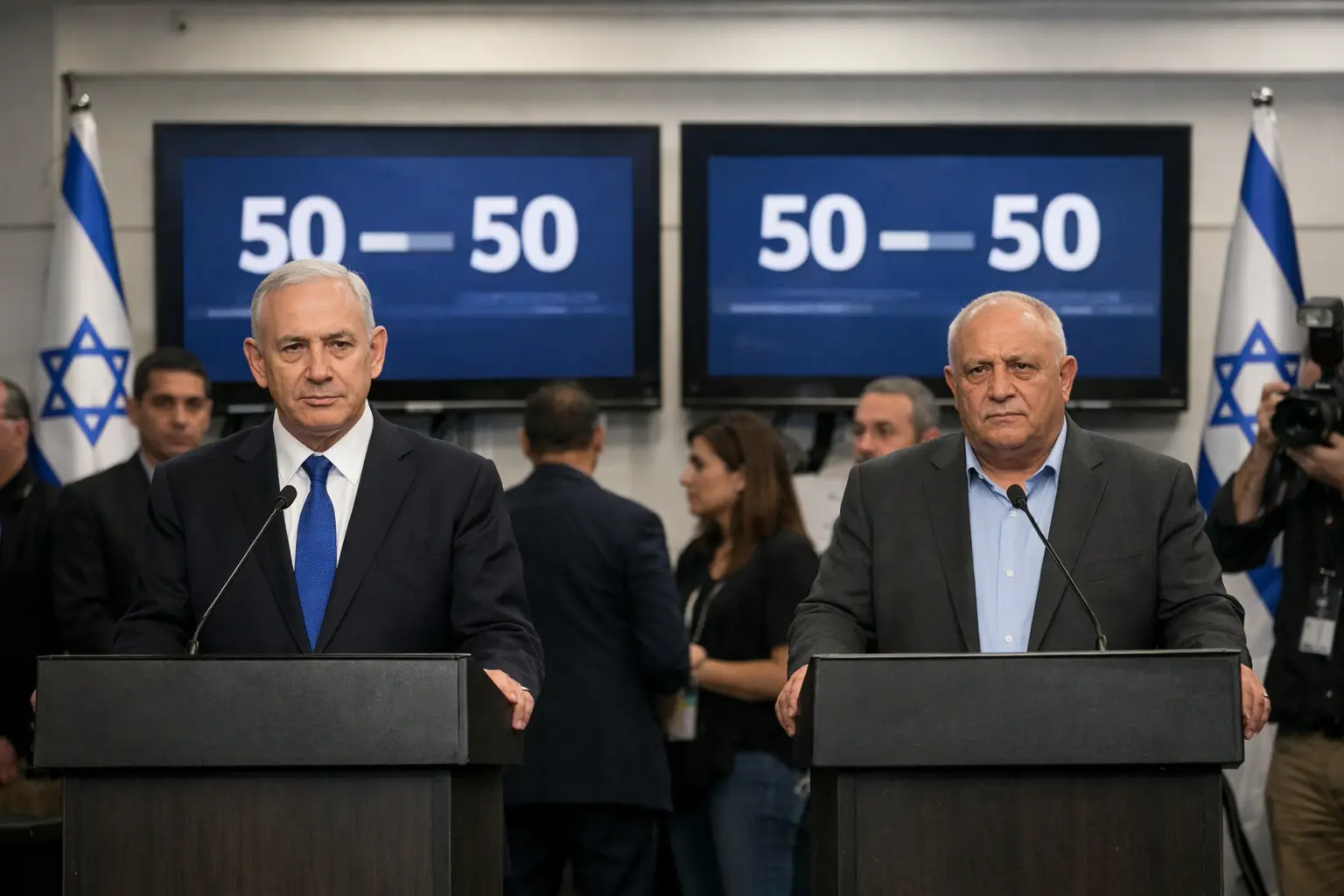
Israel’s unresolved election has opened a new contest over political legitimacy, with Benjamin Netanyahu and Gadi Eisenkot each presenting himself as the figure best placed to guide the country after exit polls showed no clear winner. Netanyahu called for the formation of a right-wing government, while Eisenkot argued that voters had turned away from the long-serving prime minister. The competing messages came before final results, leaving the immediate direction of Israel dependent on coalition arithmetic rather than a decisive ballot-box verdict.
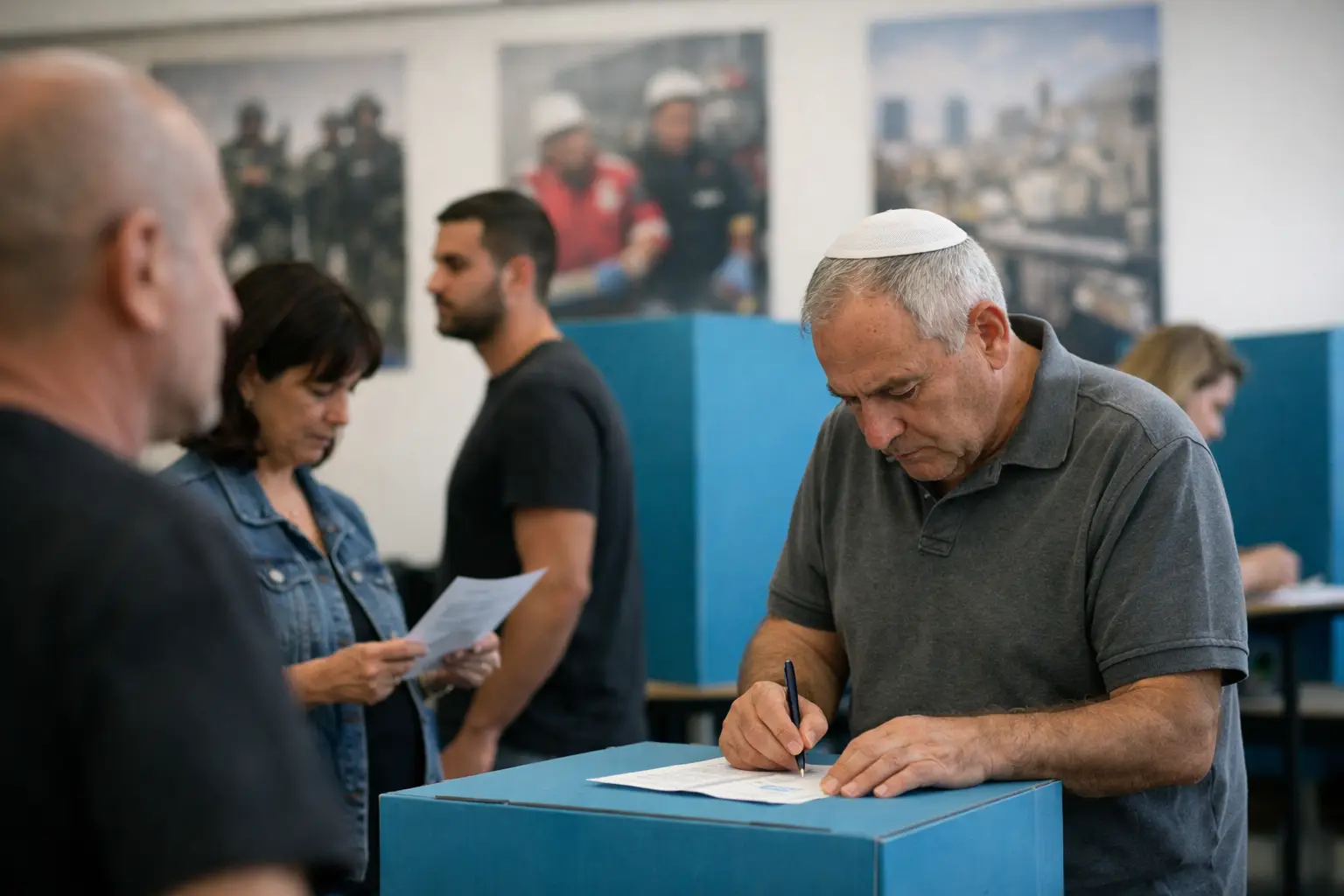
The vote held on Tuesday produced, at least in the initial projections, a familiar problem in Israeli politics: rival blocs close enough to deny either camp an easy path to power. In Israel’s parliamentary system, governments are built through agreements among parties represented in the Knesset, making the distribution of seats as important as which party finishes first. Exit polls can shape political momentum, but they do not replace official counts, negotiations or the formal process that follows an election.
Netanyahu’s appeal for a right-wing coalition was aimed at framing the result as an opportunity to consolidate support around his camp. As prime minister, he remains the central figure of the Israeli right and one of the country’s most enduring political actors. His position also brings the weight of incumbency through the Prime Minister’s Office, even as the vote count and subsequent consultations determine whether he can assemble a governing majority.
Eisenkot’s response sought to shift the interpretation of the same election away from bloc numbers and toward public appetite for change. By saying voters had rejected Netanyahu, he challenged the prime minister’s claim to a mandate despite the absence of a clear edge in the exit polls. That argument reflects the political significance of perception in coalition talks: parties often use the hours after voting to define the meaning of an ambiguous result before official outcomes narrow their room for maneuver.
The stalemate underscores the fragility of Israel’s electoral landscape, where fragmented party competition can prolong uncertainty after polling day. Until the final seat allocation is confirmed and coalition discussions advance, both camps are likely to keep pressing their rival narratives. The immediate consequence is a period in which claims of victory carry political value, but the ability to govern will depend on whether Netanyahu, Eisenkot or their allies can translate those claims into a parliamentary majority.