







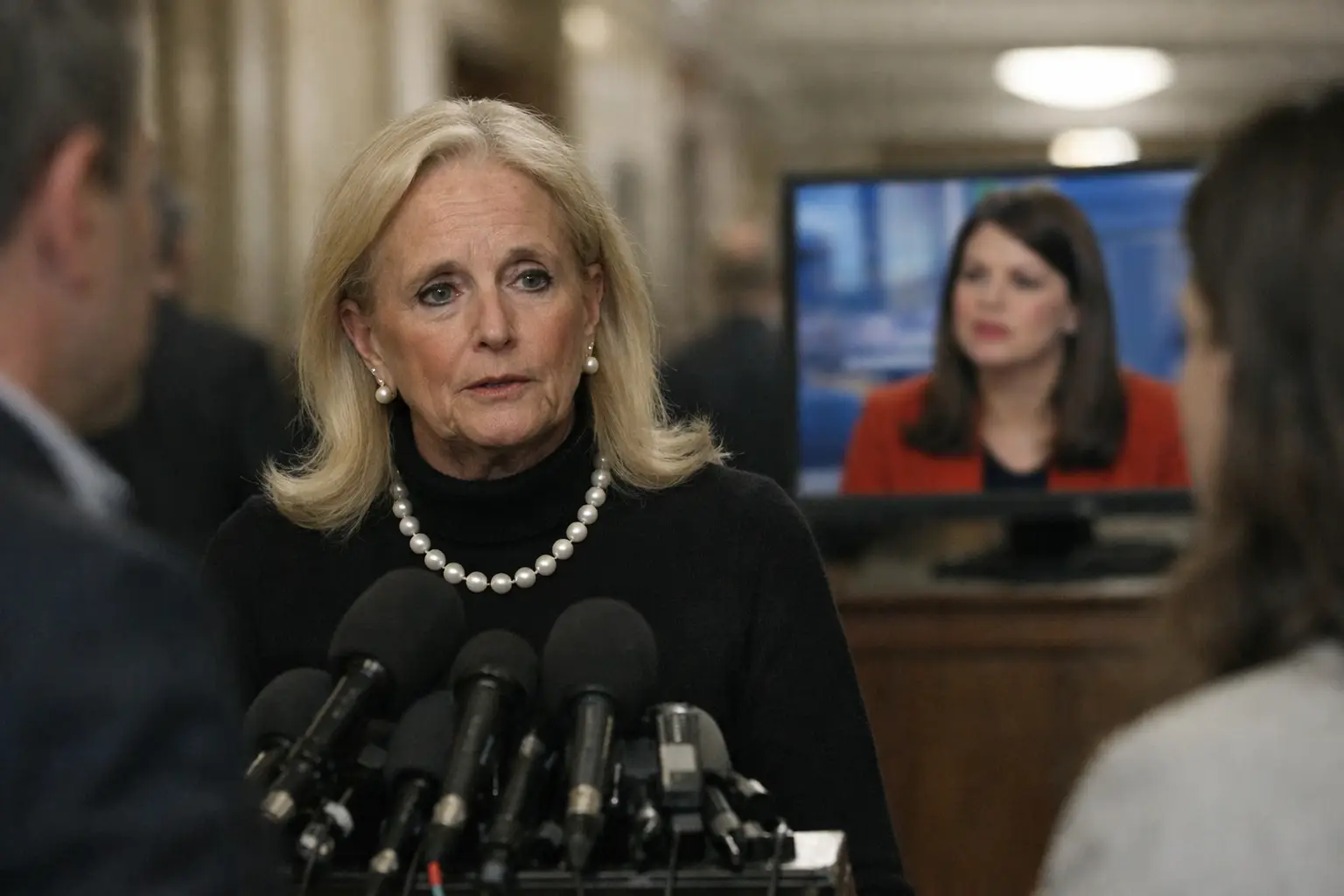
A Michigan Democratic dispute moved into public view after Debbie Dingell sharply criticized Haley Stevens for defending her endorsement of former Republican congressman Mike Rogers in the state’s Senate race. Dingell said Sunday that Stevens’s exchange with Anderson Cooper on CNN was “one of the most painful interviews I’ve ever watched,” a remark that underscored the political sensitivity surrounding the endorsement.
The interview drew attention because Stevens, a Democrat from Michigan, was pressed by Cooper on her decision to support Rogers, a Republican and former member of Congress, in a competitive Senate contest. Stevens used the appearance to defend her position, while Cooper focused on why she had shifted toward backing him. The exchange became a flashpoint not only because of the endorsement itself, but because it highlighted the strain that such decisions can create inside a party during a high-profile statewide race.
Mike Rogers, who previously represented Michigan in the U.S. House, is running for the Senate as a Republican. A Democratic endorsement for a Republican candidate in that context carries significance beyond a single campaign statement: it raises questions about party unity, candidate judgment and the calculations lawmakers make when local political relationships intersect with national partisan competition. In an election environment where Senate races can affect the balance of power in Washington, cross-party support is often examined closely by activists, donors and party officials.
Dingell’s reaction placed another senior Michigan Democrat into the conversation and amplified scrutiny of Stevens’s explanation. Without adding new claims about the reasoning behind the endorsement, Dingell’s comment made clear that the televised defense had not eased concerns among at least some Democrats. Her description of the interview as difficult to watch also reflected the broader challenge for elected officials who attempt to justify politically unconventional alliances in real time, especially on national television.
The episode adds another layer to the developing Michigan Senate race, where personal endorsements may carry particular weight because of the state’s divided political landscape. For Stevens, the immediate issue is no longer only the endorsement of Rogers, but the continuing reaction to how she has explained it. For Democrats in Michigan, the dispute illustrates how internal disagreements can quickly become part of the public narrative around a Senate campaign.