








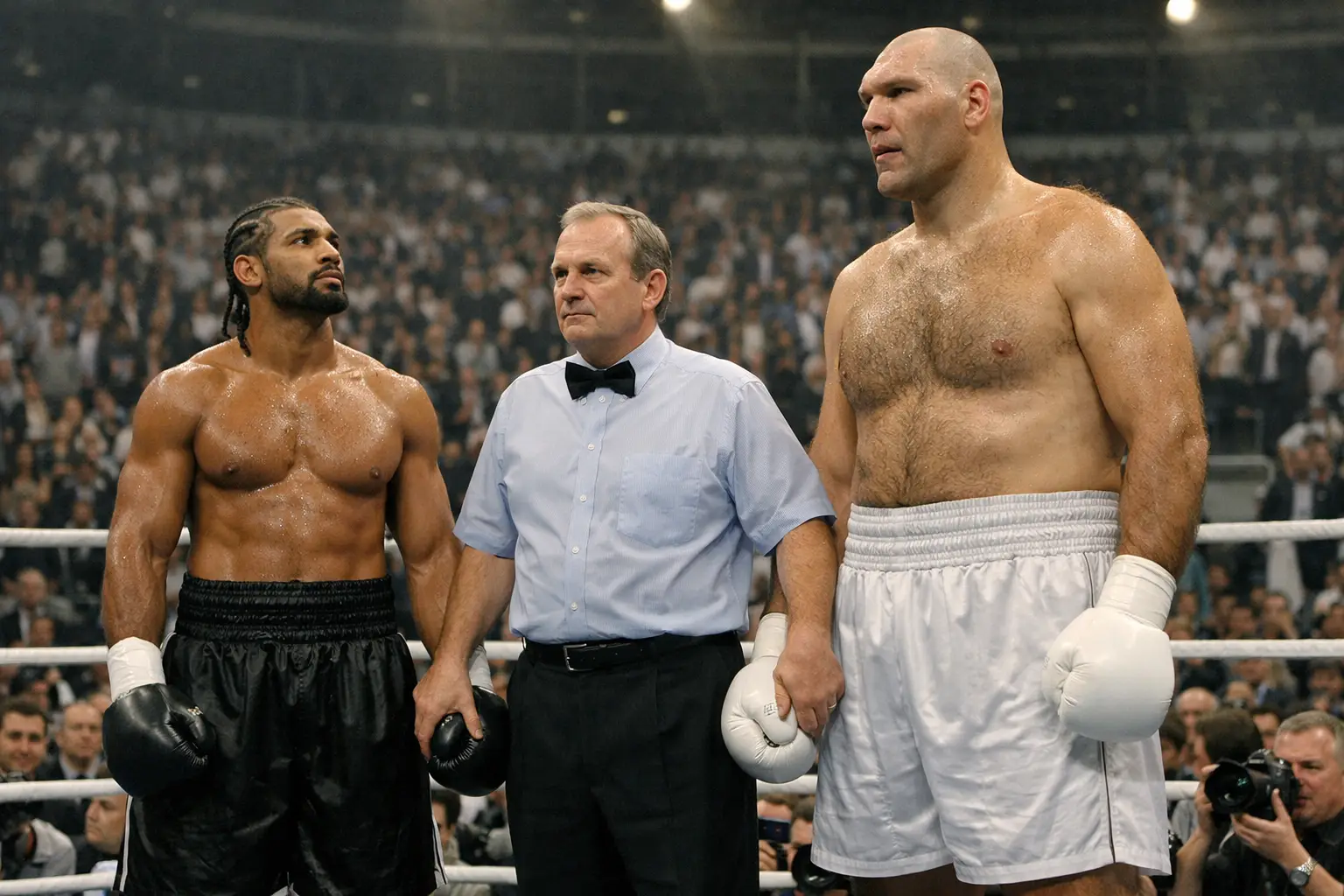
Seventeen years ago, David Haye stepped into a heavyweight title fight that looked, on paper, like an exercise in physical imbalance. Across the ring in Nuremberg stood Nikolai Valuev, the seven-foot Russian champion whose reach, height and weight made him one of the most unusual figures in modern boxing. Haye, moving up after his reign at cruiserweight, was almost 100 pounds lighter when he challenged for the World Boxing Association heavyweight title on 7 November 2009.
The contrast gave the contest its enduring place in the sport’s memory. Heavyweight boxing often rewards size, but Haye’s task required precision rather than confrontation. He could not afford prolonged exchanges at close range, nor could he rely on the kind of physical pressure that had defined many heavyweight title performances. Instead, the British fighter used movement, timing and selective attacks to limit Valuev’s output and prevent the champion from turning the bout into a contest of strength.
After twelve rounds, the judges delivered a majority decision in Haye’s favour, with two cards scored 116-112 and the third even at 114-114. The result made David Haye a world heavyweight champion and gave British boxing one of its most distinctive victories of the era. It also confirmed that his move from cruiserweight had produced more than commercial intrigue: he had defeated a reigning heavyweight titleholder whose dimensions created problems rarely seen at championship level.
For Nikolai Valuev, the defeat marked the end of his time at the top of the division, while Haye’s win reshaped his career and secured his status beyond the cruiserweight category. The fight remains relevant because it illustrated a basic truth about elite sport: physical advantages matter, but they do not decide everything in isolation. Tactical discipline, ring management and the ability to control risk can alter the terms of a contest, even when the visual evidence before the opening bell suggests otherwise.
Looking back after seventeen years, Haye versus Valuev stands as more than a curiosity built on a dramatic size difference. It is remembered as a strategic performance under extreme conditions, a night when a lighter challenger handled one of heavyweight boxing’s most imposing champions and left Germany with a world title. In a division often defined by power, the bout remains a case study in how speed, planning and composure can overcome scale.