






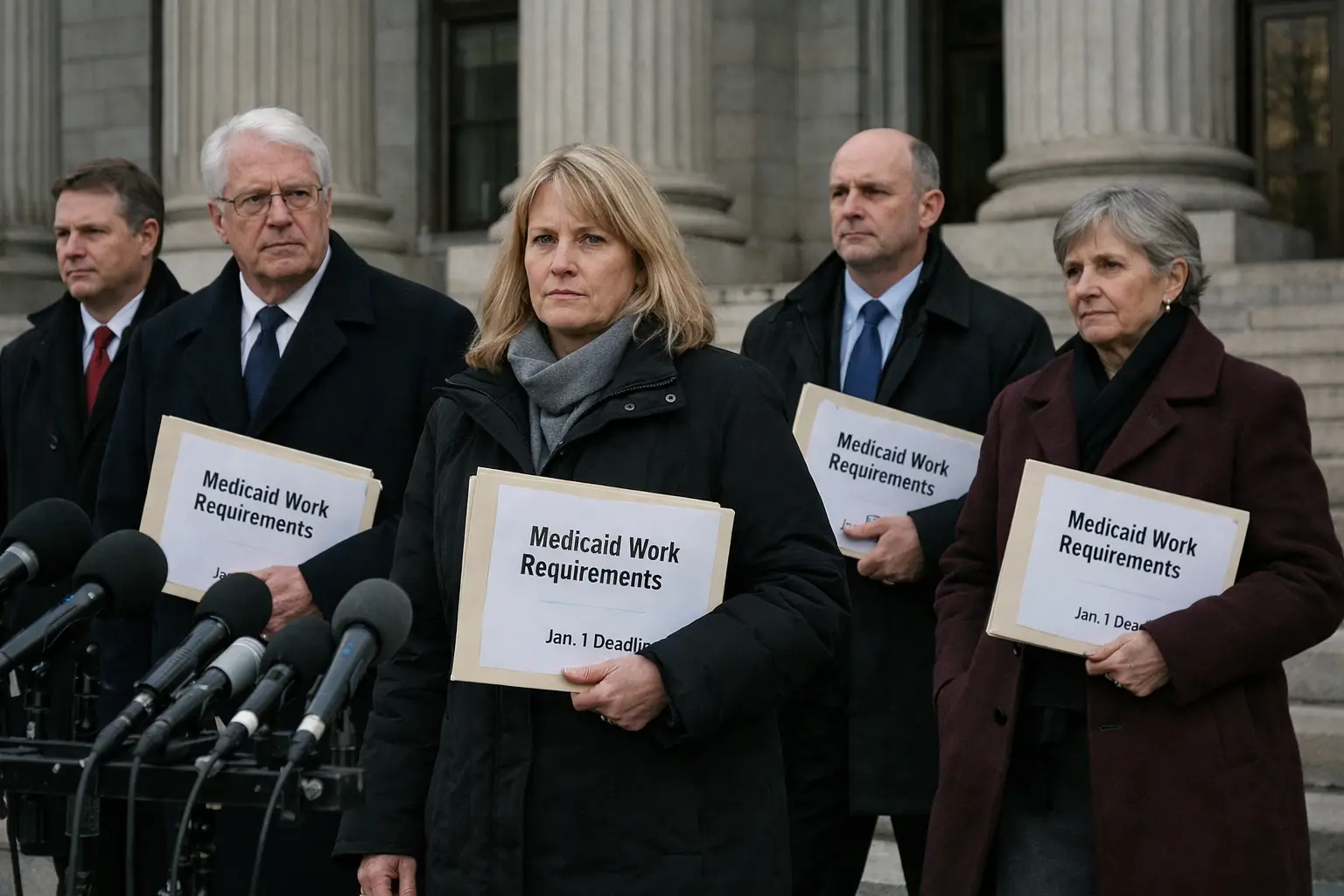
Four U.S. states have opened a new legal front against the Trump administration’s planned changes to Medicaid, asking a federal court to delay work requirements that are due to take effect on Jan. 1. The case, filed in the U.S. District Court in Oregon, comes less than a week after a federal judge concluded that implementation of similar requirements would cause “irreparable harm.”
The complaint was brought by Oregon Attorney General Dan Rayfield, joined by Minnesota, New Mexico and Washington. The states argue that the federal government lacks authority to compel them to put the new system in place. They also warn of “irreparable sovereign, fiscal, and public-health harms,” framing the dispute not only as a benefits case but as a challenge over state powers and administrative control of a major public insurance program.
The contested policy stems from Republicans’ One Big Beautiful Bill, passed in 2025. Under the measure, many Medicaid recipients would have to work, volunteer or attend school for 80 hours each month to keep health coverage, with limited exceptions tied to disability. The deadline leaves states with less than 60 days to prepare systems for verifying compliance, processing exemptions and managing coverage decisions for eligible residents.
Medicaid occupies a central place in U.S. health policy because it is administered jointly by the federal government and the states. That structure is at the heart of the lawsuit: the filing challenges whether Washington can require states to implement new eligibility conditions on the timeline and terms set by Congress and the administration. For state governments, the case also raises operational questions about cost, staffing and the risk of eligible beneficiaries losing insurance during the transition.
The latest lawsuit adds pressure to an already contested rollout. With the Jan. 1 date approaching, the courts may determine whether the administration can move ahead as scheduled or whether implementation must be paused while the legal challenges proceed. For Medicaid beneficiaries, the outcome could decide how quickly new monthly work, school or volunteer obligations become a condition for maintaining health insurance.