








French officials on Wednesday confirmed the first case of Ebola in the country, saying that a doctor who had traveled to the Democratic Republic of Congo, where an outbreak began last month, had tested positive for the virus.
The humanitarian worker was admitted to a special health care facility and is in stable condition, the health ministry said in a statement. French health workers were racing to trace anyone who may have come in contact with the doctor. Contacts will have to be isolated for 21 days and will be closely monitored, the ministry said.
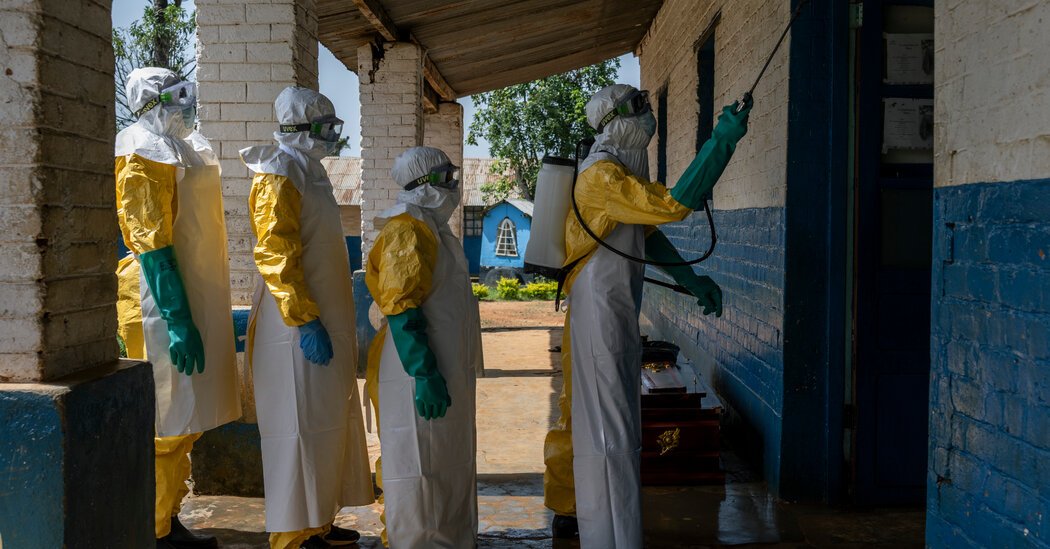
Congo is at the center of an outbreak in central Africa that was declared on May 15, with most cases in the northeastern Ituri Province. At least 260 people have died, and there have been more than 1,000 confirmed cases in the country, according to the World Health Organization.
The health ministry said the risk of infection for the wider European population was low, citing the European Center for Disease Prevention and Control. Most of the positive cases in Congo have been in remote parts of the country, and Ebola spreads only through direct contact with the bodily fluids of a sick person.
Before the confirmed infection in France, the only active case in Europe was an American doctor who was transferred to Germany for treatment after he contracted the virus in Congo. Dr. Peter Stafford was likely infected on May 9 while treating a woman who had a fever and severe stomach pain, according to Serge, the Christian mission organization that he works for. It was not known that the patient had Ebola when Dr. Stafford treated her. After she died and an Ebola outbreak was declared, it was presumed that she had the virus.
Dr. Stafford made a full recovery and was released this month. His wife and four children were also evacuated to the same hospital, where they were monitored for 21 days and did not become sick.
The outbreak is the 17th in Congo in recent decades, and it has tested the country’s expertise and resources. The type of Ebola virus behind this outbreak, known as Bundibugyo, is rare, with no targeted vaccines or treatment.
Conflicts in the region has caused the forced displacement of people, creating conditions for the rapid spread of the virus.
Source:
www.nytimes.com