








(RNS) — There’s a brilliant scene in the film “The Devil Wears Prada” in which a villainous high fashion editor berates her new, plainly dressed assistant for thinking she is above the dictates of the fashion world when the fact is that even the discount items she buys have trickled down from the upper echelons of a ruthless and rabid fashion industry.
In the movies, the devil may wear Prada, but in the Southern Baptist Convention, the devil came cloaked in its so-called Conservative Resurgence.
The Conservative Resurgence within America’s largest Protestant denomination was co-engineered by the late Paul Pressler — a Texas judge and a mover and shaker in the Republican Party and the SBC — along with former SBC seminary and convention president Paige Patterson.
Armed with evidence that liberals were invading the nation’s largest Protestant denomination, the two organized fellow conservatives to fight back, seizing control of the SBC in a decades-long denominational civil war. Now, a new and exhaustive report by Robert Downen at Texas Monthly details the horrific, lengthy history of sexual predation and abuse by Pressler, the facilitation of this abuse, and the cover-up of this abuse and other abuse cases by those within his inner circles of power (including Patterson) in both the SBC and local and national Republican politics.
Much of this history has leaked out slowly over the past few years as a result of various court proceedings, but this new report connects sparse details to a larger picture that begins with the Southern Baptist Convention but extends far beyond.
“You might not know Paul Pressler’s name,” Downen writes. “But your life has been profoundly affected by the fruits of his labor.”
“As the architect of the SBC’s so-called conservative resurgence, Pressler—or the Judge, as many knew him—played a crucial role in the marriage of the Republican Party and the white evangelical voters who still sustain its power.” In other words, the Conservative Resurgence cannot be separated from the merging we see today between the Republican Party and evangelicals. This is the thesis of the 12,000-word article.
But the devil is in the details.
Those details describe a deeply rooted culture of abuse that has been perpetuated for decades in the SBC despite numerous, vocal and at times seemingly serious attempts — mainly by abuse survivors (and some who ultimately did not survive their abuse) — to bring about change.
Those chances for real change, according to Downen’s analysis as well as the conclusions of many who tried to effect reform, are now dead in the water. The history of the Conservative Resurgence shows why.
The resurgence began because the SBC’s seminaries had been influenced by scholars who held to less literal interpretations of the Bible, which clashed with the more conservative views local churches and pastors tended to hold.
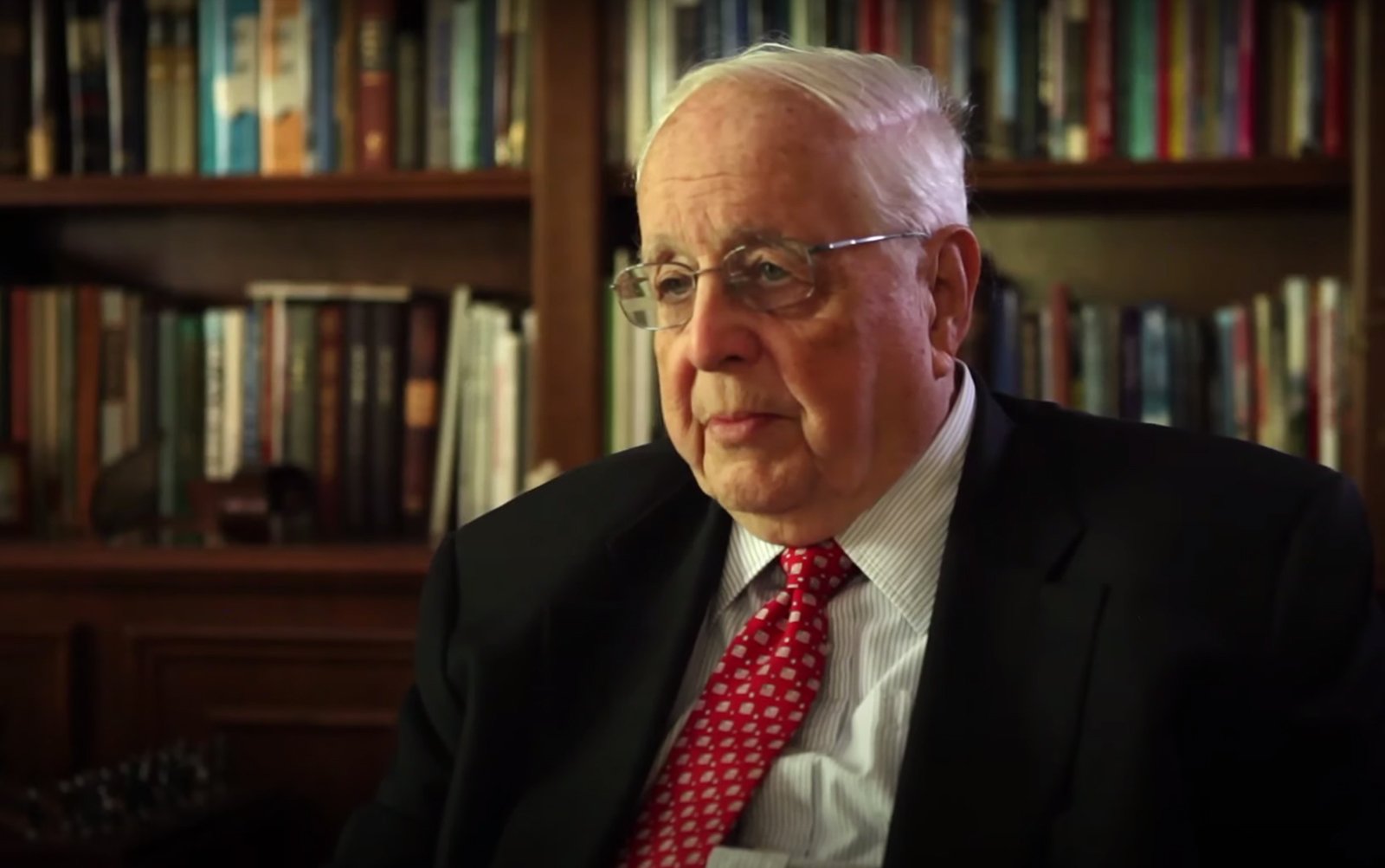
Former Judge Paul Pressler, who played a leading role in wrestling control of the Southern Baptist Convention from moderates in 1979, poses for a photo in his home in Houston on May 30, 2004. (AP Photo /Michael Stravato)
Pressler used that tension to gain power — and along the way, crushed countless vulnerable and innocent people, who were labeled as liberals and enemies of the church.
Tragically, Pressler pretended to believe in conservative Christian sexual ethics while allegedly raping and abusing boys and young men for decades. Some of these victims were supplied to him by his own political party.
Rumors and accusations about Pressler’s conduct — which led to him failing a background investigation for a job in the George H.W. Bush presidential administration — were brushed off as the stratagems of apostate, power-hungry liberals.
Pressler and Patterson were hailed for years as heroes — and many of their disciples went on to positions of power in the SBC, running SBC seminaries and entities, filling powerful pulpits and denominational appointments.
Every leader in today’s SBC pays homage to the idea that the movement led by Pressler and Patterson saved the SBC.
Yet the movement was not just about theology. It was about political power.
I am not a survivor of sexual abuse as too many of my friends in SBC circles are (some of whom are described in the Texas Monthly article). But my life was indeed profoundly affected by Paul Pressler, Paige Patterson and the Conservative Resurgence — years and years before I knew it. Reading the timeline of Pressler’s rise within the SBC and the GOP was like raising the backdrop on the stage of my own life to find the hidden directors behind the scenes.
I had no idea that the choices I was making were, at least in part, the manufactured product of an interconnected web of religious and political powerbrokers whose real interests were far from the ideals of truth and justice they peddled.
In the mid-1980s, just a few years after helping launch the Conservative Resurgence in the SBC, Downen reports, Pressler was advising the Council for National Policy, a secretive conservative networking organization whose partial membership list is a “who’s who” of right-wing politicians, corporate heads and evangelical leaders, on ways to mobilize churches and register voters by working with Jerry Falwell.
These efforts soon reached the small country church my husband and I attended in western New York. Our church was not SBC or even Baptist, but the pastor was a graduate of Falwell’s Liberty Baptist College (now Liberty University), and while we never heard the phrase “Conservative Resurgence,” I know now in looking back that our church was one of the many spoils taken by the victors of that battle.
Here we were instructed that God’s word in the Bible was delivered through full, inerrant, verbal and plenary inspiration (a phrase we were encouraged to memorize), and each term countered liberal views of Scripture that were gaining traction in the culture and undermining the Bible’s authority.
By the late 1980s, Pressler was president of the CNP and, along with other members of the organization, wrote a letter to then-Vice President George H.W. Bush that, Downen reports, “promised to deliver evangelical voters in exchange for ‘direct access’ to the White House.”

Paul Pressler, right, in a stained-glass window that was removed from Southwestern Baptist Theological Seminary. (Photo courtesy of Don Young Glass Studio)
I am one of those voters that was delivered, as promised.
I didn’t just vote, either. I invested time, money and resources into institutions I thought were rooted in Christian conviction, only to realize they were largely fronts for partisan politics.
I was enlisted into the pro-life movement, understanding the issue to be one of social justice, human rights and human dignity, only to learn much later that abortion had been seized upon by the Republican Party as a combat partner in a war against “a malevolent secular state” and the SBC was taken along for the ride.
By 1998, I had been so convinced of the rightness of the religious right and the conservative movement that when news of the Clinton-Lewinsky abuse case broke, I thought the leaders who spoke against Clinton and sought his impeachment actually cared about the immorality of it all.
I thought the politics were flowing from the theology (and surely at times they were). But now I see that too often the theology was being exploited for political gain — especially after many SBC leaders turned into vocal supporters of serial adulterer and self-described abuser Donald Trump.
I am grateful for the theological and ethical questions I was able to wrestle with during those years of and following the Conservative Resurgence. I developed convictions then that remain my convictions today.
But I didn’t need enemies in a trumped-up culture war to gain those convictions. I needed education, reflection, dialogue, curiosity and genuine faith. This is what we all need. Christians, too. Christians especially, because we are called to follow a narrow path.
I see now that I and countless others were pawns in what turned into a devilish enterprise to satisfy lusts of the flesh. Some of these pawns have been horrifically abused; even more have simply been used.
As more and more layers are peeled away and we see more and more the abuse of power — power used to abuse the vulnerable, power used to cover up for friends and allies, power used to curry favor with those with greater power — we must use our power to resist such abuse.
We are actors even as we are acted upon.
For a while, we did not know. But once we do know, we become accountable. The leaders may be dead or gone, but the machine they put in place whirs on. It still depends on our continued quiet consent.
Source:
religionnews.com