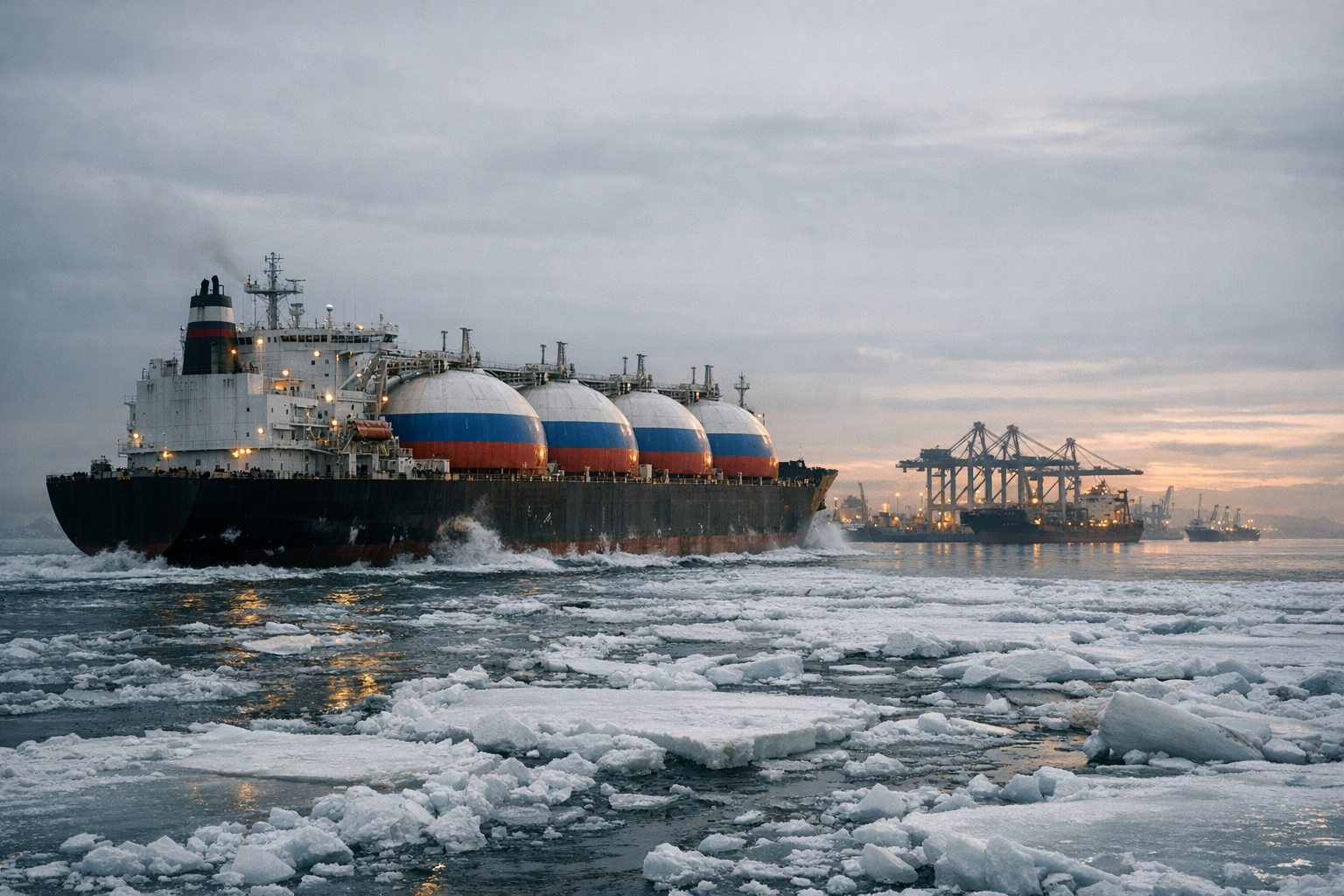
Russia’s LNG exports are undergoing a pronounced geographic shift as European demand falls and regulatory pressure tightens. With major Western markets reducing purchases and measures targeting Russian energy services, Moscow has increased deliveries eastward. Key producers such as Novatek and project operators like Sakhalin Energy now face a logistics imperative: secure buyers, shipping capacity and insurance on routes to Asia while managing contract reassignments and price differentials between markets.
China and other Asian buyers have become focal points for redirected shipments. Asian importers combine long‑term contracts and flexible spot purchases, providing an outlet for volumes that once flowed to Europe. The concentration of demand in Asia is influenced by regional regasification capacity, competitive pricing, and state energy procurement strategies. These commercial adjustments are visible in shipping manifests and port call patterns at major Asian terminals.
Novatek and operators of Sakhalin facilities must also navigate practical constraints: availability of liquefied natural gas carriers, insurance cover from international underwriters, and port slot allocations at busy Asian terminals. The maritime sector’s role is central — from vessel chartering to flagging and compliance with evolving sanctions regimes. Industry participants report that changes in insurance and shipping practices can reshape which trade lanes remain viable for sanctioned or sanctioned‑adjacent cargoes.
European Union and United States policy choices will determine how enduring this eastward shift becomes. Measures that close off Western market access without coordinated alternatives can accelerate reallocation of supplies to Asia, with attendant impacts on global gas prices and regional energy security. Monitoring trade documentation, shipping patterns and contractual transfers will be necessary to assess whether these shifts represent a temporary adaptation or a more permanent realignment of global LNG trade.