Mojtaba Khamenei consolidates his power at the heart of an Islamic Republic transforming into a military and security fortress
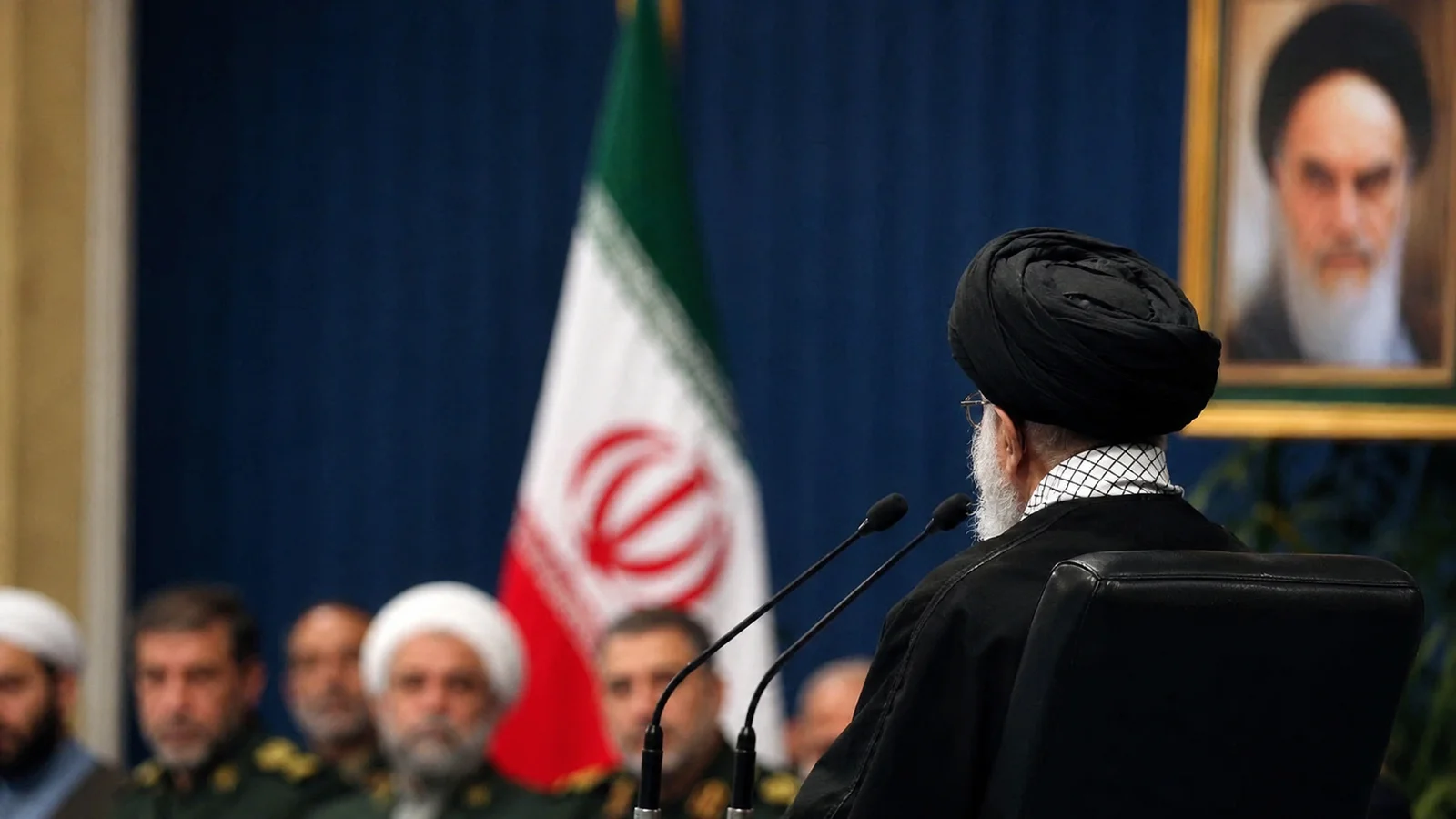
Since ascending to the position of Supreme Leader of Iran in March 2026, Mojtaba Khamenei has remained largely absent from the public eye. Yet behind this striking absence, the new Iranian leader is steadily leaving his mark on the country’s most sensitive institutions. Recent appointments at the helm of the Iranian armed forces, the Islamic Revolutionary Guard Corps (IRGC), the Basij, and the Supreme National Security Council extend far beyond a mere administrative shuffle. They reveal a much deeper transformation of the Islamic Republic of Iran, now organized around a single overriding priority: guaranteeing regime survival in a regional environment where military confrontation has become a permanent reality. Mojtaba Khamenei is therefore not merely inheriting the system built over several decades by his father, Ali Khamenei. He is taking the reins of an Iran profoundly shaken by war, strikes on its territory, the loss of several senior military commanders, and the weakening of key traditional power structures. In this context, the essential question is no longer just how the new Supreme Leader will govern Iran, but what form of regime will emerge from this extraordinary period.
Ali Khamenei’s son inherited the supreme title, but not yet his father’s personal authority
Automatically comparing Mojtaba Khamenei to Ali Khamenei would be misleading, as both men came to the pinnacle of power under radically different circumstances. For more than three decades, Ali Khamenei constructed an extremely complex architecture of influence linking the Shia clergy, the IRGC, intelligence services, the judiciary, religious foundations, state media, and a vast portion of the economy. His authority was not derived solely from his title as Supreme Leader: it rested on decades of accumulated personal relationships, political arbitrations, and loyalties. Mojtaba Khamenei, by contrast, received the office without immediately inheriting that political depth. His priority therefore appears to be rapidly constructing his own system of loyalties, particularly within the military and security apparatus. Recent appointments can be understood through this lens: the new Supreme Leader is not merely replacing officials or reorganizing a command structure weakened by war; he is also deciding which men will be entrusted with protecting the regime and, by extension, his own power. The Iranian succession is thus not complete simply because a new Leader has been named. It is ongoing through the quiet restructuring of Tehran’s decision-making centers.
Revolutionary Guard veterans return to the center of Iranian power
The figures currently being promoted or recalled to strategic positions do not represent a new political generation eager to break with the revolutionary legacy. On the contrary, several belong to the historical core of the Islamic Republic’s military and security apparatus. Ahmad Vahidi, Mohsen Rezaei, and Hossein Taeb each embody, at various levels, continuity with the structures that have guided the regime through its most challenging periods. Rezaei belongs to the Iran-Iraq War generation and led the IRGC for years; Vahidi possesses extensive experience across military and security structures; Taeb knows the inner workings of intelligence and the Basij intimately. Their return or promotion signals that the Iranian regime is currently prioritizing experience, ideological allegiance, and knowledge of system survival mechanisms over political openness. This direction illuminates one of Mojtaba Khamenei’s fundamental choices: faced with uncertainty, the new Leader appears to trust men who have considered Iranian national security, military power, and domestic stability to be inseparable for decades. The Islamic Republic is not preparing a transition toward a more flexible model. On the contrary, it is reinforcing those who know the regime’s tools of coercion, intelligence, and defense best.
The Islamic Republic is gradually transforming into a permanent security state
Iran has always been an authoritarian regime backed by a powerful military and security apparatus, but the current situation could fundamentally alter the internal hierarchy of power. For decades, the Islamic Republic maintained a form of balance among the Supreme Leader, the clergy, tightly controlled electoral institutions, technocrats, diplomats, economic circles, and the IRGC. The Revolutionary Guards already held considerable sway, but they operated within a broader architecture in which Ali Khamenei served as the undisputed arbiter. Today, security logic is becoming the organizing principle of the entire system. Iran no longer reasons simply as a state seeking to prevent a future war: it behaves like a country convinced that military clashes may now recur regularly on its own territory. This evolution inevitably shifts priorities. Command structures must be capable of quickly replacing fallen leaders, protecting strategic infrastructure, maintaining communications, preserving ballistic capabilities, securing borders, monitoring domestic movements, and ensuring continuity of power even under renewed strikes. Iranian politics, national defense, and internal security are becoming increasingly indistinguishable, giving rise to a system built not just to fight, but above all to endure prolonged confrontation.
Iran’s true military strategy may be less about winning a war than becoming impossible to neutralize
The ongoing overhaul of Iran’s military apparatus does not necessarily mean Tehran is planning a massive regional offensive. That interpretation would be overly simplistic. The strategic goal may be far more pragmatic: building a structure capable of continuing to function despite losses, bombardments, targeted assassinations of military leaders, economic disruption, and international pressure. Lessons from recent months are likely being analyzed with extreme care by Iranian command staffs. When a chain of command can be swiftly disrupted by the loss of a few commanders, the solution is to multiply succession mechanisms, decentralize certain capabilities, and bring operational centers closer together. When an adversary possesses vast technological and aerial superiority, the objective is no longer necessarily to seek a conventional military victory, but to prevent that adversary from translating tactical superiority into a definitive strategic victory. Iran’s military strategy thus appears to be evolving toward a logic of resilience: retaining enough missiles, drones, naval forces, intelligence networks, and asymmetric capabilities to ensure that any new confrontation remains long, costly, and politically complex.
Mojtaba Khamenei is empowering the Guards, but this reliance could also limit his own authority
This represents one of the most significant paradoxes of Iran’s new era. The appointments made by Mojtaba Khamenei can be viewed as tools for personal consolidation: by selecting the heads of key military and security structures, the new Supreme Leader is steadily building his network and placing experienced figures in positions upon which his power’s stability directly depends. Yet this strategy carries a fundamental contradiction. The more the Supreme Leader relies on the Revolutionary Guards to guarantee his safety, ensure state continuity, and contain internal crises, the more indispensable the Guards themselves become. The relationship between religious and military authority could thus shift toward a far deeper interdependence than existed under Ali Khamenei. Mojtaba provides the revolutionary forces with the institutional legitimacy of the Supreme Leader and the continuity of the system established in 1979; in return, the Guards provide him with military might, economic networks, intelligence capabilities, and the capacity to control vital parts of the state apparatus. Iran could consequently evolve into a regime where the Leader remains legally and symbolically at the top, while being forced to compromise more heavily with a security coalition he cannot do without.
Mojtaba Khamenei’s public absence creates an even more opaque Iranian leadership
One of the most extraordinary elements of this transition remains the physical disappearance of the new Supreme Leader. In a political system built around the office of the Supreme Leader, the man holding that title has remained practically invisible since taking power. Decisions are issued, appointments are published in his name, officials of the Islamic Republic invoke his authority, and institutions officially continue to function under his direction—yet Mojtaba Khamenei himself remains largely shielded from public view. It would be unwise to draw definitive conclusions from this situation regarding his health or exact level of involvement in daily decision-making, as much of the available information remains impossible to verify independently. Politically, however, this invisibility is already producing real consequences. The more inaccessible a leader becomes, the more power accrues to those able to convey his instructions, obtain his rulings, or interpret his will. Iranian governance could thus become even more opaque than it was under his father, resulting in a system where supreme authority remains officially unquestioned while the true mechanics of decision-making become increasingly difficult to observe from both outside and inside the country.
The Strait of Hormuz remains the strategic insurance of an Iran aware of its conventional weakness
In this strategy of prolonged resistance, the Strait of Hormuz retains exceptional significance. Iran understands full well that it cannot match the United States in a conventional military confrontation driven by air, naval, and technological dominance. Its long-standing strategy has therefore been to shift the costs of confrontation into domains where its conventional weaknesses matter less. Hormuz is precisely such an arena. Sustained disruption to this vital maritime corridor for global energy trade could rapidly turn a regional military crisis into an international economic disaster, impacting shipping, insurance, energy prices, and economies reliant on Gulf hydrocarbons. The strait’s strategic value lies not merely in the dramatic prospect of its closure, but in the constant uncertainty Tehran can cast over its security. For the Islamic Republic, Hormuz acts as a power multiplier: Iran does not need to match its opponents militally if it retains the ability to raise the economic and geopolitical price of conflict high enough to alter their calculations.
The Basij serves as a reminder that controlling Iranian society remains a top regime priority
However, the militarization of power cannot be understood solely through the lens of external threats. The strengthening of the Basij and the recall of veteran security officials highlight a fundamental truth: since its founding, the Islamic Republic has treated domestic stability as a matter of national security. While the Basij represents a force that can be mobilized during armed conflict, its deep territorial presence and role in political social control make it one of the regime’s primary tools for defending against domestic unrest. This dimension could become even more critical during prolonged confrontation. War imposes heavy burdens on society: inflation, supply shortages, infrastructure damage, unemployment, declining purchasing power, and psychological fatigue. For a regime that has already faced major waves of protest, the potential for economic distress to turn into political dissent poses a major strategic threat. The simultaneous reinforcement of external military capabilities and domestic control structures demonstrates that Tehran no longer distinguishes clearly between defending national territory and defending its political system. It is precisely this blurring of Iran’s security with the survival of the Islamic Republic that should concern Iranians most.
The Iranian people must never be confused with the clerical regime
Making this distinction is essential to understanding contemporary Iran. Criticizing the Islamic Republic, its repressive machinery, its ideology, and the overwhelming influence granted to security forces is not a condemnation of Iranian society. On the contrary, the Iranian people are the first to suffer the consequences of their leaders’ decisions. Over recent years, a significant portion of the population has repeatedly demonstrated its desire for greater personal, political, and social freedoms. Iranian women have stood at the center of these movements, while multiple generations have voiced exhaustion with the restrictions imposed by the regime. The current buildup of the Basij, intelligence services, and the IRGC must also be viewed through this lens: the apparatus built to protect the Islamic Republic from external threats is the exact same machinery used to suppress Iranian citizens questioning the system. This reality marks one of the primary contradictions in Tehran’s official rhetoric, which routinely equates regime survival with national defense, even though those two interests do not necessarily align.
The Islamic Republic enters the bunker era
Mojtaba Khamenei’s initial moves ultimately sketch the outline less of a new monarch than of a new model of governance. The Islamic Republic of Iran appears to be abandoning any illusion of a durable return to regional stability, organizing its institutions around the expectation of repeated confrontation. The Revolutionary Guards occupy an increasingly central position, security veterans are returning to power, the Basij is reassuming a critical role, the Supreme National Security Council is becoming an indispensable coordination center, and the Supreme Leader himself remains shielded behind near-total opacity. This is not necessarily a traditional military dictatorship, as the clergy, religious institutions, and the office of the Supreme Leader retain fundamental importance. Rather, the Islamic Republic may be evolving into something more complex: a permanent security state run by a coalition of clerics, military commanders, and intelligence officials whose primary obsession is no longer developing a political vision for Iran, but ensuring system continuity regardless of the crisis.
Mojtaba Khamenei thus becomes the paradoxical symbol of this new Iranian era. The country’s least visible leader presides over a dramatic expansion of the apparatus built to oversee, monitor, and control everything else. His father spent over three decades shaping an Islamic Republic around his personal authority; his son may build a different system—one less reliant on the physical presence of the Leader and more heavily organized around military structures designed to function through wars, crises, and leadership transitions. Herein lies the true significance of current appointments: Mojtaba Khamenei’s Iran is no longer merely trying to prevent the next war. It is transforming into a regime designed to survive it.