








There are some pretty gigantic non-negotiables for an orchestral musician. You have to be able to perform the right notes in the right order, with a combination of technical expertise, artistry, skill and understanding that demands years, decades and lifetimes of devotion.
But there is one figure on the orchestral concert platform who is both the most important person in the room – at least according to classical music’s hierarchies – yet who makes no sound, and whose job looks the simplest of all: the conductor, waving their arms about in time with the music and gurning at the players.
Despite appearances, the professional conductor’s responsibility is to know every line of the music inside out, and to turn the performance into not only a perfected version of the rehearsal, but a one-off experience that has its own energy, shape and narrative. You want to know a trade secret? Any professional orchestra in this country could play most of the music on their programmes without a conductor. What the best professional conductors do is provide the x-factor of inspiration that allows the orchestral players to do things that they can’t achieve on their own.
But still, as the Hungarian violinist Carl Flesch put it: “There is no profession which an impostor could enter more easily.”
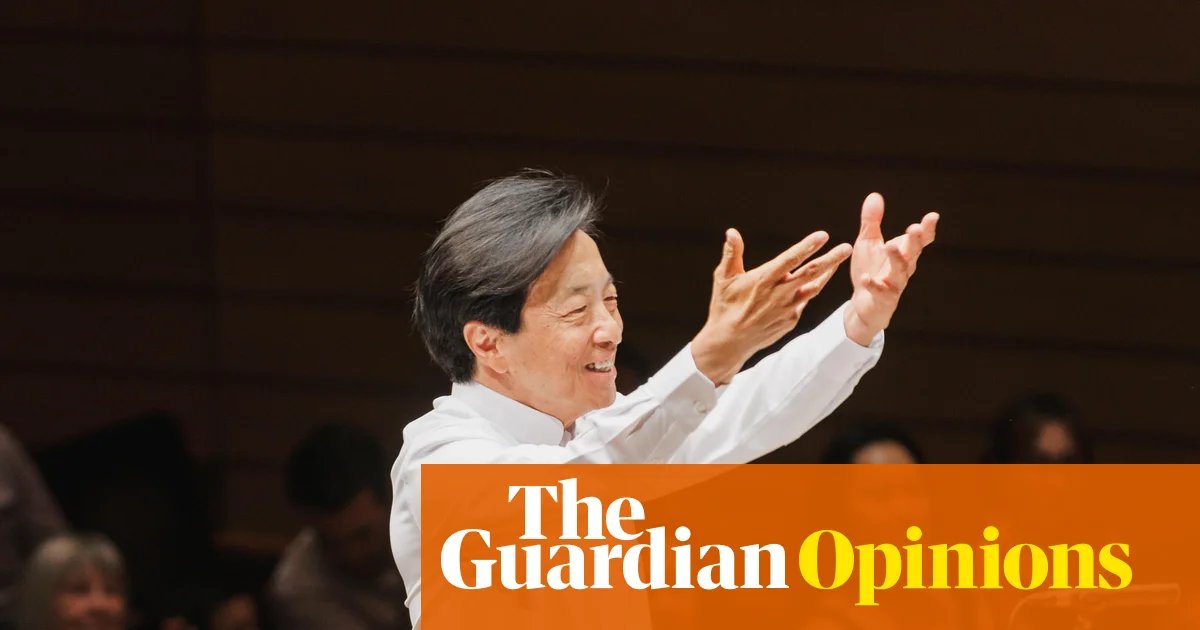
By his own admission, the 78-year-old businessman and founder of the Mandle Philharmonic in Canada, Mandle Cheung, is an amateur conductor. He resists the “maestro” tag. He loves music, he loves Mahler particularly, and he is able to conduct world-class orchestras because he is able to pay these orchestras to play for him. Last year he led the Toronto Symphony in Mahler’s Second Symphony, but he isn’t stopping there. More Mahler, and European orchestras are in his sights. His wish becomes reality on 21 August at London’s Alexandra Palace when Cheung conducts the Royal Philharmonic Orchestra, soloists Elizabeth Watts and Jennifer Johnston, and the Brighton Festival Chorus, in a performance of Mahler 2.
double quotation mark
It turns Mahler’s music into an expensive, ego-driven spectacle that’s all about the wish fulfilment of financially powerful people
Cheung paid about C$500,000 (£264,000) to conduct the Toronto Symphony; his representative has confirmed that Cheung is paying the RPO for the same privilege, but not the amount. “We do not disclose fees for concerts,” said an RPO spokesperson. It says something profound about the parlous state of orchestral finances on either side of the Atlantic that they need to take Cheung’s money, and risk their reputations with their players, audiences and sponsors by letting a non-professional conductor take on one of the most prestigious works in the repertoire. Mahler’s Second is a symphony of epic scale of sound and spirit. With its vast trajectory from funeral march to vision of resurrection it is one of the most complex and transcendent pieces of music you are ever likely to hear.
Cheung himself acknowledged the issue, talking to the New York Times last year about the Toronto Symphony experience: “These are great musicians, and they work really hard all their life to become a player in a professional symphony orchestra,” he said. “And then somebody who’s not a recognized conductor just walks in and writes you a check and starts conducting you.”
There’s a wider story than one very rich person’s vanity here, and it’s far from a new one. Gilbert Kaplan, another businessman and philanthropist who was similarly obsessed with Mahler’s Second, conducted and recorded the piece with the London Symphony in 1987, and with the Vienna Philharmonic, released on Deutsche Grammophon, in 2002. There’s something about this symphony that seems to speak to the power fantasies of these men: is it that having mastered the universes of finance and technology, being in charge of orchestral and choral forces and guiding them to the radiant transcendence of the end of the symphony is the musical equivalent of building a spacecraft to go to Mars?
It turns Mahler’s music into an expensive, ego-driven spectacle that’s all about the wish fulfilment of financially powerful people, curdling the spiritual message of the piece into just another commodity that can be bought and sold.
Of course, one way of looking at the entire history of orchestral music and opera is that it’s always been an aristocrat’s indulgence, from the Chapel Royal of the English court to the orchestra that was Prince Esterházy’s pride and joy, and which was the laboratory for Joseph Haydn’s symphonies in the 18th century. You can extend the idea to the wealthy philanthropists of US arts from the 19th century onwards; and you could even see the state funding of the arts in Europe as a variation of the same principle: promoting an unaffordable luxury through taxation. In that context, what’s wrong with someone renting an orchestra for a night to make their dreams come true?
On their own terms, you might think that none of these individual concerts that the wealthy can pay to conduct are necessarily problematic. If you’ve got the cash, and wonderful musicians will turn up to play Mahler for you, that’s up to them. But audiences deserve to know what they’re getting for the price of their tickets at Alexandra Palace – there’s nothing on the RPO’s website to say this is an event in which a professional orchestra and soloists have been privately hired by an amateur conductor.
The RPO’s managing director, Sarah Bardwell, said: “The RPO takes pride in offering life-changing musical experiences to people from all walks of life, and the orchestra is looking forward to welcoming Mandle Cheung to the podium this summer. Classical music is for everyone, and this special one-off summer concert will fulfil a dream for a great Mahler enthusiast, while materially supporting our community and education work for the new season.”
I’d love to conduct the RPO myself, but am guessing that my dreams and enthusiasm for Mahler aren’t, on their own, enough; I wasn’t aware that the UK’s orchestras had a role to play in the fulfilment of businessmen’s bucket lists. The community and education work that the RPO say will be the beneficiary of Cheung’s largesse is a non-negotiable part of any orchestra’s remit and of course is vital and welcome. But if you look at how the concert is promoted on the RPO’s website you might imagine you were attending a concert that belongs in the same category as performances by the RPO’s music director, Vasily Petrenko. But you’re not. You’re attending a performance that should clearly be advertised for what it is: an amateur fulfilling his most cherished fantasies. As Cheung told the New York Times: “Now that I’ve conducted in Toronto, maybe that can be sort of like a credential for approaching American orchestras, European orchestras, to see if we can work with them,” he said. “That would be nice.”
double quotation mark
If anyone can buy a world-class symphony orchestra to play with for one night, why not for a week, or a month, or a season?
And it probably will be more than nice. The RPO’s skilled musicians will almost certainly hold the performance together, and Mahler’s music will make the radiant sounds and noises that only this symphony can; the audience will applaud and feel they have been on a massive Mahlerian journey. What’s the problem with that?
Here’s the kicker: if anyone can buy a world-class symphony orchestra to play with for one night, why not for a week, or a month, or a season? Why bother with decades of specialist training to become a conductor when all you need to stand on a podium and lead a a public performance is very deep pockets? If you’re an audience member, who cares about the difference between amateurs and world-class professionals?
If these currently exceptional concerts such as Cheung’s become part of an orchestra’s regular way of life, a means of generating income, the message is stark. For all those more talented musicians working away in conservatoires and opera houses and concert halls right now – those naive souls who imagine classical music is a meritocracy, not an auction – the whole principle that this is an art-form available to all is betrayed.
This week Tom has been listening to: Judith Weir’s Moon and Star. I was lucky enough to be in Proms audience for Ryan Wigglesworth, the BBC Scottish Symphony Orchestra and BBC Singers’ performance of this work. Based on Emily Dickinson’s poetry, it’s music that charms and beguiles. Listen again here
Source:
www.theguardian.com