







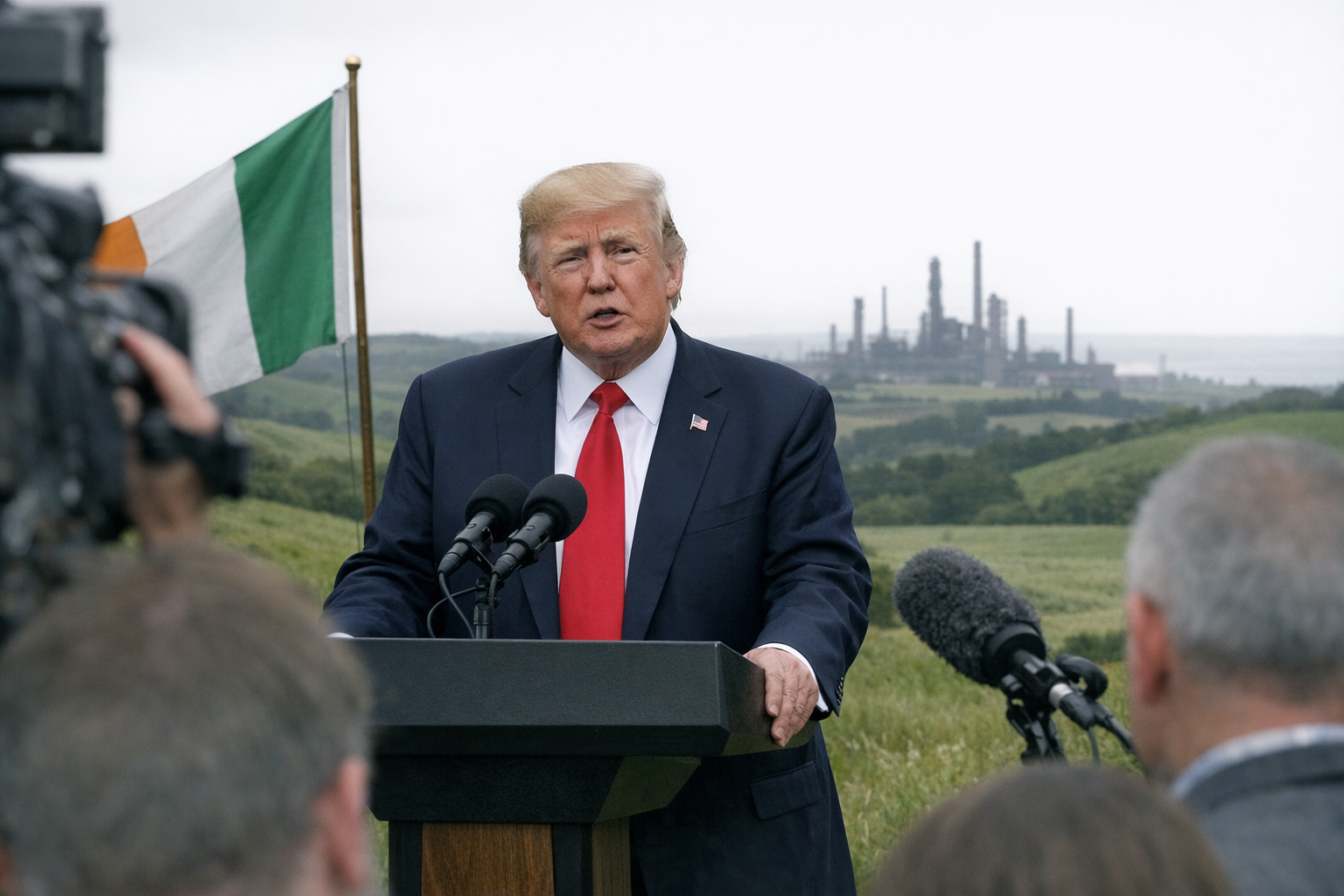
Trump on Sunday said that Ukraine should refrain from striking oil refineries in Russia, citing a recent surge in diesel prices tied to the ongoing tensions in the Middle East and a broader energy crunch. The comment came as Donald Trump was at a golf course in Ireland during the Irish Open, when a reporter asked whether he had spoken with Volodymyr Zelensky. Officials did not provide additional details about any conversation between the two leaders.
Mr. Trump’s remarks framed the issue chiefly in economic terms, pointing to the sensitivity of fuel markets to disruptions at refining sites. Attacks on refining infrastructure have the potential to curtail supply flows and exert upward pressure on wholesale and retail fuel prices, particularly diesel, which is central to freight and industrial activity. Analysts and market participants have been monitoring such risks closely as geopolitical events continue to affect energy distribution.
The debate over whether to target energy infrastructure has generated diplomatic and strategic questions since it can have cross-border consequences beyond immediate military objectives. Kyiv’s campaign choices intersect with concerns about civilian energy access and international market stability, themes that have drawn attention from neighboring states and global traders. Domestic and international observers are also tracking how such operations might influence broader economic conditions tied to the diesel prices and the unfolding energy crisis.
Sunday’s exchange at the golf course adds a public element to discussions already occurring among policymakers and analysts over the balance between military strategy and economic fallout. As fuel costs and supply dynamics remain volatile, government statements and operational choices by the parties involved are likely to be watched for their immediate market impact and longer-term diplomatic implications.