






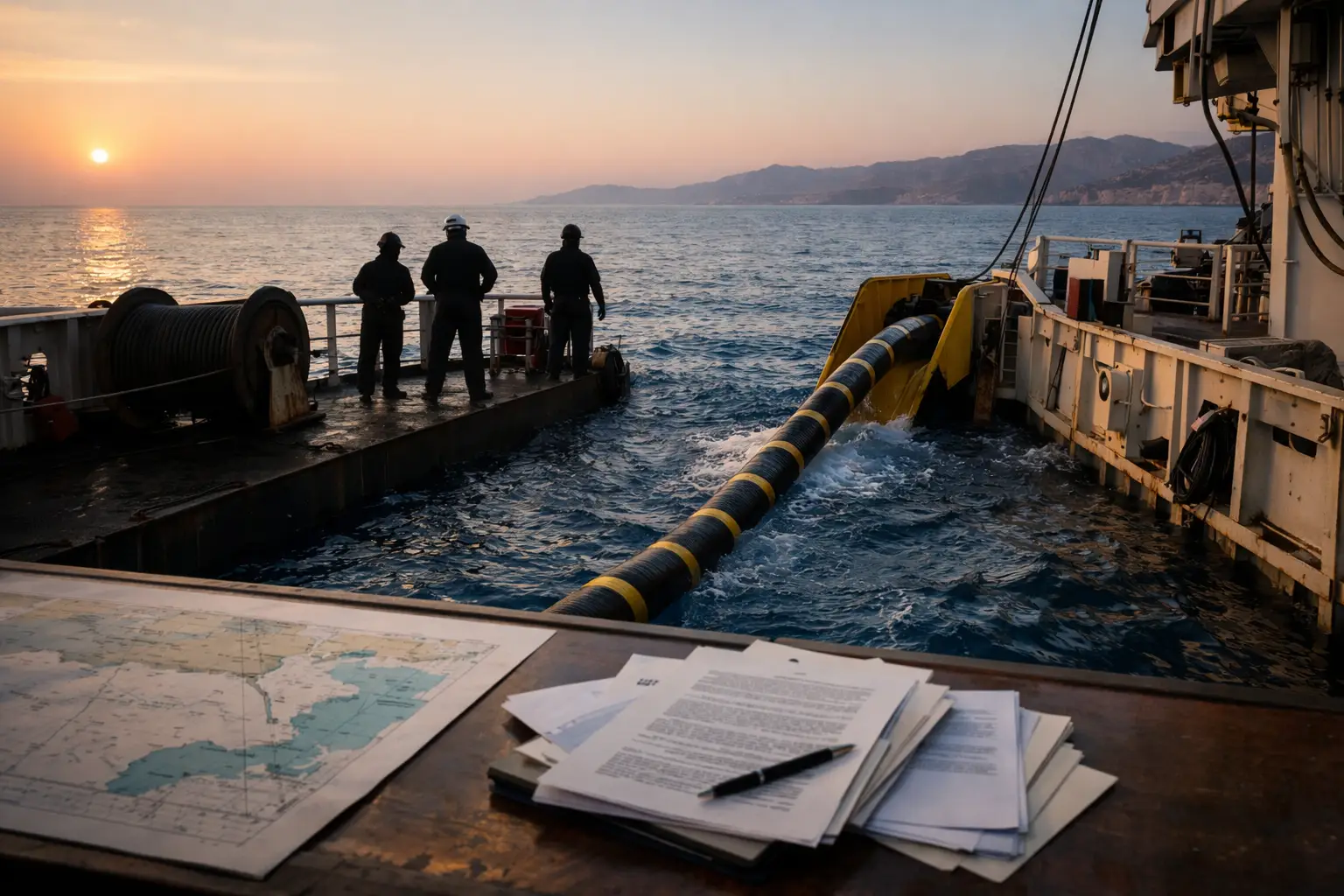
A technical dispute over a cable route has become a reminder that the seabed is no longer a quiet space for engineers alone. Turkey’s challenge to a planned undersea connection in the eastern Mediterranean reflects a broader problem: critical infrastructure is being laid across waters where legal authority, strategic interests and unresolved maritime claims increasingly collide.
The issue matters well beyond one project. Undersea cables carry the overwhelming majority of intercontinental digital communications, while submarine power links are becoming more important for electricity markets and regional energy integration. Their routes depend on predictable rules, timely permits and the ability to inspect or repair infrastructure quickly. When a coastal state contests activity linked to a cable, even on legal or jurisdictional grounds, it can create delays and uncertainty for governments, operators and investors.
The international framework is built around rights and limits. The United Nations Convention on the Law of the Sea recognises freedoms related to laying submarine cables, while also giving coastal states important powers in territorial seas and exclusive economic zones. But maritime law is not self-executing. It depends on acceptance, interpretation and enforcement. Turkey is not a party to the convention, and the eastern Mediterranean remains marked by overlapping claims and competing views of maritime jurisdiction.
This is why a “humble” cable can become a strategic test. The seabed now hosts the infrastructure of finance, communications, government services and energy security. Recent damage to cables in regions such as the Baltic Sea and the Red Sea has already pushed governments to treat submarine networks as part of national resilience. The International Telecommunication Union has long underlined the central role of connectivity, but protection at sea still involves a complex mix of private ownership, naval capacity and diplomatic coordination.
The immediate dispute points to a wider governance challenge. States need procedures that allow legitimate maritime claims to be addressed without turning infrastructure projects into open-ended geopolitical confrontations. Clearer notification practices, faster repair arrangements and stronger regional channels would reduce the risk that essential networks become bargaining tools. For the Mediterranean and beyond, the question is whether the rules beneath the sea can keep pace with the dependence built above it.