







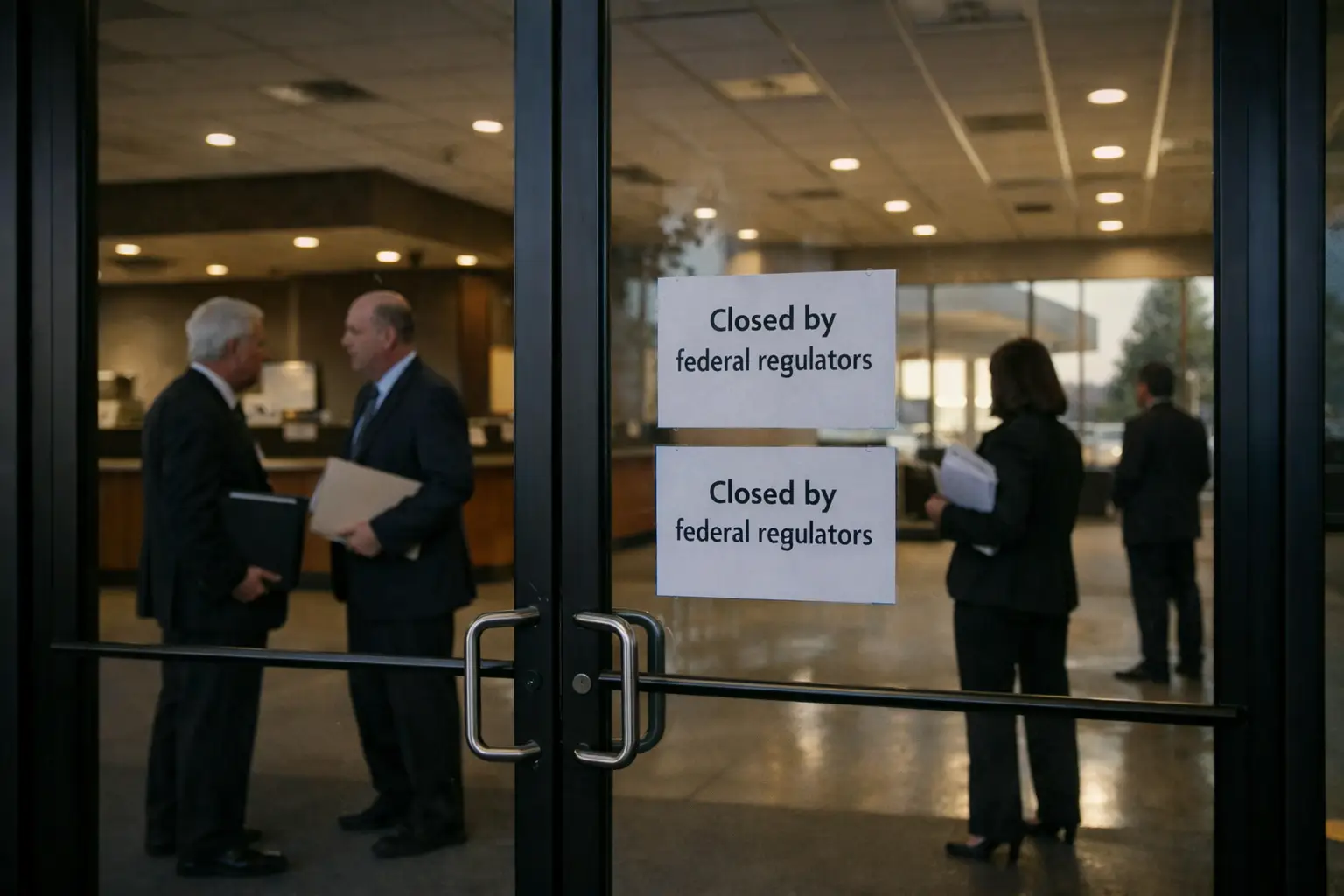
Federal regulators closed United Fidelity Bank, making it the largest bank closure in the United States since 2024 and adding fresh attention to the condition of smaller lenders. The case is the seventh U.S. bank failure recorded this year by the Federal Deposit Insurance Corporation, placing it within a sequence of disruptions that has kept supervision, deposit protection and balance-sheet resilience in the spotlight.
The closure stands out not only because of its size relative to recent failures, but also because bank failures are closely watched indicators of stress in the financial system. A failed bank does not automatically point to a wider crisis, yet each closure tests the mechanisms designed to protect insured depositors and maintain public confidence. For customers, the central issue is continuity of access to insured funds; for regulators, it is the orderly handling of the institution’s assets and liabilities.
The U.S. banking sector has faced recurring scrutiny since the turbulence that reshaped debate over regional lenders in recent years. Even when failures remain limited in number, they can influence market perception, funding conditions and regulatory priorities. Smaller and mid-sized institutions tend to be more exposed to local economic conditions and narrower business models than the largest banks, making supervision a key part of financial stability policy.
Bank closures also carry consequences beyond the affected institution. They can prompt renewed attention from investors, depositors and policymakers to capital levels, liquidity management and concentration risks. The FDIC’s role is central in that process because it administers deposit insurance and manages resolutions when banks fail. The agency’s published data provide the official count of failures, which now includes United Fidelity Bank as the seventh case this year.
For the broader financial system, the immediate significance of the United Fidelity closure lies in its place within the recent pattern of failures. It is the biggest U.S. bank closure since 2024, but the available facts do not establish broader systemic distress. Regulators’ next steps and official disclosures will determine how much more can be understood about the causes and consequences of the failure, while the event reinforces the importance of vigilance in banking regulation.