







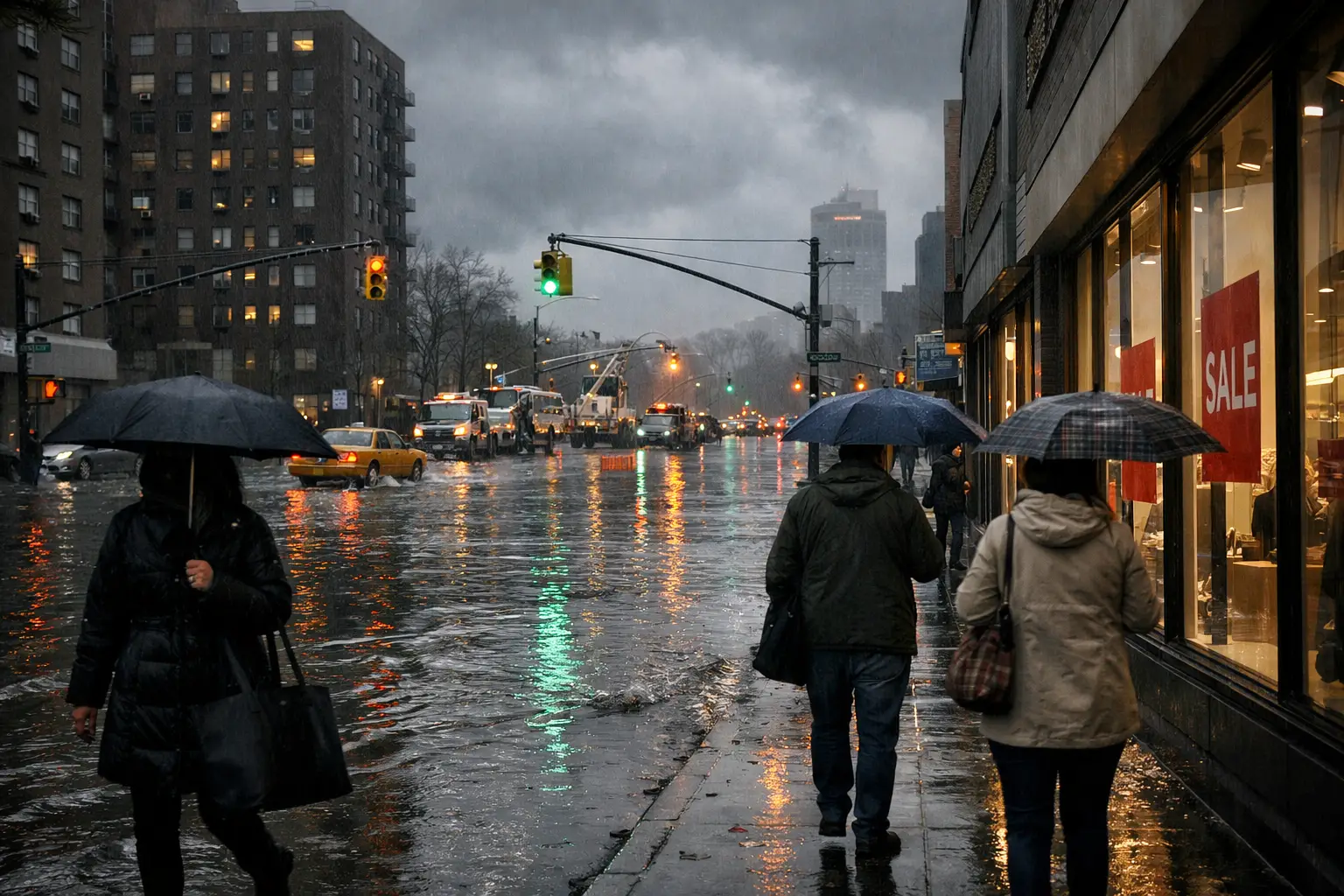
A severe Thanksgiving storm disrupted one of the busiest holiday periods in the United States, leaving nearly one million customers without power and flooding streets along the East Coast. Heavy rain and strong winds brought travel and public-event complications at the start of the long weekend, underscoring how vulnerable major holiday infrastructure remains when extreme weather coincides with peak mobility and retail activity.
In New York City, the weather forced a rare change to a major national tradition. The Macy’s Thanksgiving Day Parade, marking its 100th year, was postponed until Saturday, November 28, after forecasts called for high winds and rain. The decision marked the first weather-related postponement in the parade’s history. Floats were left along Central Park West as organizers adjusted to conditions considered unsafe for the event’s usual Thanksgiving schedule.
The disruption came as millions of Americans were expected to move from holiday gatherings into the year’s most closely watched shopping weekend. Despite the pressure of inflation on household budgets, experts expect consumers to continue spending heavily during Black Friday promotions. Forecasts point to sales reaching record levels, a sign that discounts, seasonal demand and established shopping habits remain powerful forces in the U.S. retail calendar.
For retailers, the combination of severe weather and strong demand creates a mixed backdrop. Store traffic can be affected by flooded roads, power outages and delayed travel, while online shopping may benefit when consumers avoid difficult conditions. The holiday period is also a key test of pricing strategies after months in which shoppers have become more selective, comparing deals closely and prioritizing value without abandoning gift purchases altogether.
The storm’s impact highlights the overlapping pressures facing American households and businesses during the holidays: weather disruption, energy outages, transport challenges and persistent price concerns. Yet the expected resilience of Black Friday spending suggests that the final stretch of the year remains central to consumer activity. As the Thanksgiving weekend continues, the immediate focus is divided between recovery from the storm and the commercial momentum that traditionally opens the holiday shopping season.