









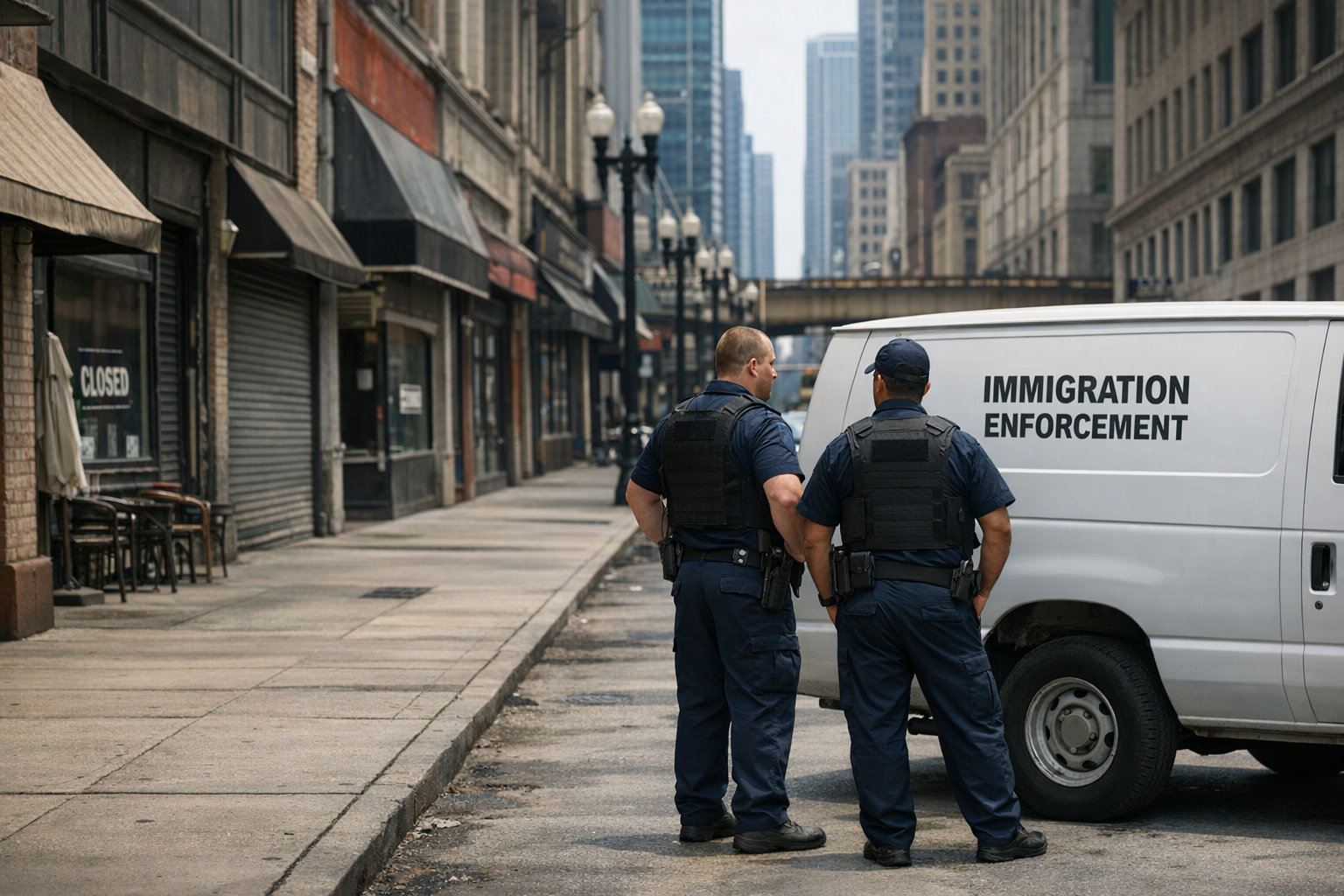
ICE raids in 2025 in Chicago coincided with a sharp pullback in consumer activity among immigrant communities, a new study shows. Researchers estimate the enforcement actions and ensuing fear kept many residents away from shops and restaurants, producing an estimated loss of more than $1.26 billion in retail, restaurant and sales-tax revenue across affected neighborhoods.
The report links the decline directly to reduced foot traffic and spending in consumer-facing sectors. Small businesses that rely on daily patronage from immigrant customers saw revenues fall, while city coffers experienced lower collections from sales taxes. Visible public reaction to the raids included neighborhood displays criticizing enforcement, underscoring how public sentiment and enforcement policy intersect with local commerce.
Analysts behind the study emphasize that the economic effects were concentrated in sectors dependent on frequent, everyday transactions—restaurants, convenience stores and retail outlets—where even brief drops in customer volume translate quickly into revenue shortfalls. The study also highlights how diminished sales-tax receipts can compound budgetary pressure for municipal services, linking enforcement activity to broader fiscal consequences for the city and its neighborhoods.
The findings add a fiscal dimension to debates over immigration enforcement, showing measurable local costs beyond immediate enforcement outcomes. By documenting the economic impact of the 2025 actions, the study provides data that municipal leaders, community organizations and policymakers may consider when weighing enforcement strategies and community responses. For further context on the legal authority involved, see ICE and coverage of related immigration policy discussions on immigration and the economy.