








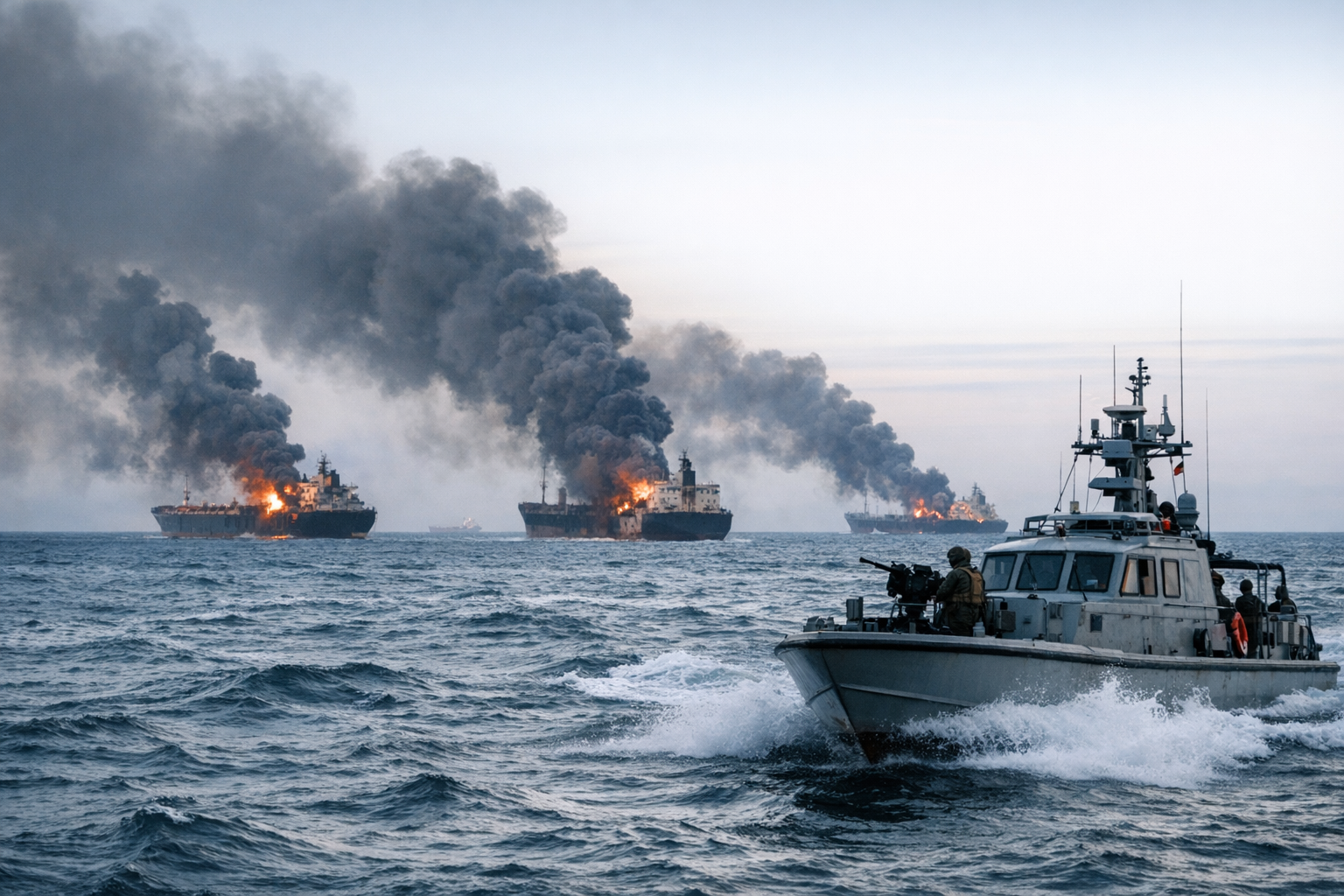
Major escalation erupted as the Islamic Revolutionary Guard Corps reported launching ballistic missiles at a base in Jordan used by the U.S. military, and said it had attacked ten vessels at sea. The announcement came after Washington said it had destroyed five oil tankers linked to Iran, a sequence of actions that has sharply intensified a conflict now entering its sixth month.
The incidents have broken a recent lull and targeted a range of strategic assets: onshore military facilities, merchant shipping and energy infrastructure. Reports indicate some strikes occurred close to the Strait of Hormuz, a key chokepoint for global oil flows. Markets reacted swiftly, with energy prices moving higher and maritime insurers and operators reassessing transit risks in the region.
U.S. authorities have described the destruction of five tankers as part of a response to earlier hostile actions attributed to Iranian-linked networks, while Tehran framed its strikes as retaliation. The exchanges have drawn attention from regional governments and external partners concerned about the conflict spreading beyond the immediate actors involved. Shipping operators and naval forces in the area have reported heightened alert levels following the latest wave of attacks.
The developments deepen an already complex security environment in the Gulf and neighbouring areas, complicating diplomatic and commercial efforts to stabilise the situation. Analysts and officials note the immediate priorities are safeguarding civilians and commercial traffic and preventing further military escalation. How regional capitals and international actors respond in the coming days will be crucial to whether the confrontation expands or subsides.