








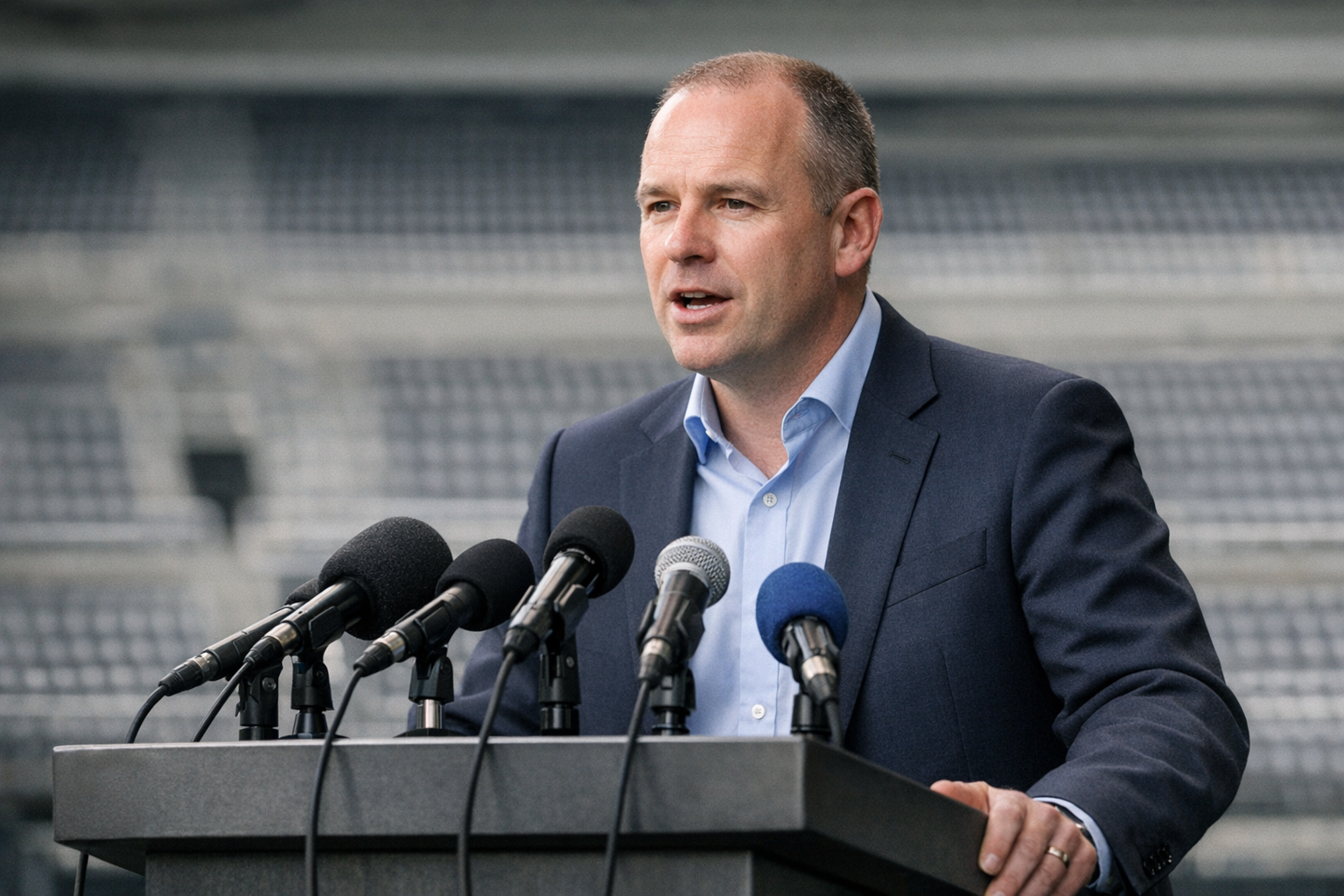
Newcastle sporting director Ross Wilson stated that the club had been preparing for Eddie Howe‘s departure for several months, and described the recent summer as one that “never felt chaotic.” The comments aim to frame the managerial change as a managed transition rather than a sudden upheaval, emphasising internal planning and contingency measures put in place by club leadership.
The club’s message underlines the role of long-term planning in modern football, where succession scenarios are often modelled well ahead of time. Sources close to the sporting operations say that clubs of Newcastle’s scale typically maintain parallel recruitment and structural plans to reduce disruption. That approach, according to Wilson, helped the organisation navigate the summer period with continuity in day-to-day functions across the football department.
Practical consequences of such preparation tend to show up in how teams handle the transfer window, contract negotiations and staff reorganisations. By signalling that the change was foreseen, the club seeks to reassure stakeholders — from players and backroom staff to supporters and commercial partners — that sporting objectives remain on track. The emphasis on readiness also speaks to broader governance practices, where boards and sporting directors map out potential scenarios to protect squad coherence.
For supporters and observers, the key takeaway is that the club presented the exit as part of an organised process rather than a reactive period. How that steadiness translates onto the pitch and in upcoming competitive fixtures will be watched closely. Meanwhile, the statement from Ross Wilson frames the episode as an instance of institutional planning, suggesting Newcastle enters the next phase with an explicit focus on mitigating disruption and sustaining performance ambitions.