









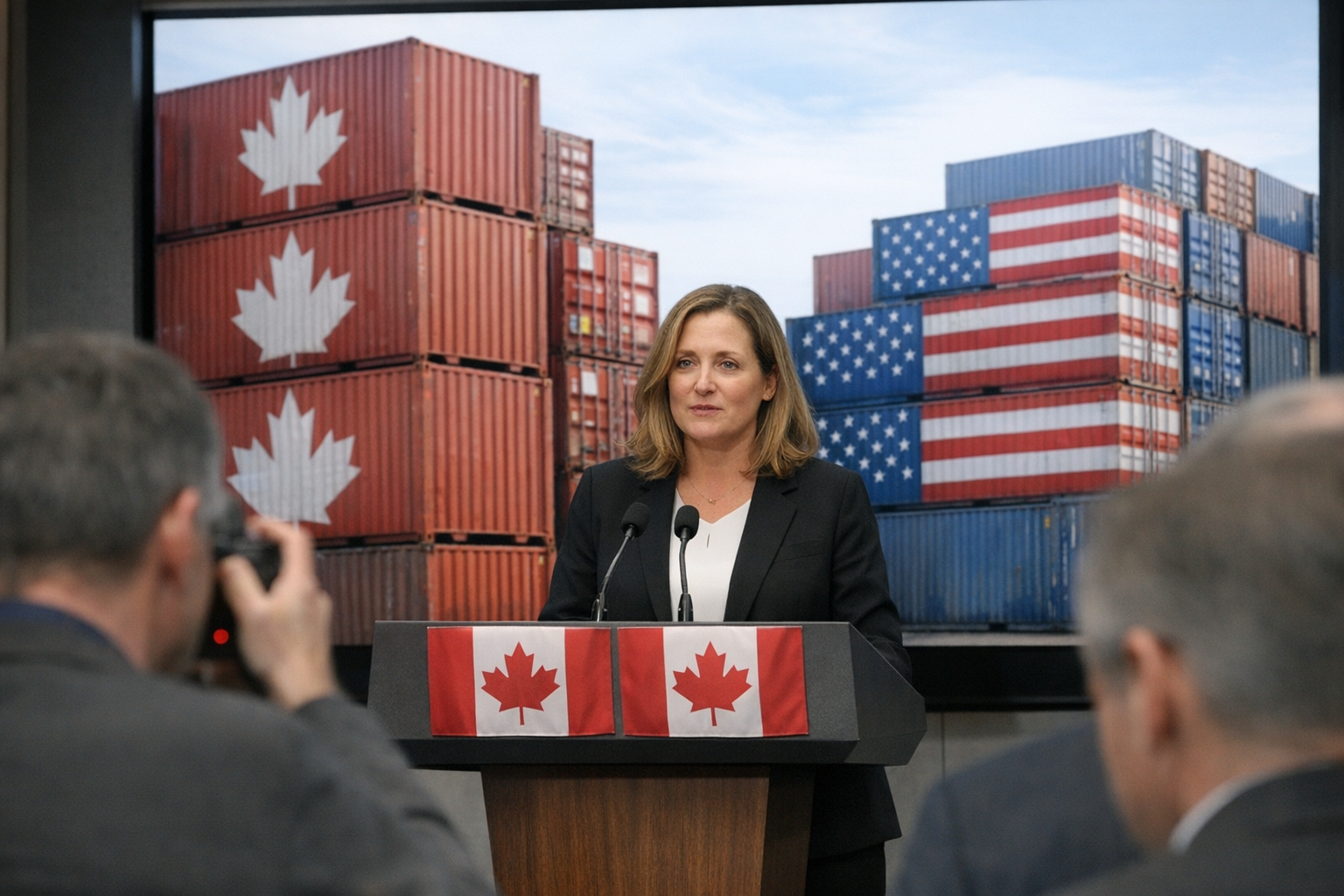
Canada imposed tariffs on roughly $20 billion worth of goods from the United States in a direct response to recent U.S. measures, marking a sharp escalation in bilateral trade tensions. The move, announced by Ottawa, targets a broad array of imports and comes after a series of policy steps by the administration of Donald Trump. Officials framed the action as a measured countermeasure, while observers warn the development could ripple across supply chains that bind the two economies.
The decision underscores how closely integrated the economies of Canada and the United States remain, and why trade disputes between them carry outsized consequences. Visuals circulating in coverage show Canadian lumber products at U.S. facilities, a reminder that many sectors rely on cross-border flows of raw materials and finished goods. The Canadian federal administration framed its response as defensive trade policy; the government’s public communications can be consulted via Government of Canada.
Analysts say the immediate effects will be felt by exporters and importers who move goods across the border daily, including manufacturers that depend on inputs sourced from either side. Companies may face higher costs, disrupted procurement plans and a renewed need to reassess tariffs and logistics. Financial markets and commodity segments that track cross-border commerce may also react as investors recalibrate expectations about trade flows and corporate earnings in affected industries.
Beyond firms and markets, the dispute raises broader questions for trade governance and dispute resolution mechanisms that have managed U.S.-Canada commerce for decades. Policymakers on both sides will now navigate pressure to limit further escalation while seeking avenues for negotiation. How this episode resolves will influence not only bilateral relations but also discussions among other trading partners watching whether established rules and practices can contain a widening confrontation.