







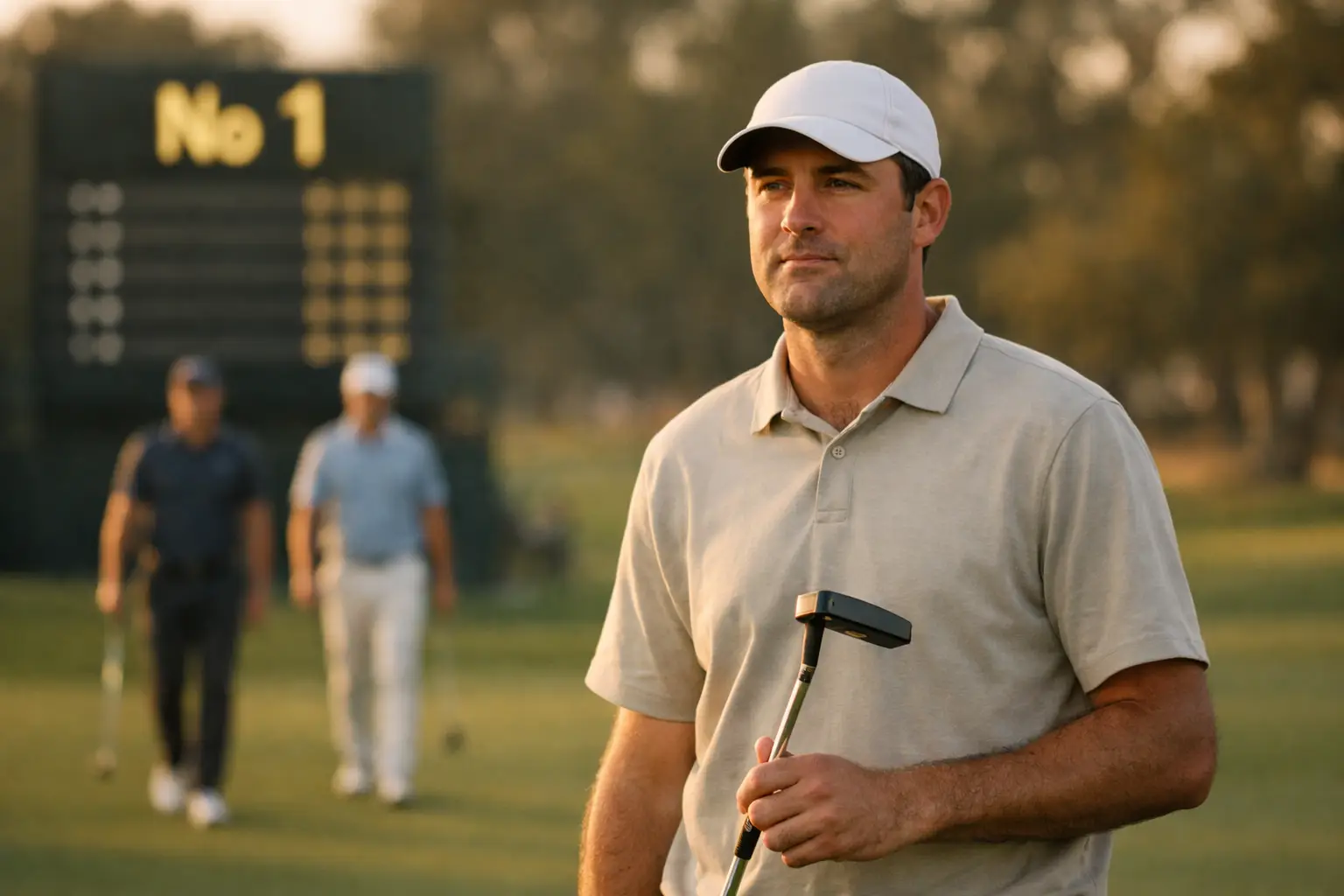
Scottie Scheffler’s continued dominance in men’s golf reflects a blend of performance consistency and tournament management that has kept him atop the rankings. Since rising to the sport’s summit he has combined regular top finishes with victories at high-profile events, accruing ranking points more steadily than rivals who alternate peaks and troughs. That reliability — finishing near the lead week after week — is the clearest practical reason for his prolonged stay at No.1.
At the core of that steadiness are measurable facets of elite play: a high level of ball striking, a strong short game, and the ability to produce low scores under pressure. Equally important has been strategic scheduling and course selection that maximise exposure to ranking events. Support structures — coaching, fitness and caddie relationships — also play a less visible but material role in converting form into headline results. Together these elements create a profile that resists the natural volatility of single-week performances.
The pool of players capable of overtaking Scottie Scheffler is deep. Names that consistently appear among potential challengers include Rory McIlroy, Jon Rahm, Viktor Hovland, Xander Schauffele and Patrick Cantlay. Each brings a mix of major pedigree, week-in week-out scoring, or both. The mechanics of the world ranking reward sustained excellence over a rolling period, so a challenger must string together high finishes in events with substantial points to displace the incumbent. Sudden surges can move the needle, but long-term changes typically follow extended runs of superior results.
The practical consequence for the wider game is twofold: spectators get a compelling duel between steadiness and momentum, and tournament narratives shift toward matchups that can produce ranking movement. For players and coaches the priority remains clear — maximise performance at the events that shape the ranking cycle. Over the coming months the calendar of majors and signature tournaments will offer the most likely avenues for a change at the top, but any shift will require sustained form rather than a single standout week.