




Congress must strengthen the rules that govern interactions between senior White House advisers and foreign actors. The involvement of Jared Kushner, who served as a senior adviser and participated in diplomatic efforts, has sharpened public attention on the risk that private business ties or payments could create conflicting obligations. At stake is a basic principle: officials conducting diplomacy should not have financial arrangements with the governments they engage.
The implications extend beyond a single individual. Perceived or actual conflicts of interest can undermine the credibility of U.S. decision-making, complicate day-to-day foreign policy operations and create openings for adversaries to exploit. Existing ethics frameworks and disclosure regimes provide some oversight, but questions remain about transparency, enforcement and whether statutory gaps allow influence to persist despite public scrutiny.
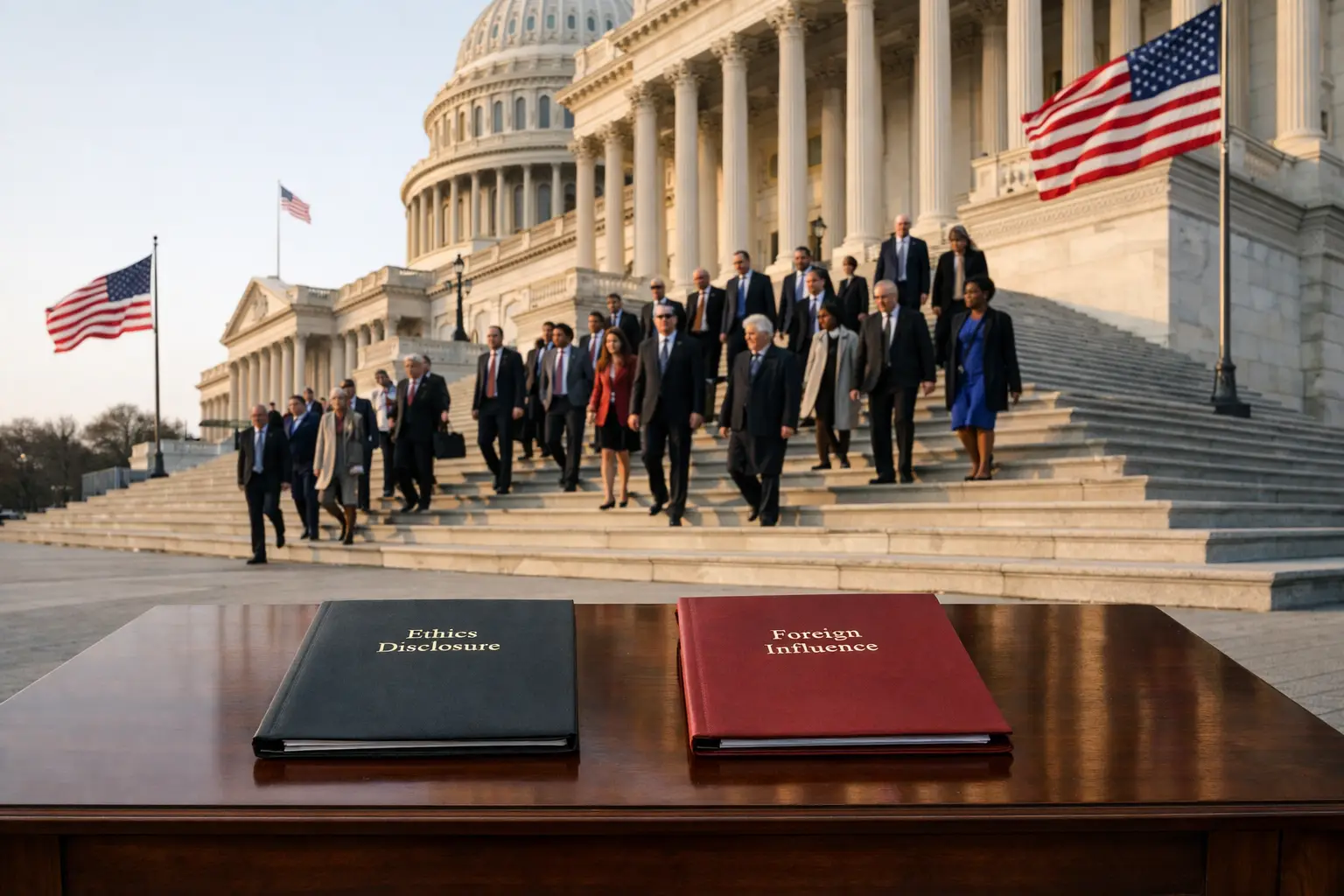
There are several legislative and oversight tools available to address these concerns. Congress can tighten statutory prohibitions on receiving payments from foreign governments, expand disclosure obligations to cover certain family interests and require binding divestment or use of independent trusts in sensitive cases. Committees can also use hearings, subpoenas and appropriations measures to clarify obligations and impose penalties where enforcement is weak. Strengthening the authority and resources of ethics offices would improve monitoring and reduce reliance on voluntary compliance.
Reform would bring concrete benefits: clearer rules reduce ambiguity for officials, robust enforcement deters abuses, and stronger transparency helps restore public confidence. Ultimately, meaningful change requires Congress to translate broad ethical standards into enforceable law so that diplomatic work cannot be shadowed by unresolved financial ties. Without firm statutory fixes, questions about influence and priorities are likely to persist, with consequences for trust in institutions and the conduct of U.S. foreign relations.