






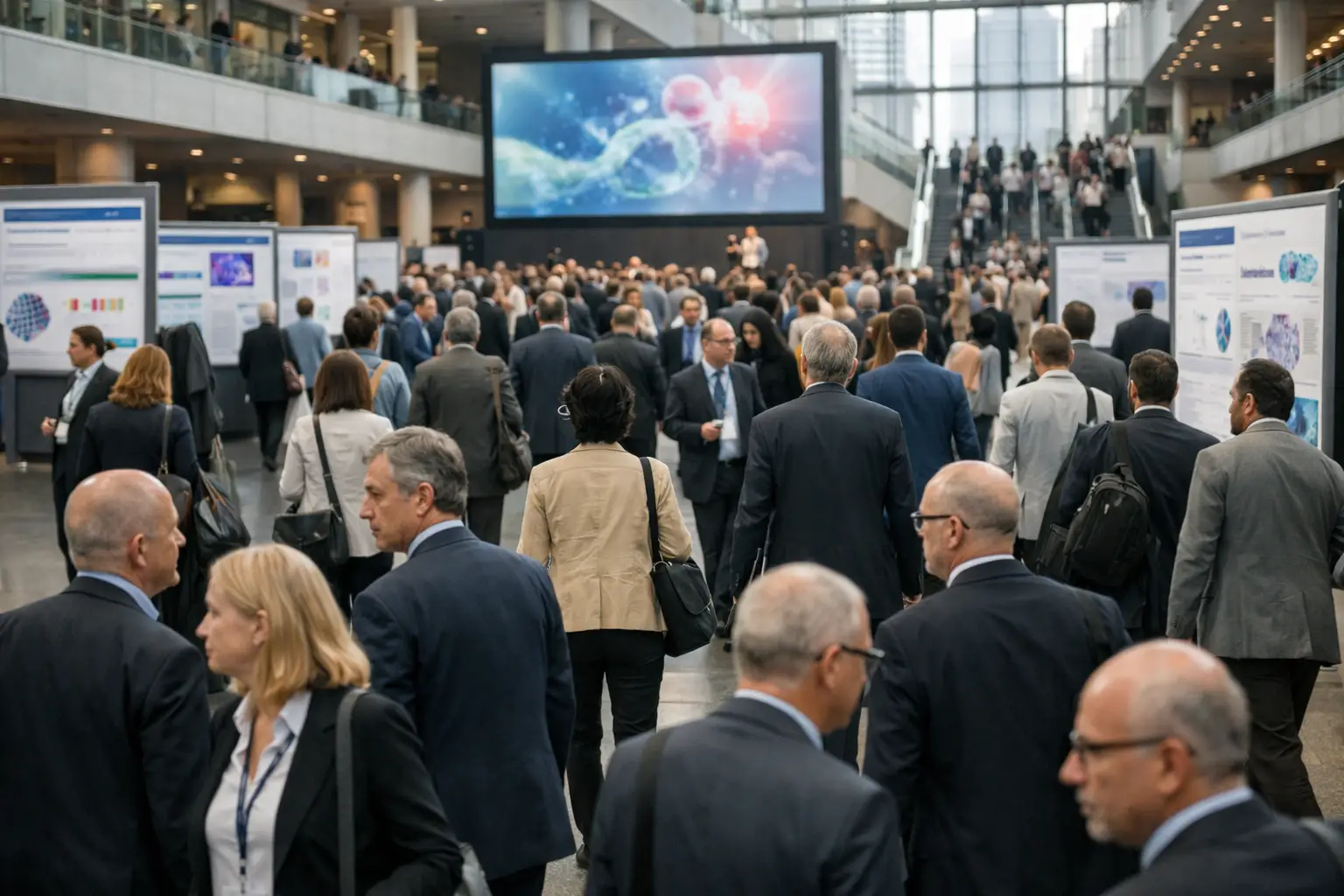
The annual gathering of the European Society for Medical Oncology entered its second day in Madrid, drawing nearly 40,000 participants to one of the most closely monitored events on the global cancer calendar. The meeting has become a central forum for physicians, researchers, drug developers and health policy observers tracking the fast-moving field of oncology, where clinical data can influence treatment strategies, regulatory priorities and investment across the sector.
Attention at this year’s conference has focused in part on presentations tied to Merck and Moderna, whose work continues to be watched closely after the wider rise of messenger RNA technology and the expanding role of immunotherapy in cancer care. The companies’ presence reflects a broader trend at ESMO: major pharmaceutical groups are using the meeting to place experimental and approved therapies in the context of evolving clinical evidence, particularly in areas where survival gains and treatment sequencing remain under scrutiny.
The conference also includes news involving Amgen and Imdelltra, a drug name that has drawn interest as companies pursue more targeted approaches for difficult-to-treat malignancies. While individual presentations often attract the most immediate attention, ESMO’s relevance lies in how data are assessed by specialists who must weigh efficacy, safety and practical use in real-world cancer treatment. For hospitals and health systems, the implications may extend beyond trial results to questions of access, cost and clinical adoption.
The scale of the Madrid meeting underscores the growing international profile of cancer research and the pressure on the medical community to translate scientific progress into patient benefit. European oncology meetings have increasingly become venues where global drug development strategies are tested before a specialist audience, with results discussed not only by clinicians but also by regulators, payers and patient advocates. The concentration of experts in one place gives the conference an influence that can continue well after formal sessions end.
ESMO’s annual meeting is expected to remain a key reference point for oncology developments as additional sessions and analyses unfold. For the medical community, the value of the event will depend less on a single headline and more on the cumulative picture emerging from trial updates, expert discussion and the comparison of new findings with existing standards of care.