







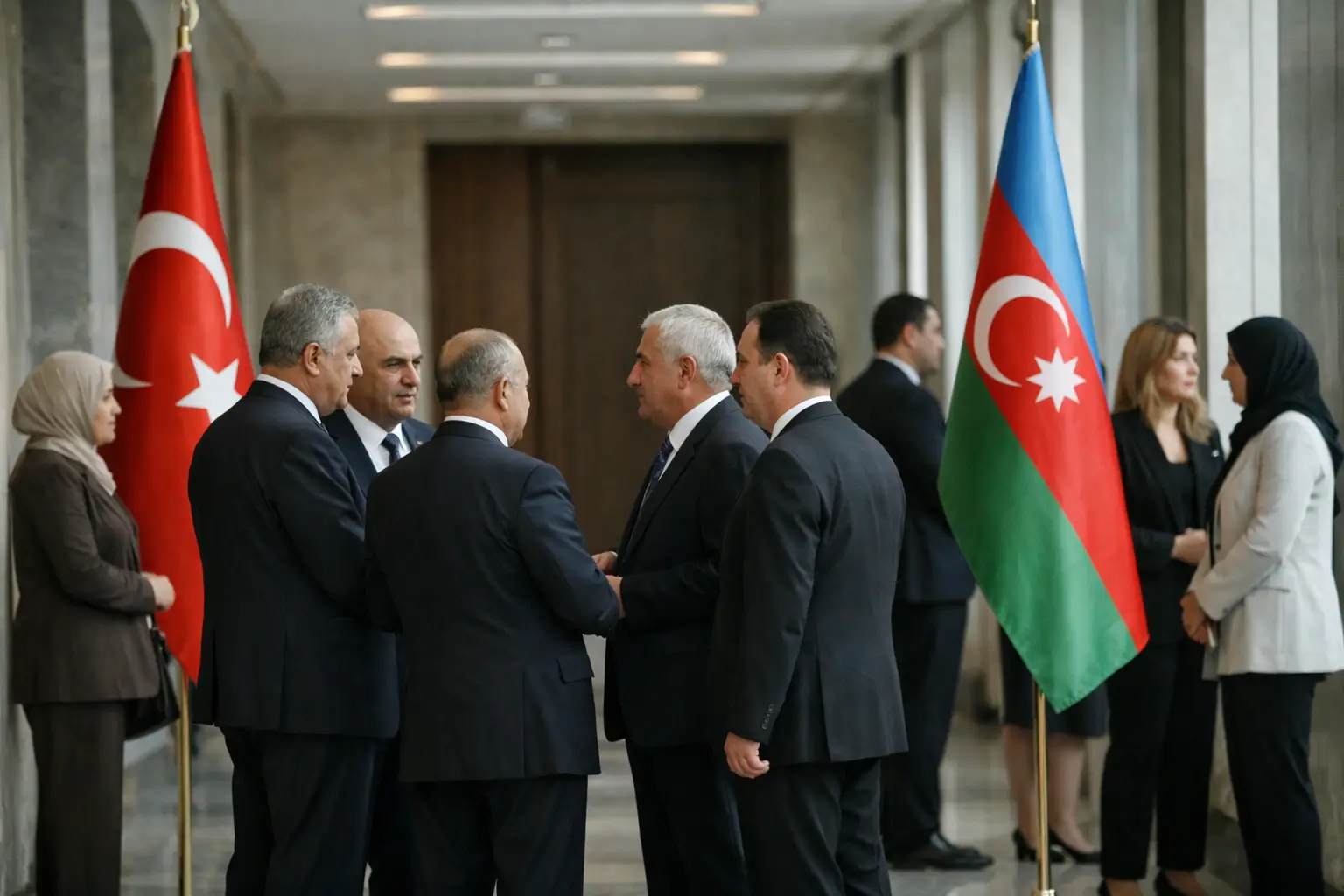
A dispute over veiling has brought an unusual source of friction into the open between Turkey and Azerbaijan, two states that normally present their relationship as one of the closest partnerships in the region. The disagreement is not only about religious dress. It touches a more sensitive issue for Baku: who defines the limits of public identity, faith and political authority inside Azerbaijan.
The two countries share linguistic, cultural and strategic ties, and their cooperation has carried weight in energy policy, defence and diplomacy across the South Caucasus. Ankara has long been one of Baku’s most important supporters, while Azerbaijan has cultivated its partnership with Turkey as a pillar of regional security. That closeness, however, does not remove the boundaries of state sovereignty. The current argument over veiling shows how quickly a cultural or religious question can become a test of political independence when it is perceived as external pressure.
Azerbaijan is a majority-Muslim country with a strongly secular model of governance. Its authorities have historically guarded the public sphere against movements or symbols they associate with political religion, while presenting secularism as part of national stability. Turkey’s political environment is different, shaped by a broader public role for religious identity in recent decades. Those divergent approaches do not always matter in official relations, but they can become visible when debates over religion, education, gender or public institutions cross borders.
The sensitivity is heightened by the language of fraternity often used to describe Turkey and Azerbaijan. Such rhetoric can strengthen diplomatic alignment, but it can also blur expectations. For Ankara, public concern over religious expression in Azerbaijan may be framed as solidarity. For Baku, the same concern can be read as interference in domestic affairs. The resulting tension reflects a familiar dilemma for close allies: partnership does not automatically mean shared rules on internal governance.
The episode is unlikely to erase the strategic foundations of the relationship, which remain significant for both governments. Yet it underlines that the alliance is not immune to disputes over identity and authority. In the South Caucasus, where power balances are closely watched, even a debate rooted in veiling can carry wider meaning. It reveals how questions of sovereignty continue to shape relations between states that otherwise describe themselves as natural partners.