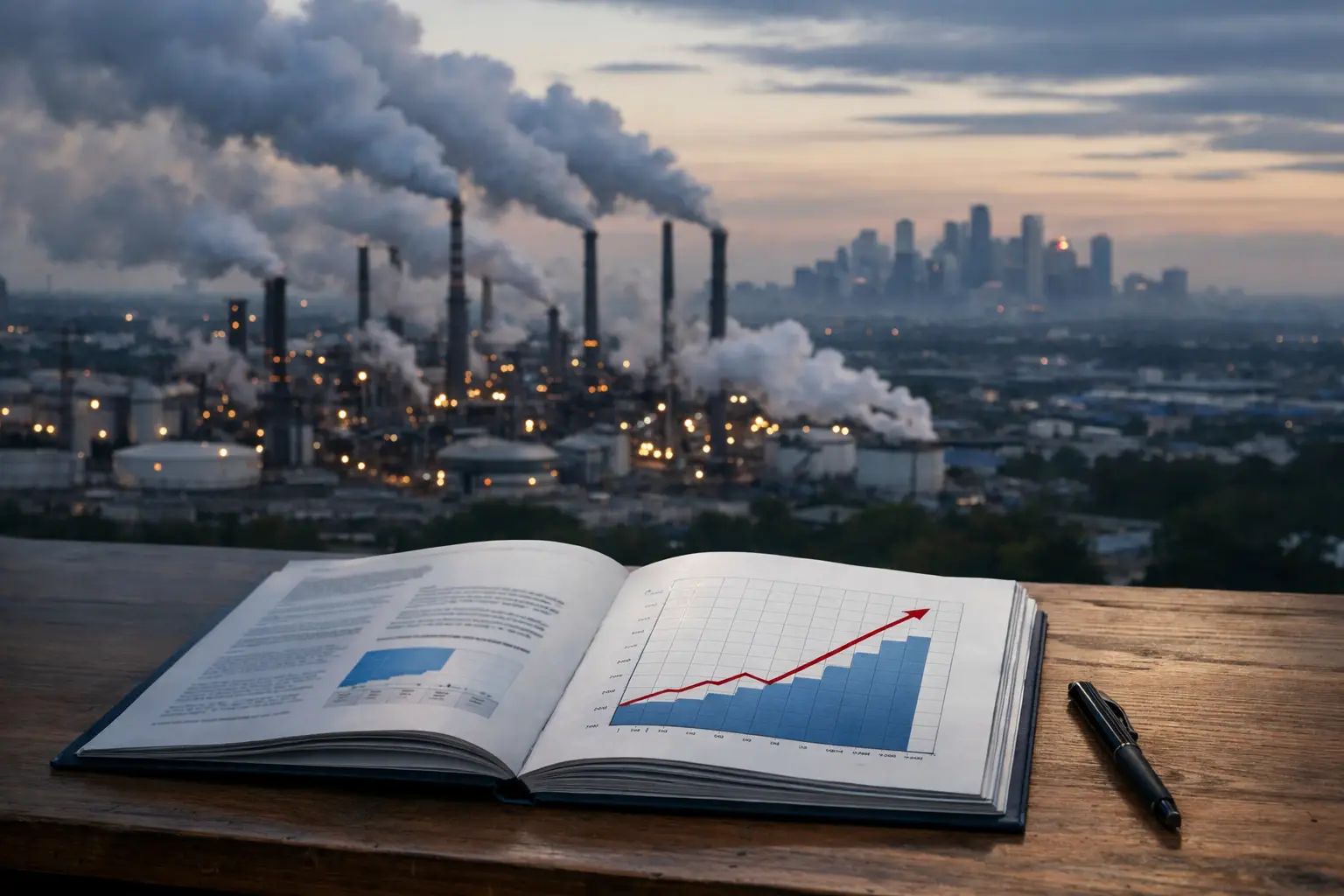







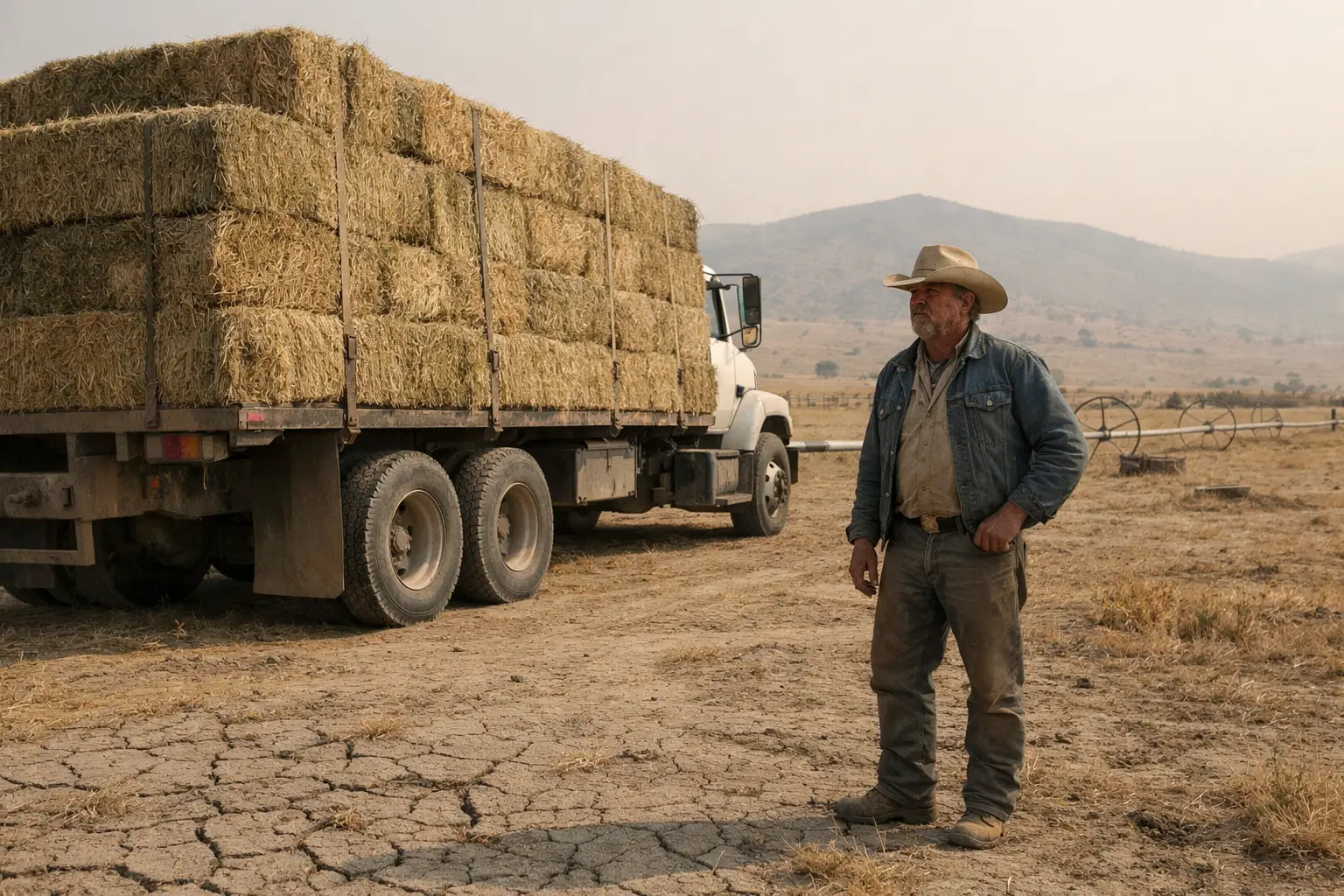
For ranchers in Oregon, the pressure from the land and the market is arriving at the same time. Prolonged drought across parts of the West has reduced the availability of natural forage, forcing livestock producers to buy more hay to keep herds fed. At the same time, record diesel prices have made that hay more expensive to move, adding a transport burden to an already costly season.
The challenge is especially acute in remote ranching areas, where feed often has to travel long distances before reaching cattle operations. Diesel affects more than the fuel tank of a pickup or tractor: it shapes trucking rates, hay delivery costs and the price of moving animals and supplies across rural routes. For producers raising cattle in places such as Hines, in eastern Oregon, higher freight costs can quickly turn a basic feed purchase into a larger financial strain.
Katie Baltzor, who raises Black Angus cattle near her home outside Hines, is among the ranchers facing the combined effects of dry conditions and rising fuel costs. Drought reduces the grass available on rangeland, while fire risk and past wildfire impacts add another layer of uncertainty for livestock producers in the region. When pastures cannot provide enough feed, ranchers have fewer options: reduce herds, purchase additional hay or absorb higher operating costs while waiting for conditions to improve.
The situation illustrates how vulnerable ranching can be to overlapping pressures. Feed, fuel and transport are not separate expenses in livestock production; they are connected parts of the same supply chain. Guidance and agricultural programs from institutions such as the Oregon Department of Agriculture and the U.S. Department of Agriculture operate within that broader reality, but individual ranchers still face immediate decisions about how much feed to buy and how much cost they can carry.
In the West, where cattle operations often depend on open range and long-distance logistics, the convergence of drought, fire conditions and expensive diesel is more than a temporary inconvenience. It can affect herd management, cash flow and the stability of family-run operations. For Oregon ranchers, the season’s arithmetic is straightforward but difficult: less grass means more hay, and higher fuel prices make every delivered load cost more.