








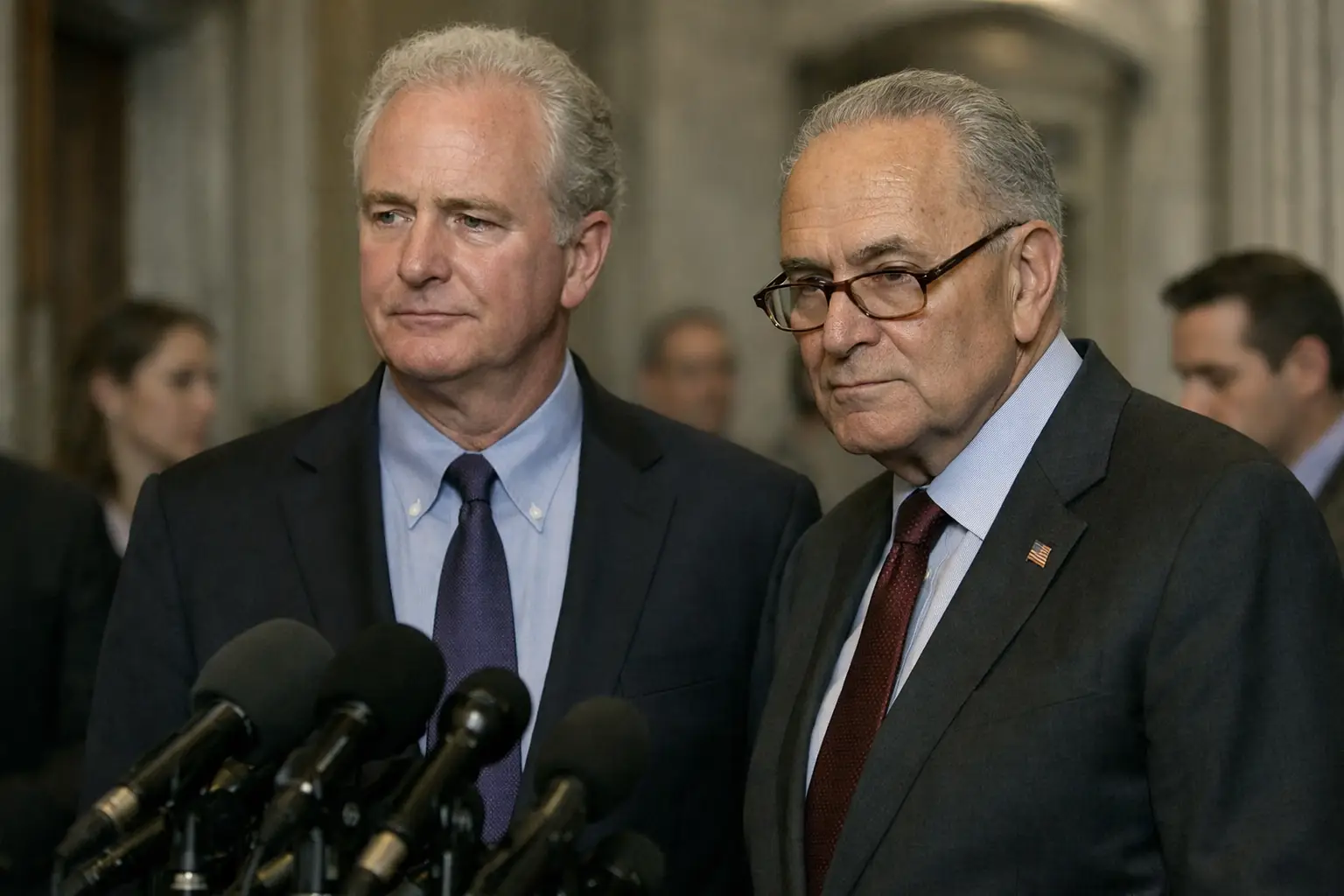
Chris Van Hollen has announced that he will challenge Chuck Schumer for the role of Senate majority leader, opening a direct contest over the direction of Democratic leadership after the midterm elections. The Maryland Democrat, identified with the party’s progressive wing, framed his decision as a response to voters who signaled a desire for “change from the status quo.”
The move places Van Hollen, whose official Senate office is at Chris Van Hollen, against Schumer, the New York Democrat whose office is at Chuck Schumer. A leadership challenge at this level is not simply a personal contest; it affects how the Democratic caucus presents itself, how it negotiates priorities and how it responds to pressure from its own voters. The Senate majority leader holds one of the most consequential positions in U.S. politics, with influence over the chamber’s agenda and the party’s legislative strategy.
Van Hollen’s message links the leadership race to the political meaning of the midterms. By emphasizing dissatisfaction with the existing order, he is seeking to put questions of renewal, party discipline and ideological balance at the center of the debate. For Democrats, that debate comes at a moment when voter expectations after an election can shape internal decisions as much as public messaging. The contest also highlights the continuing tension between long-established leadership and lawmakers who argue that the party must adapt more visibly to demands from its base.
Schumer has long been one of the most recognizable Democratic figures in the Senate, and any challenge to his position draws attention beyond the chamber itself. Leadership races are decided inside the party, but they carry broader implications for legislative priorities, campaign strategy and the relationship between senators and the voters who sent them to Washington. Van Hollen’s decision ensures that the next phase of Democratic Senate politics will include an explicit debate over whether continuity or change should guide the caucus.
The announcement does not, by itself, determine the outcome of the race. It does, however, create a formal test for Democratic senators weighing institutional experience against calls for a different approach. With Van Hollen invoking the midterm electorate and Schumer representing the current leadership structure, the contest is set to become an early measure of how the party interprets the political message delivered by voters.