









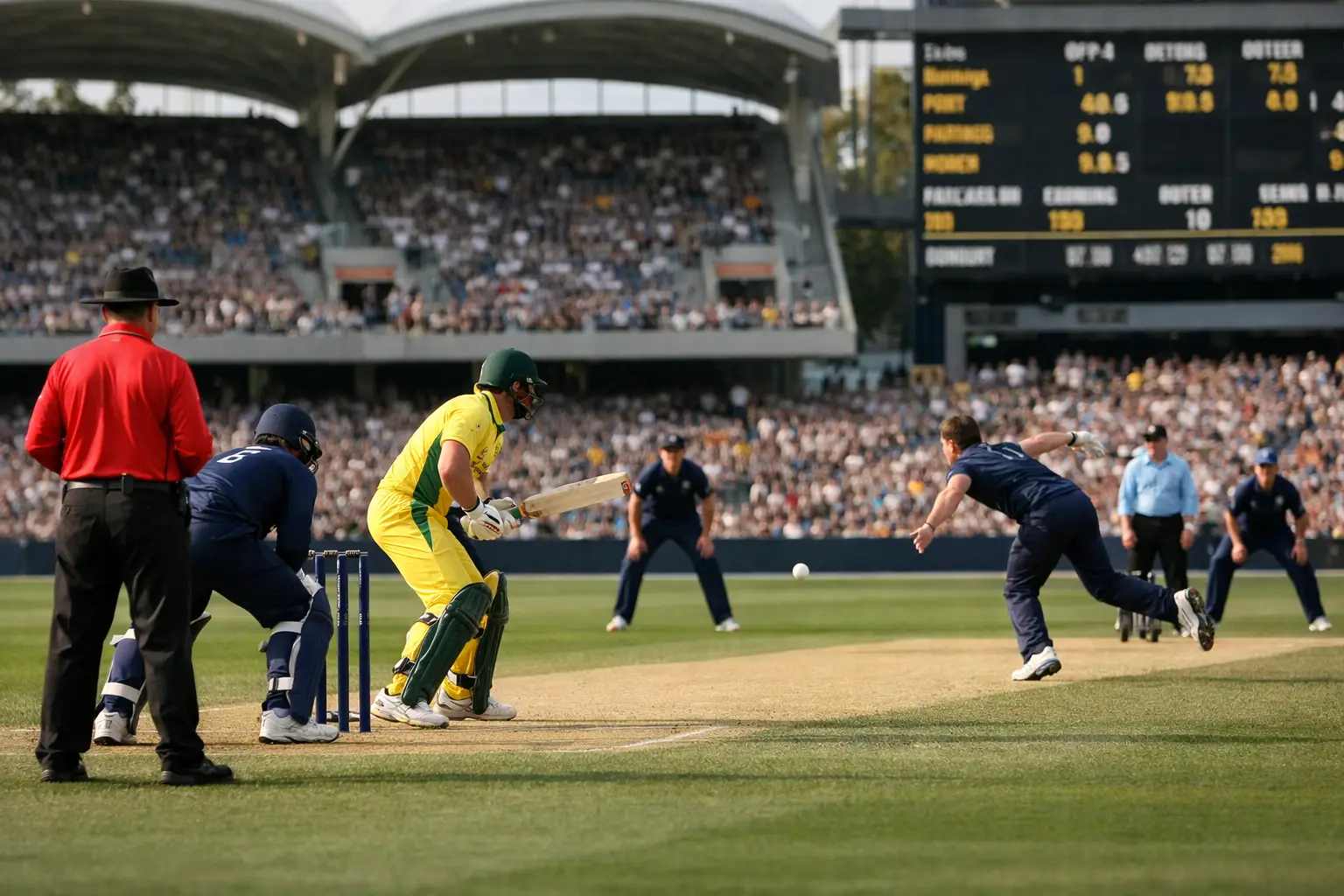
Australia and England are playing at Adelaide Oval in the second one-day international of their three-match series, placing one of cricket’s most watched rivalries back in a format where tempo, batting depth and bowling discipline are measured over every phase of the innings. The match carries immediate significance within a short series: with only three fixtures scheduled, the second ODI can either decide the direction of the contest or keep it finely balanced heading into the final meeting.
The Adelaide venue gives the match a familiar international setting. Known for its central role in Australian cricket, Adelaide Oval has staged major fixtures across formats and remains a ground where conditions can reward both controlled stroke play and precise seam or spin bowling. In an ODI, the scorecard offers more than a running total; it captures partnerships, wickets in clusters, run-rate pressure and the strategic use of overs, all of which shape how each side approaches the closing stages.
For Australia, the fixture sits within the structure of a home series managed under the national cricket system overseen by Cricket Australia. For England, represented internationally through the England and Wales Cricket Board, the match is another test of white-ball consistency away from home. ODI cricket often exposes the balance of a side: openers are expected to set a platform, middle-order batters must manage risk, and bowlers are judged on both wicket-taking and containment.
The importance of the scorecard is especially clear in a 50-over match because momentum can shift without a dramatic headline moment. A quiet spell of overs may build scoreboard pressure, while a single partnership can alter a chase or lift a first-innings total into competitive territory. Fielding, running between wickets and bowling changes also leave their mark indirectly, reflected in required run rates, economy figures and the timing of dismissals.
With the series limited to three ODIs, the Adelaide contest has little room for recovery once the final result is recorded. The live score remains the simplest way to follow the immediate state of play, but the broader picture lies in how each innings develops and how the two teams respond under match pressure. The outcome will shape the final fixture and add another chapter to a rivalry that remains central to international cricket.