





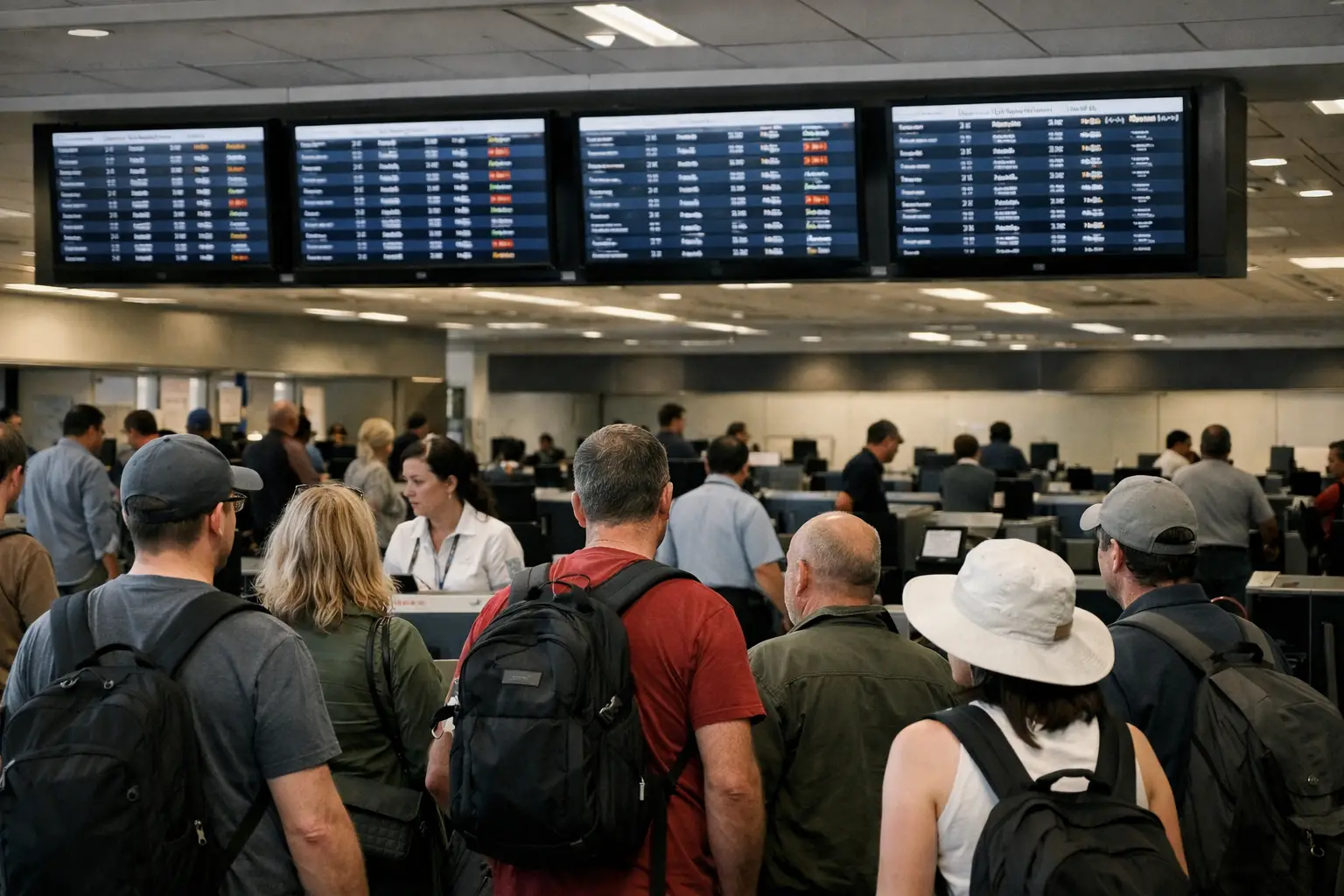
U.S. air travel began moving again after the Federal Aviation Administration lifted a rare nationwide ground stop, ending an order that temporarily halted departures across the country. The measure created a broad disruption for passengers, airports and airlines, with delays and missed connections expected to continue even after the formal restriction was removed.
The ground stop affected the national aviation system at a moment when schedules were already under pressure. Once departures resume, aircraft, crews and passengers are often out of position, forcing airlines to rebuild rotations across multiple airports. That process can take time, particularly when the disruption is nationwide rather than confined to a single region or carrier.
Homeland Security Secretary Mullin said there was “zero evidence” of a cyberattack, addressing one of the immediate concerns surrounding a systemwide halt. The statement from the Department of Homeland Security helped narrow the public focus to operational recovery, although it did not eliminate the practical consequences for travelers facing cancellations, rebookings and crowded airport terminals.
The return to normal service may be slowed by the current economics of the airline industry. With fuel costs elevated, airlines have been operating with fewer flights, leaving less spare capacity to absorb passengers whose original itineraries were disrupted. In practice, fewer open seats mean rebooking can become more difficult, especially on busy routes and at major hubs where delayed passengers compete for limited availability.
The episode highlights the fragility of a tightly scheduled airline network in which a single nationwide interruption can produce effects long after the initial order is lifted. For passengers, the end of the ground stop is not the same as an immediate return to normal. Airlines must reposition aircraft and crews while airports manage backlogs, making a multi-day recovery possible for parts of the U.S. air travel system.