







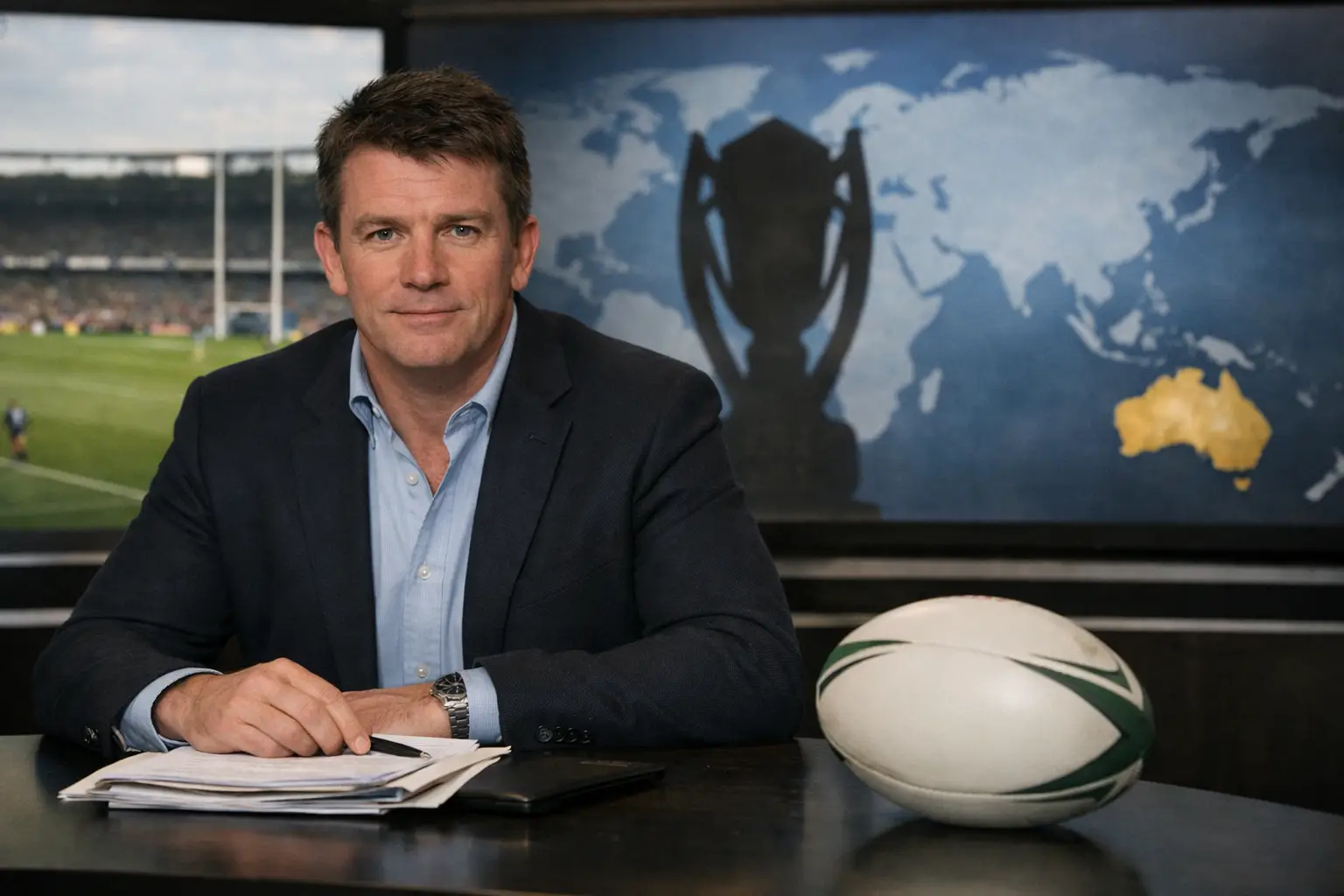
Rugby league’s next steps are being shaped by three connected questions: how the forthcoming World Cup finals can capture wider attention, how Australia’s influence should be measured, and how far the domestic game can move while talks over a future NRL partnership remain unresolved. Brian Carney, assessing the sport for Sky Sports Rugby League, has placed those issues at the centre of the current debate around the international and club landscape.
The immediate focus is the rugby league World Cup finals, where the sport has another opportunity to present its elite level beyond its traditional base. In that context, Australia remains an unavoidable reference point. The national side’s status within the game gives any tournament involving it a particular competitive and commercial weight, while also creating the challenge of ensuring that the event is not defined by one dominant standard alone. For organisers and broadcasters, the strength of the finals lies in making that benchmark part of a wider global story.
Carney has also highlighted a longer-term idea linked to the World Cup in 2030: a “Magic”-style concept. Within rugby league, the term points to a format built around concentrating multiple high-profile fixtures into a single destination and turning matchday into a broader sporting showcase. Applied to a World Cup environment, the model would aim to package international matches in a way that is easier to promote, easier to attend and more attractive to media partners. The concept remains part of the discussion rather than a confirmed tournament structure, but it reflects the search for formats that can give the global game a clearer identity.
The domestic picture is less settled. Work continues toward a possible partnership involving the National Rugby League, the competition that sits at the commercial heart of the sport in Australia and has growing influence beyond it. That process has left parts of the domestic game in a holding pattern, with decisions on direction and structure linked to negotiations not yet concluded. Carney’s description of that uncertainty as necessary underlines a difficult balance: short-term clarity is desirable, but a major alignment with the NRL could carry consequences that justify waiting for firmer terms.
For rugby league, the themes are closely connected. A stronger international programme depends on compelling events, credible competition and a domestic ecosystem capable of supporting them. The World Cup finals offer the near-term test; the 2030 concept points to possible innovation; the NRL discussions may determine how much practical support such ambitions can command. None of those strands alone settles the sport’s future, but together they show why the coming period matters for rugby league’s profile, calendar and commercial direction.