








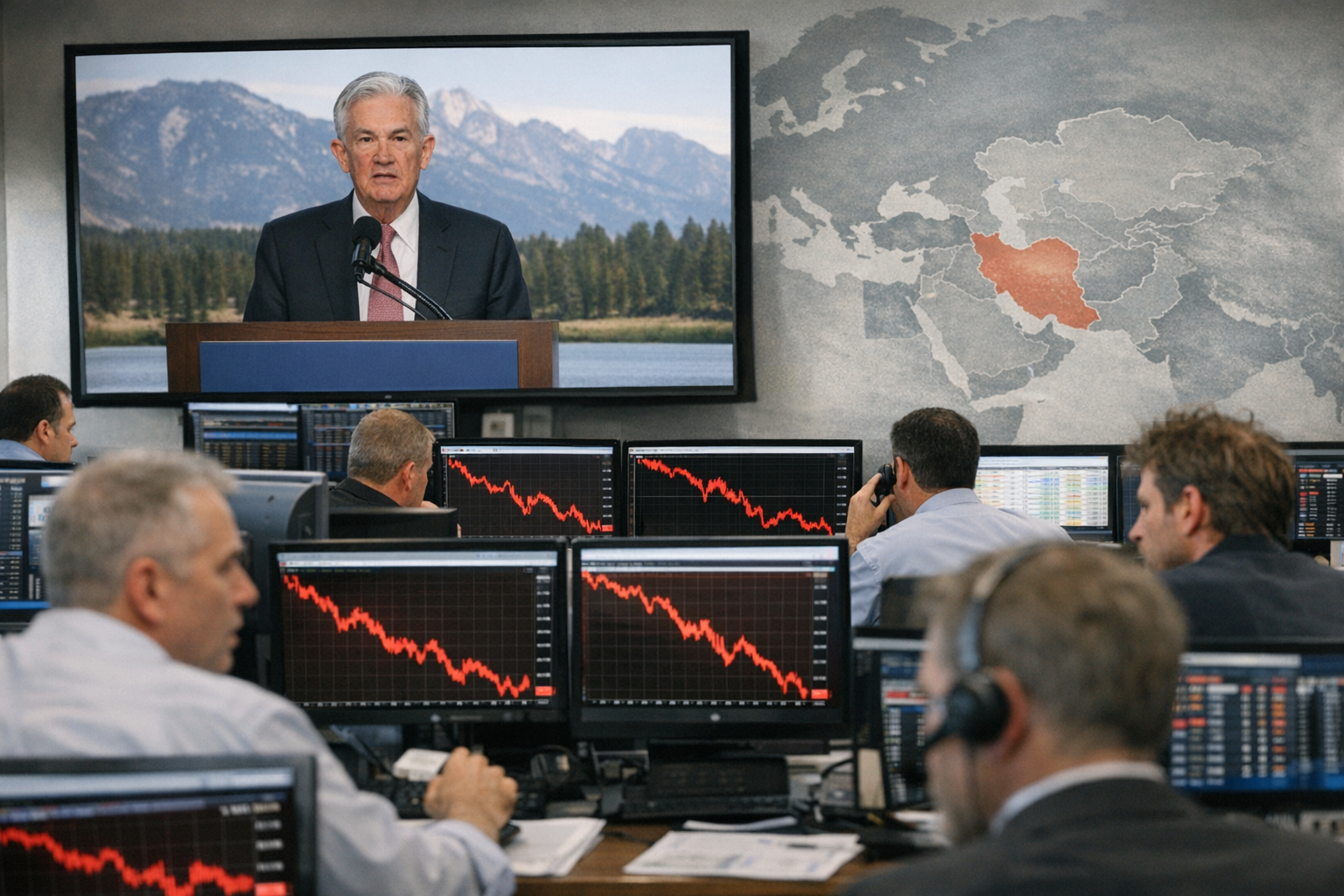
Market futures fell as investors recalibrated risk after comments at the Jackson Hole gathering that lifted expectations of another interest-rate increase. The remarks by Warsh contributed to a reassessment of the path for the Federal Reserve, prompting traders to price in higher borrowing costs. At the same time, fresh exchanges of fire between the United States and Iran added a geopolitical overlay, amplifying caution ahead of the coming trading days.
Traders responded by trimming exposure to riskier assets and adjusting positions in equity futures, reflecting uncertainty over monetary policy and international conflict. Market participants are weighing how an additional tightening cycle would affect corporate earnings and discount rates, while also considering the immediate impact of heightened geopolitical tension on investor sentiment. The combined signals from central-bank commentary and security events pushed sentiment toward a more defensive stance.
The renewed U.S.-Iran confrontations raise the prospect of broader regional escalation that could influence energy markets and safe-haven flows. Even without an immediate large-scale flare-up, such incidents tend to tilt market attention toward volatility and liquidity considerations, with portfolio managers reassessing allocations to equities, sovereign debt and commodities. Observers note that geopolitical shocks often interact with policy expectations to drive abrupt moves across asset classes.
Looking ahead, market direction will likely hinge on additional signals from policymakers and any further developments in the Middle East. Investors will monitor follow-up commentary from central-bank officials and any official responses that might clarify risks to the outlook. Until there is greater clarity on both the policy path and the security situation, volatility in futures and other markets may persist as participants digest competing economic and geopolitical forces.